Breast
Benign Breast Condition Surgery
Careful evaluation and treatment for non-cancerous breast changes
Book an appointment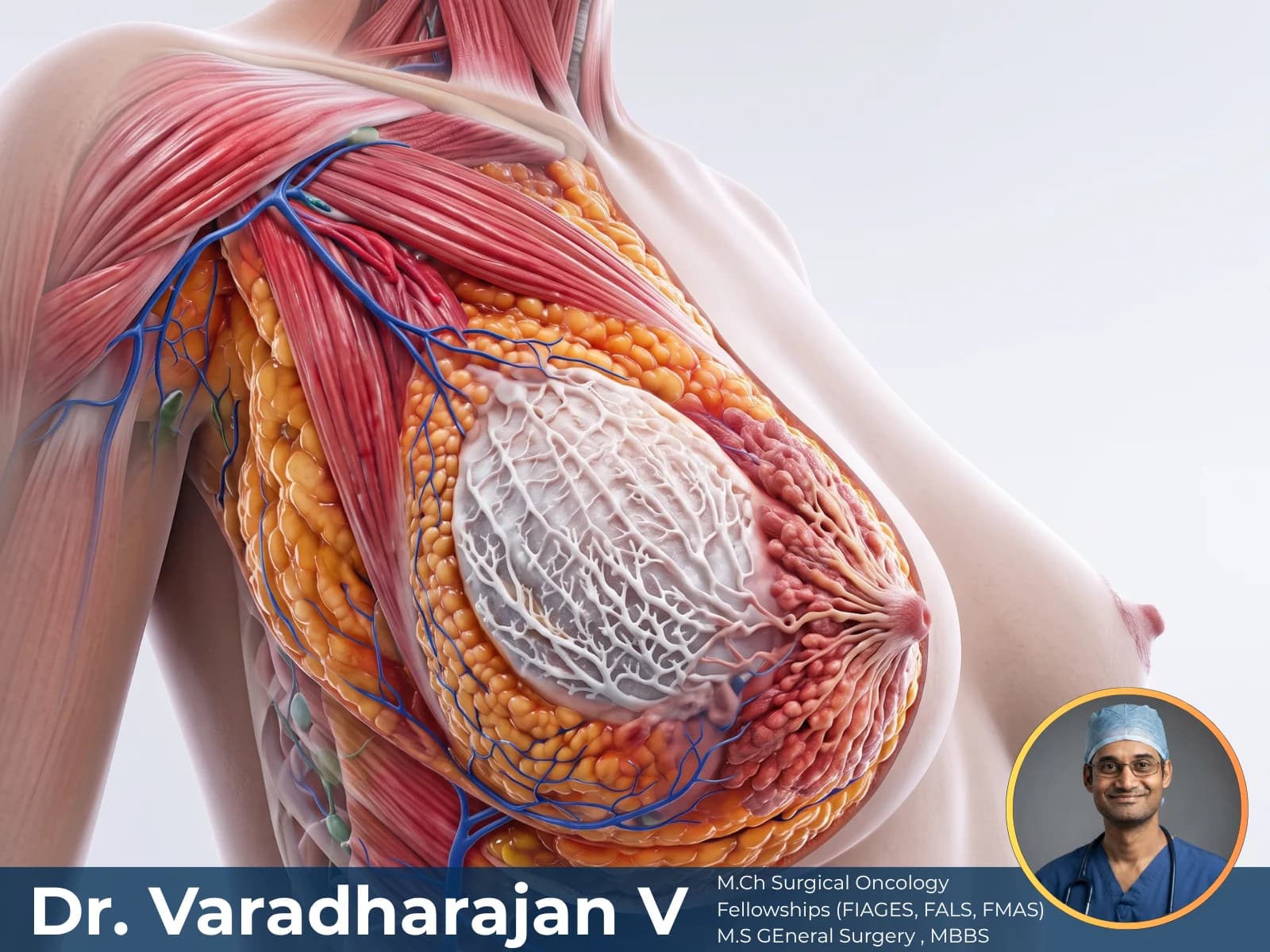
Benign Breast Condition Surgery: Key Facts
- Covers fibroadenomas, cysts and other non-cancerous breast lumps needing removal
- Most excisions are day procedures with a small incision
- Removed tissue is always sent for pathology confirmation
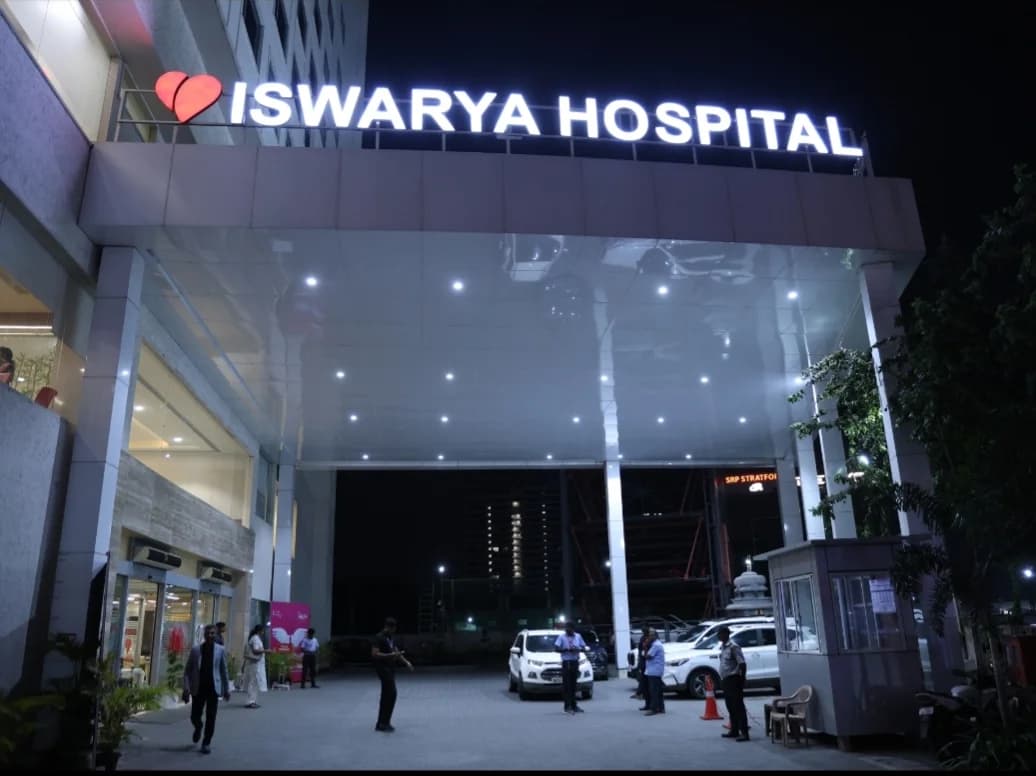
- Performed at Iswarya Hospital, Tharamani, Chennai
- Video consultation available on WhatsApp
Not Every Breast Lump Is Cancer
Most breast lumps and changes that bring women in for a consultation turn out to be benign, meaning they are not cancerous. Conditions like fibroadenomas, cysts, fibrocystic changes, and duct-related issues are common at different life stages and usually treatable with straightforward, low-risk procedures. Even so, any new lump, pain, or nipple discharge deserves a proper clinical examination and imaging rather than being dismissed, because the only way to be certain something is benign is to actually check.
Minimally Invasive Options for Non-Cancerous Conditions
Where a benign lump needs to be removed, whether because it's growing, causing discomfort, or simply for peace of mind, the surgical approach is usually far less involved than cancer surgery. Many fibroadenomas and cysts can be managed with a small incision or even a needle-based procedure, leaving minimal scarring. The aim throughout is to resolve the concern with the least disruption to the breast's natural shape and function, while still sending any removed tissue for pathology to confirm it is indeed benign.
When Watchful Waiting Makes Sense
Removal is not always the right answer. Small, stable fibroadenomas and simple cysts that cause no symptoms can often be observed safely with periodic examination and imaging, avoiding an operation altogether. Surgery tends to be recommended when a lump is enlarging, causing persistent discomfort, producing uncertain biopsy results, or when the patient simply prefers the reassurance of having it taken out. The decision is made together, weighing the small risks of a minor procedure against the value of a definitive answer.
Common Conditions Treated
Benign breast changes seen in regular practice
- Fibroadenomas, the most common solid lump in younger women
- Breast cysts, which are fluid-filled and often simple to drain or remove
- Fibrocystic breast changes causing lumpiness or cyclical pain
- Duct-related conditions such as intraductal papillomas
- Breast abscesses and infections requiring drainage
Who Should Get Evaluated
Signs worth bringing to a specialist
- A new lump that feels different from the surrounding breast tissue
- A lump that is growing or changing over a few menstrual cycles
- Persistent breast pain not clearly tied to the menstrual cycle
- Nipple discharge, especially if bloodstained or from one duct only
- Family history of breast cancer, which may lower the threshold for a biopsy
What Treatment Usually Looks Like
How these conditions are typically managed
- Clinical examination followed by ultrasound or mammogram as appropriate
- Needle biopsy to confirm the nature of a lump before any surgery is planned
- Simple excision under local or short general anaesthesia for most cases
- Cyst aspiration as a same-day, minimally invasive option
- Follow-up imaging to confirm resolution and rule out recurrence
When a Lump Still Needs Checking
Features that lower the threshold for biopsy or removal
- A lump that feels hard or fixed rather than soft and mobile
- Any lump that keeps growing over successive checks
- Blood-stained or persistent single-duct nipple discharge
- Skin dimpling or texture change over the area of a lump
- A strong family history of breast cancer alongside a new lump
What Happens After Removal
The typical course once a benign lump is excised
- Most excisions are day procedures with a small, well-placed incision
- Removed tissue always goes for pathology to confirm the benign diagnosis
- Normal activity usually resumes within a few days
- The scar fades gradually and is often barely noticeable
- Routine follow-up confirms complete resolution
Medically reviewed by Dr. Varadharajan V, Surgical Oncologist (M.Ch Surgical Oncology), Iswarya Hospital, Chennai, Tamil Nadu, India · Tamil Nadu Medical Council Reg. No. 90663 · Last reviewed: September 2026

Frequently Asked Questions
Need answers? Find them here...
No, most breast lumps turn out to be benign conditions such as fibroadenomas, cysts, or fibrocystic change. However, no lump can be confirmed as benign without proper evaluation, so any new lump, persistent pain, or nipple discharge deserves a clinical examination and imaging rather than being assumed harmless.
Not necessarily. Small, stable lumps that cause no symptoms can often be observed safely with periodic examination and imaging. Removal is recommended when a lump is enlarging, causing persistent discomfort, producing uncertain biopsy results, or when you would simply prefer the reassurance of having it taken out.
Usually not. Most benign breast excisions are day procedures done through a small, well-placed incision under local or short general anaesthesia. Normal activity typically resumes within a few days, and the scar fades gradually. The removed tissue is always sent for pathology to confirm the benign diagnosis.
Most benign lumps do not recur after complete excision. The pathology report confirms the diagnosis and that the lump was fully removed, and routine follow-up checks that the area has settled. Any new lump that appears later should still be evaluated on its own merits.
Related Treatments

Breast Cancer Surgeries
Surgical removal of breast tumours with focus on preservation and aesthetics.

Breast Oncoplasty
Combines cancer removal with cosmetic reconstruction for optimal appearance.
Travelling for treatment? See guidance for patients coming from outside Chennai.
This page is general education about benign breast condition surgery and is not personal medical advice. Diagnosis, stage and fitness decide the right treatment for each person. Please consult Dr. Varadharajan V or your own oncologist for advice on your situation. In an emergency, go to the nearest hospital.
Location & Contact
Contact Information
Address
110, Rajiv Gandhi Salai, OMR, Tharamani, Chennai 600041, Tamil Nadu
Working Hours
Mon to Sat, 9:00 AM to 5:00 PM · Sunday closed
Phone
+91 94442 64315Book an Appointment
Online booking is temporarily unavailable. Please call +91 94442 64315 or message us on WhatsApp.