
Gynae, Thoracic & Head-Neck
Gynaecological Malignancies
Surgical care for cancers of the female reproductive system
Book an appointment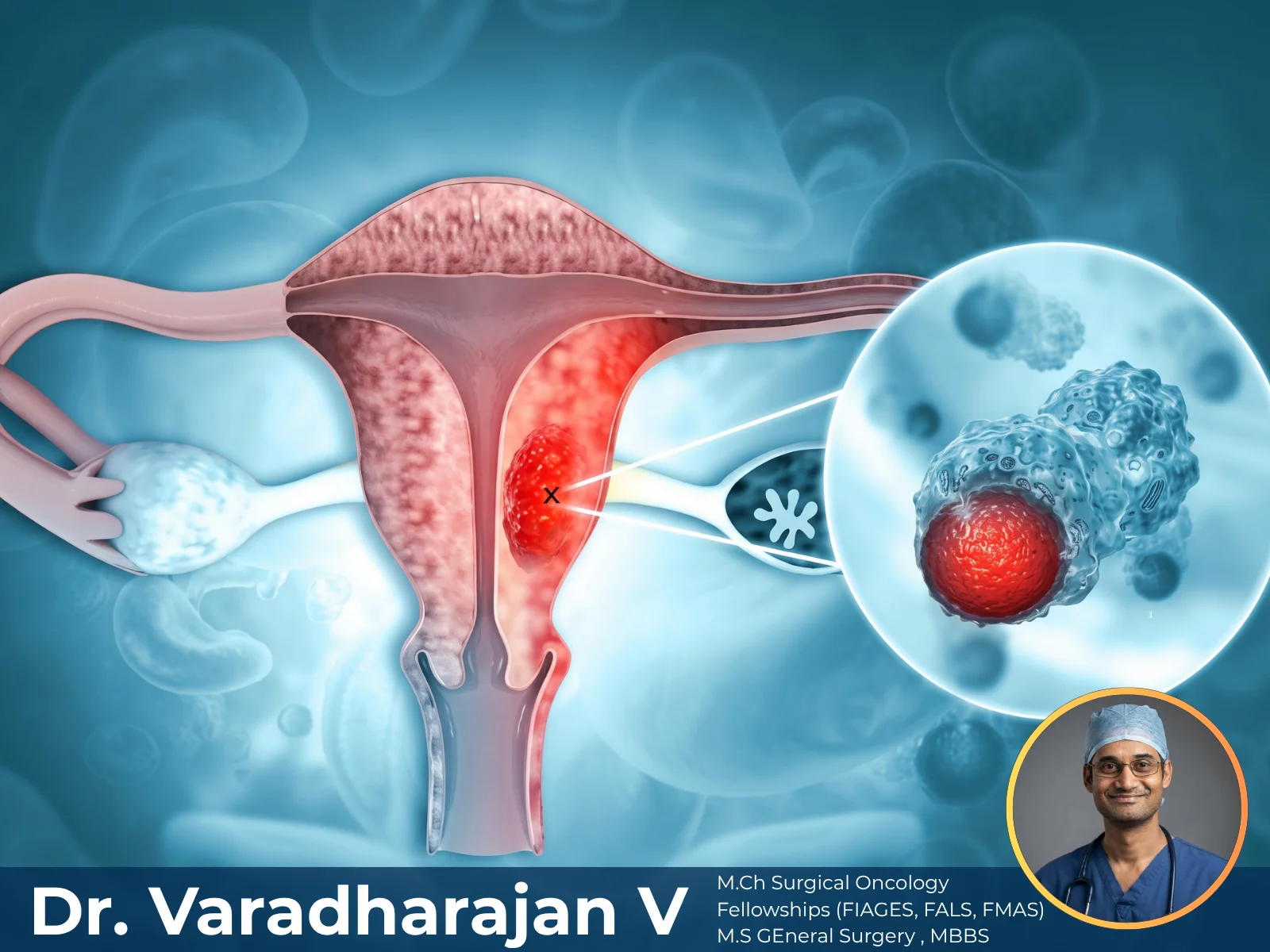
Gynaecological Malignancies: Key Facts
- Surgical treatment of uterine, cervical, ovarian and other gynaecological cancers
- Keyhole staging for suitable early cancers; open cytoreduction for advanced disease
- Fertility-sparing options discussed in selected early cases
- Performed at Iswarya Hospital, Tharamani, Chennai
- Video consultation available on WhatsApp
Cancers That Need a Coordinated, Careful Approach
Gynaecological cancers, including those of the ovary, uterus, cervix, and vulva, often present differently from one another and require different surgical strategies. Ovarian cancer, for instance, is frequently diagnosed at a more advanced stage and may involve extensive surgery to remove disease from multiple areas of the abdomen, while early cervical or uterine cancers can sometimes be treated with more limited, fertility-preserving procedures depending on the stage and the patient's wishes. Getting the diagnosis and staging right before surgery is especially important in this field, since it directly shapes what kind of operation makes sense.
Considering the Whole Patient, Not Just the Cancer
For younger women, especially those who haven't completed their families, fertility preservation is a real consideration that gets discussed openly wherever it's medically appropriate. For others, the priority may be complete surgical clearance, sometimes combined with chemotherapy before or after the operation. Every plan starts with an honest conversation about what the cancer stage allows for, rather than assuming one approach fits everyone.
Minimally Invasive Options in Gynaecological Cancer Surgery
For early-stage uterine and cervical cancers, laparoscopic and robotic techniques allow complete surgical staging, removal of the uterus, and assessment of lymph nodes where needed, through small incisions, with the magnified view proving especially useful in the confined anatomy of the pelvis. Advanced ovarian cancer is a different situation: it often requires open surgery to remove disease thoroughly from multiple areas of the abdomen, and occasionally heated intraperitoneal chemotherapy (HIPEC) in selected cases. The approach is matched to what the stage and spread of disease genuinely demand, not applied uniformly.
Who May Need Gynaecological Cancer Surgery
Surgery is often the first treatment for uterine and cervical cancers found early, and plays a central role in ovarian cancer where removing all visible disease shapes the outcome. The approach differs by stage: early cancers may suit keyhole staging, while advanced ovarian disease usually needs open surgery to clear multiple areas of the abdomen thoroughly.
Cancers Treated
Gynaecological malignancies commonly managed
- Ovarian cancer
- Uterine (endometrial) cancer
- Cervical cancer
- Vulvar cancer
- Peritoneal cancers originating from gynaecological organs
Who Should Seek a Surgical Opinion
Reasons patients are typically referred
- Abnormal vaginal bleeding, especially after menopause
- A pelvic mass identified on ultrasound or CT
- An abnormal Pap smear requiring further evaluation
- A confirmed gynaecological cancer diagnosis needing surgical staging or treatment
- Persistent pelvic pain or bloating that hasn't been explained
What the Treatment Process Involves
How care is usually structured
- Imaging and, where needed, biopsy to confirm diagnosis before surgery
- Surgical staging to determine exactly how far the cancer has spread
- Complete surgical removal of disease where achievable
- Coordination with medical oncology for chemotherapy before or after surgery
- Fertility-preserving options discussed where the stage and patient's wishes allow
Surgical Approaches Used
How operations are matched to the cancer and stage
- Laparoscopic or robotic hysterectomy and staging for early uterine cancer
- Radical surgery for cervical cancer where stage requires it
- Open cytoreductive surgery for advanced ovarian cancer
- Lymph node assessment to establish accurate staging
- Fertility-sparing procedures in carefully selected early cases
What to Expect After Surgery
Recovery following gynaecological cancer surgery
- Shorter hospital stay and quicker recovery after keyhole procedures
- Longer recuperation after extensive open surgery for advanced disease
- The final pathology and staging determine whether chemotherapy follows
- Discussion of hormonal and menopause-related effects where relevant
- Structured follow-up for surveillance and symptom review
Preparing for Gynaecological Cancer Surgery
Steps before the operation
- Scans and biopsy results establish the stage and surgical plan
- Fertility-sparing wishes are discussed before decisions are made
- Anaesthesia assessment and blood tests are completed
- Bowel preparation may be arranged for extensive operations
Recovery and Follow-Up
What to expect after surgery
- Keyhole procedures recover faster than open surgery
- Final pathology and staging decide whether chemotherapy follows
- Menopause-related effects are discussed where ovaries are removed
- Regular reviews continue for surveillance and symptom checks
Questions to Ask Your Surgeon
Worth clarifying at consultation
- Is my cancer suitable for a keyhole operation?
- Will surgery affect fertility or menopause timing?
- Is chemotherapy likely after surgery in my case?
- What surveillance schedule will I follow?
Medically reviewed by Dr. Varadharajan V, Surgical Oncologist (M.Ch Surgical Oncology), Iswarya Hospital, Chennai, Tamil Nadu, India · Tamil Nadu Medical Council Reg. No. 90663 · Last reviewed: September 2026

Frequently Asked Questions
Need answers? Find them here...
Often, yes for early-stage disease. Early uterine and cervical cancers are commonly managed with laparoscopic or robotic hysterectomy and staging through small incisions. Advanced ovarian cancer usually requires open surgery to remove disease thoroughly from multiple areas of the abdomen, the approach is matched to your stage.
It can, which is why fertility preservation is discussed openly wherever it is medically appropriate. In carefully selected early-stage cases, fertility-sparing procedures may be possible. For other stages, complete surgical clearance takes priority, the options are reviewed honestly before any decision is made.
It depends on the final pathology and staging. Some early cancers need nothing further after complete surgical removal; others, particularly ovarian cancer, are followed by chemotherapy. The removed tissue determines the stage, and the stage determines what comes next, decided through multidisciplinary review.
No, abnormal vaginal bleeding has many benign causes. However, bleeding after menopause, or persistent unexplained bleeding, always warrants proper evaluation with examination and imaging. Most women investigated for these symptoms do not have cancer, but checking is the only way to be certain.
Related Treatments

HIPEC
Advanced heated chemotherapy delivered directly during abdominal surgery.

Breast Cancer Surgeries
Surgical removal of breast tumours with focus on preservation and aesthetics.

Surgical Oncology
General surgical oncology care spanning breast, GI, gynaecological, thoracic and peritoneal cancers.
Travelling for treatment? See guidance for patients coming from outside Chennai.
This page is general education about gynaecological malignancies and is not personal medical advice. Diagnosis, stage and fitness decide the right treatment for each person. Please consult Dr. Varadharajan V or your own oncologist for advice on your situation. In an emergency, go to the nearest hospital.
Location & Contact
Contact Information
Address
110, Rajiv Gandhi Salai, OMR, Tharamani, Chennai 600041, Tamil Nadu
Working Hours
Mon to Sat, 9:00 AM to 5:00 PM · Sunday closed
Phone
+91 94442 64315Book an Appointment
Online booking is temporarily unavailable. Please call +91 94442 64315 or message us on WhatsApp.