GI & Abdominal
GI Oncology
Surgical management of stomach, colorectal, liver, and pancreatic cancers
Book an appointment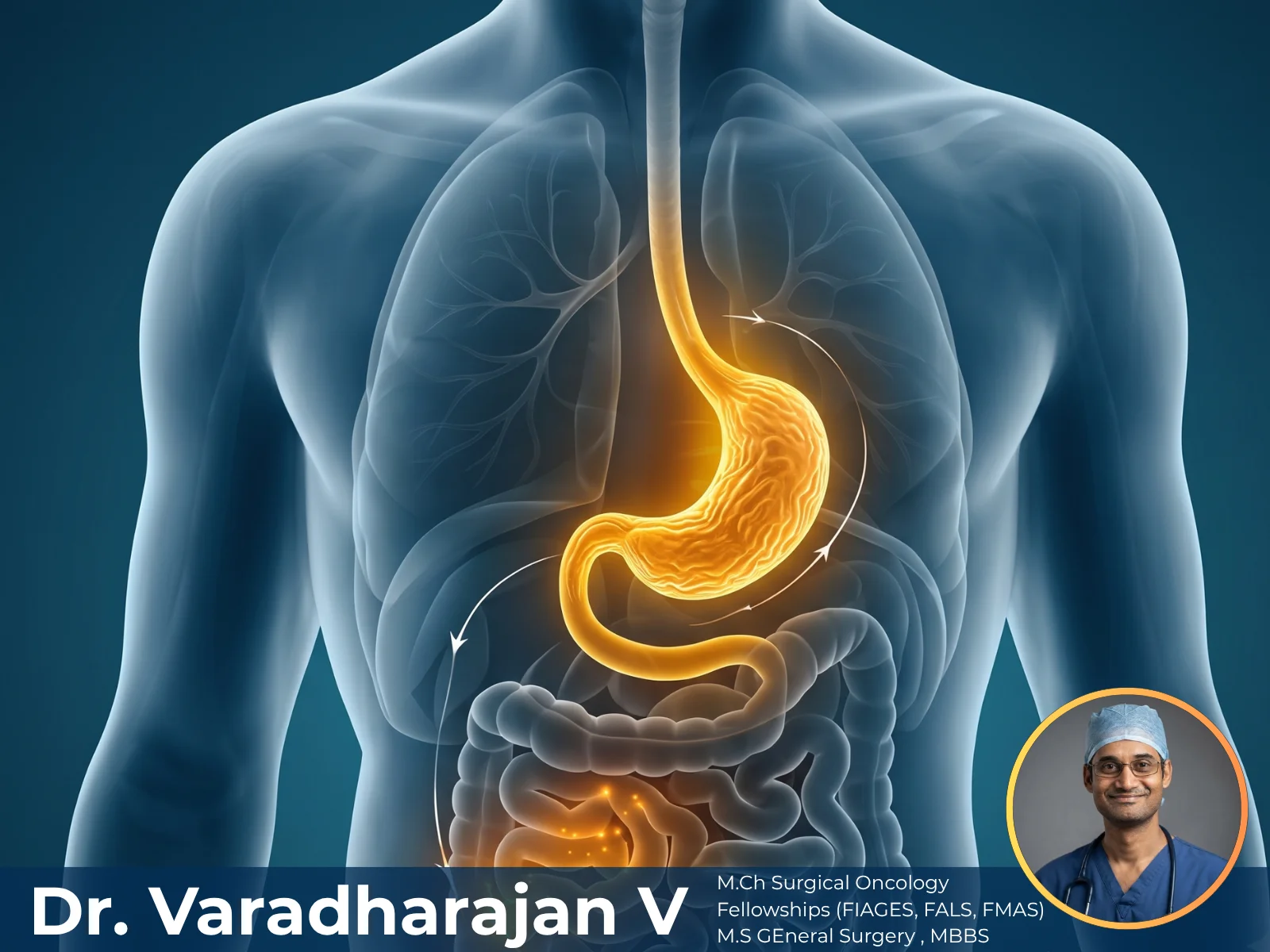
GI Oncology: Key Facts
- Covers stomach, colorectal, liver, pancreatic and other abdominal cancers
- Laparoscopic or robotic approaches are used where they achieve equal clearance
- Decisions are reviewed by a multidisciplinary tumour board
- Performed at Iswarya Hospital, Tharamani, Chennai
- Video consultation available on WhatsApp
A Wide Field Covering Several Organ Systems
GI oncology covers cancers of the stomach, colon, rectum, liver, pancreas, and bile ducts, each with its own patterns of growth, spread, and treatment. What they share is that surgery, when the disease is caught at an operable stage, remains one of the most effective ways to achieve long-term control or cure. Because these organs sit close together and share blood supply, GI cancer surgery often requires careful planning around vessels and adjacent structures, which is why experience with this specific anatomy matters.
Balancing Aggressive Treatment With Recovery
GI cancers are frequently diagnosed at a stage where the tumour is large or has begun to spread locally, which means surgery can be extensive. The goal is always to remove the disease completely while preserving as much normal digestive function as possible, since procedures on the stomach, bowel, or liver directly affect how a patient eats and digests afterward. Where minimally invasive techniques are suitable, they're used to reduce recovery time, but the priority is always a complete and safe cancer removal first.
Minimally Invasive Surgery in GI Cancers
For suitable GI cancers, laparoscopic and robotic techniques allow the same thorough removal through small port incisions instead of a large abdominal cut. The magnified view is particularly useful in GI anatomy, where tumours often sit close to major vessels and neighbouring organs, and robotic instruments add controlled, wristed movement for delicate dissection. Patients who qualify for these approaches typically experience less pain, fewer wound complications, and an earlier return to eating and normal activity, without any compromise in the completeness of the cancer removal.
Who May Need GI Cancer Surgery
Surgery is generally recommended when staging shows the tumour can be removed completely and the patient is fit for a major abdominal operation. Some patients receive chemotherapy first to bring a borderline tumour within reach of surgery. Where disease has spread too widely for surgery to help, medical treatment takes the lead instead, and this is explained openly at consultation.
Cancers and Conditions Treated
GI cancers commonly seen in practice
- Stomach (gastric) cancer
- Colorectal cancer, including colon and rectal tumours
- Liver tumours, both primary and cancers that have spread to the liver
- Pancreatic cancer
- Bile duct and gallbladder cancers
Who Should Seek a Surgical Opinion
Common reasons for referral
- A confirmed GI cancer diagnosis from endoscopy or biopsy
- Unexplained weight loss, persistent abdominal pain, or changes in bowel habit
- Abnormal findings on CT or MRI requiring surgical assessment
- Cancer that has been treated with chemotherapy and is now being reassessed for surgery
- A second opinion on whether a tumour is safely operable
What the Treatment Path Often Involves
How GI cancer care is typically sequenced
- Detailed staging with CT, MRI, or endoscopic ultrasound before any surgery
- Multidisciplinary tumour board review to confirm the treatment order
- Surgery alone, or surgery combined with chemotherapy before or after
- Minimally invasive or robotic techniques where the tumour and anatomy allow
- Structured follow-up to monitor for recurrence after treatment
Advantages of a Minimally Invasive Approach
What keyhole techniques offer GI cancer patients
- Smaller incisions with less postoperative pain
- Lower rates of wound infection and hernia at the incision site
- Earlier return of bowel function and resumption of eating
- Shorter hospital stay and quicker return to daily life
- The same standard of cancer clearance as open surgery
What to Expect After GI Cancer Surgery
The typical recovery path
- Gradual reintroduction of diet as bowel function returns
- Early walking encouraged from the first day after surgery
- The pathology report guides whether further chemotherapy is advised
- Temporary or, rarely, permanent stoma in some bowel operations
- Scheduled scans and blood tests to watch for recurrence
Preparing for GI Surgery
Steps that usually come before the operation
- Staging scans and endoscopy results are reviewed at the tumour board
- Nutrition is optimised before a major abdominal operation
- Bowel preparation is arranged when the colon or rectum is involved
- Stoma possibilities are discussed beforehand where relevant
Recovery and Follow-Up
The usual course after GI cancer surgery
- Diet is reintroduced gradually as bowel function returns
- Walking is encouraged from the first day after surgery
- The pathology report decides whether chemotherapy follows
- Scheduled scans and reviews watch for recurrence
Questions to Ask Your Surgeon
Useful things to clarify at consultation
- Can my operation be done by keyhole surgery?
- Is there any chance I will need a stoma, temporary or permanent?
- How will my eating change during recovery?
- What does the surveillance plan look like after surgery?
Medically reviewed by Dr. Varadharajan V, Surgical Oncologist (M.Ch Surgical Oncology), Iswarya Hospital, Chennai, Tamil Nadu, India · Tamil Nadu Medical Council Reg. No. 90663 · Last reviewed: September 2026

Frequently Asked Questions
Need answers? Find them here...
Many can. For suitable stomach, colorectal, and other GI tumours, laparoscopic or robotic techniques achieve the same thorough removal through small port incisions, with less pain and faster recovery. Larger or more complex tumours may still need open surgery, the decision is based on staging and your specific anatomy.
Detailed staging with CT, MRI, or endoscopic ultrasound maps the tumour and any spread, and a multidisciplinary tumour board reviews the case. Surgery is recommended when complete removal is achievable and would meaningfully improve your outcome, sometimes after chemotherapy first to bring a borderline tumour within reach.
Some bowel operations require a temporary stoma to protect healing, and a small number need a permanent one. Many patients need no stoma at all, it depends on tumour position and how the bowel is rejoined. If a stoma is a possibility for your operation, it is explained and planned for well in advance.
Diet is reintroduced gradually as bowel function returns, usually over days. Surgery aims to preserve as much normal digestive function as possible, and most patients adapt well over the following weeks. Early walking and enhanced recovery protocols support faster bowel recovery after the operation.
Related Treatments

HIPEC
Advanced heated chemotherapy delivered directly during abdominal surgery.

Laparoscopic & Robotic GI Surgery
Minimally invasive cancer surgery using advanced robotic technology.

Retroperitoneal Tumor Surgery
Specialized surgery for tumors located in the retroperitoneal space.
Travelling for treatment? See guidance for patients coming from outside Chennai.
This page is general education about gi oncology and is not personal medical advice. Diagnosis, stage and fitness decide the right treatment for each person. Please consult Dr. Varadharajan V or your own oncologist for advice on your situation. In an emergency, go to the nearest hospital.
Location & Contact
Contact Information
Address
110, Rajiv Gandhi Salai, OMR, Tharamani, Chennai 600041, Tamil Nadu
Working Hours
Mon to Sat, 9:00 AM to 5:00 PM · Sunday closed
Phone
+91 94442 64315Book an Appointment
Online booking is temporarily unavailable. Please call +91 94442 64315 or message us on WhatsApp.