Gynae, Thoracic & Head-Neck
Complex Head & Neck Resection
Advanced resection and microvascular reconstruction preserving function and appearance.
Book an appointment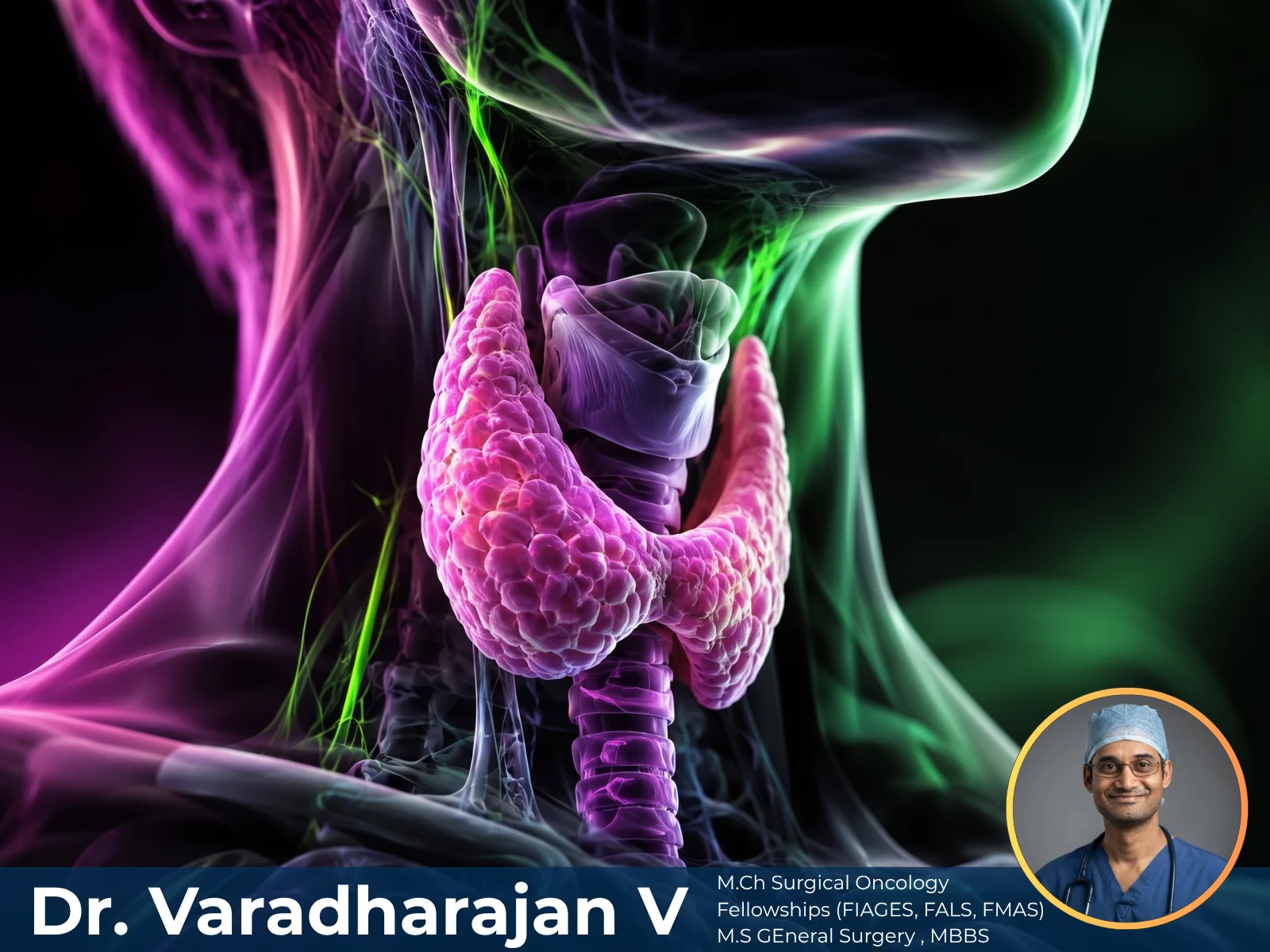
Complex Head & Neck Resection: Key Facts
- Advanced resection of larger head and neck cancers with reconstruction
- Free flap microsurgery rebuilds tissue using the patient's own vessels
- Speech and swallowing rehabilitation begins after surgery
- Performed at Iswarya Hospital, Tharamani, Chennai
- Video consultation available on WhatsApp
Advanced Head & Neck Resection with Reconstruction
Complex Head and Neck Resection with Microvascular Reconstruction involves removing cancerous tumours in critical areas, oral cavity, throat, jaw, or neck, while restoring function and appearance using advanced free-flap techniques. After tumour removal, tissue from the forearm, thigh, or fibula is transferred with its blood vessels and connected to neck vessels using microsurgery. This allows restoration of speech, swallowing, chewing, and facial structure. The procedure is essential for achieving oncologic safety while preserving quality of life, especially in extensive or anatomically challenging head and neck cancers.
Precision Oncologic Resection & Microvascular Free-Flap Surgery
This surgery combines aggressive cancer clearance with delicate reconstructive techniques to rebuild structures affected by tumour removal. Microvascular reconstruction ensures transplanted tissue receives stable blood supply, enabling better healing and long-term function. It is used for cancers affecting the tongue, jawbone, buccal mucosa, larynx, and extensive soft-tissue areas. By integrating oncology and reconstructive expertise, the procedure helps patients regain vital functions like swallowing and speech, supports aesthetics, and reduces long-term disability. It is a cornerstone treatment for large, invasive, or recurrent head and neck tumours.
Functional Reconstruction After Advanced Head & Neck Surgery
This approach focuses on restoring both structure and function after complex tumour removal. Microvascular free-flap reconstruction uses living tissue to rebuild areas critical for breathing, speaking, and eating. Surgeons precisely reconnect tiny arteries and veins to maintain optimal tissue viability. This technique is particularly beneficial after major resections involving the mandible, tongue, or pharynx. The result is improved oncologic outcomes, enhanced functional recovery, and significantly better cosmetic results. Patients experience improved quality of life, reduced complications, and higher long-term satisfaction after comprehensive surgical management.
When Reconstruction Is Part of the Operation
When a tumour removal would leave a defect affecting speech, swallowing or appearance, reconstruction is planned as part of the same operation. Free flap transfer moves living tissue with its own blood supply from the forearm, thigh or lower leg to rebuild what was removed. The flap choice depends on the size and location of the defect, and the surgical plan explains both stages before consent.
Why This Surgery Is Needed
For complete tumour removal with functional restoration.
- Required for large, invasive, or recurrent head and neck cancers
- Ensures safe removal of tumours near critical structures
- Prevents cancer spread to deeper tissues or lymph nodes
- Restores essential functions like swallowing and speech
- Provides better long-term outcomes compared to basic resections
Who Are Suitable Candidates
Patients needing reconstruction after extensive tumour removal.
- Individuals with advanced oral cavity, jaw, tongue, or throat cancers
- Patients requiring mandibulectomy or large soft-tissue resections
- Those needing functional reconstruction for speech or swallowing
- Patients medically fit for microvascular free-flap surgery
- Individuals advised by a multidisciplinary tumour board
Benefits of Microvascular Reconstruction
Superior healing, function, and aesthetics after major surgery.
- Provides living tissue with its own blood supply for stable healing
- Improves speech, swallowing, chewing, and facial structure
- Allows precise anatomical reconstruction for better outcomes
- Minimises long-term disability and improves daily functioning
- Offers more natural appearance and better cosmetic results
Types of Microvascular Flaps Used
Advanced tissue options tailored to defect size and location.
- Radial forearm free flap for tongue and soft tissue reconstruction
- Anterolateral thigh (ALT) flap for large soft-tissue defects
- Fibula flap for jawbone (mandibular) reconstruction
- Scapular/parascapular flap for combined bone and tissue needs
- Jejunal flap in rare cases for complex pharyngeal reconstruction
What to Expect After Surgery
Smooth recovery with specialised rehabilitation support.
- Hospital stay includes close monitoring of blood flow to the flap
- Early rehabilitation for speech and swallowing begins gradually
- Nutrition support may be needed until swallowing improves
- Visible swelling reduces over weeks as healing progresses
- Regular follow-ups ensure optimal flap function and cancer surveillance
Multidisciplinary Care Involved
Complete support from diagnosis to recovery.
- Head and neck surgical oncologists for tumour removal
- Microvascular reconstructive surgeons for precision rebuilding
- Speech and swallowing therapists for rehabilitation
- Nutritionists for maintaining adequate postoperative nutrition
- Medical and radiation oncologists for complementary treatments
Preparing for a Major Resection
Steps before this combined operation
- Scans map the tumour and the tissue needed for reconstruction
- Airway and feeding plans are arranged before surgery
- Donor site vessels are checked when planning a free flap
- Speech and swallowing assessment sets the recovery baseline
Recovery and Follow-Up
After resection with reconstruction
- Flap blood flow is monitored closely in the first days
- Nutrition support continues until swallowing is safe
- Speech and swallowing therapy starts gradually
- Regular reviews track healing, function and surveillance
Questions to Ask Your Surgeon
Important points before consent
- Which reconstruction option is planned for my defect and why?
- How will speech and swallowing recover afterwards?
- How long is the operation and hospital stay likely to be?
- What donor-site effects should I expect?
Medically reviewed by Dr. Varadharajan V, Surgical Oncologist (M.Ch Surgical Oncology), Iswarya Hospital, Chennai, Tamil Nadu, India · Tamil Nadu Medical Council Reg. No. 90663 · Last reviewed: September 2026
Frequently Asked Questions
Need answers? Find them here...
A free flap is living tissue, skin, muscle, or bone, transferred with its own blood vessels from another part of the body to rebuild what tumour removal takes away. Connected to neck vessels using microsurgery, it restores structures critical for speech, swallowing, chewing, and facial appearance after major resections.
Common donor sites include the forearm (for tongue and soft tissue), the thigh (ALT flap for larger soft-tissue defects), the fibula (for jawbone reconstruction), and the scapular region for combined bone and tissue needs. The flap is chosen based on the size and location of the defect being rebuilt.
Hospital recovery includes close monitoring of blood flow to the flap in the early days, with speech and swallowing rehabilitation beginning gradually. Nutrition support may be needed until swallowing improves, and swelling reduces over weeks. Regular follow-ups track flap function and provide cancer surveillance.
Microvascular reconstruction aims for the most natural appearance and function achievable, it uses living tissue precisely matched to the defect, giving considerably better cosmetic and functional results than basic repair. Complete invisibility of surgery is not always possible, but the goal is a return to normal social life.
Related Treatments

Head and Neck Cancer
Surgical treatment for oral, throat, thyroid, and neck cancers, from early-stage to advanced disease.

Surgical Oncology
General surgical oncology care spanning breast, GI, gynaecological, thoracic and peritoneal cancers.
Travelling for treatment? See guidance for patients coming from outside Chennai.
This page is general education about complex head & neck resection and is not personal medical advice. Diagnosis, stage and fitness decide the right treatment for each person. Please consult Dr. Varadharajan V or your own oncologist for advice on your situation. In an emergency, go to the nearest hospital.
Location & Contact
Contact Information
Address
110, Rajiv Gandhi Salai, OMR, Tharamani, Chennai 600041, Tamil Nadu
Working Hours
Mon to Sat, 9:00 AM to 5:00 PM · Sunday closed
Phone
+91 94442 64315Book an Appointment
Online booking is temporarily unavailable. Please call +91 94442 64315 or message us on WhatsApp.