
Cancer Surgery Blog
Medically reviewed guides on cancer surgery, screening and recovery, written by Dr. Varadharajan V, Surgical Oncology at Iswarya Hospital, Chennai. Each cluster starts with a complete guide followed by focused articles.
GI Cancer Surgery

Complete guide
GI Cancer Surgery: Types, Treatment & Recovery
GI cancer surgery covers operations for esophageal, stomach, colon and rectal cancers. Learn how procedures are planned, the main types and recovery.

GI Cancer Surgery
Esophageal Cancer Surgery: Procedure and Recovery
Esophagectomy removes part of the food pipe and rebuilds it using the stomach. Learn who needs it, how it is done, what recovery involves and how eating.
GI Cancer Surgery
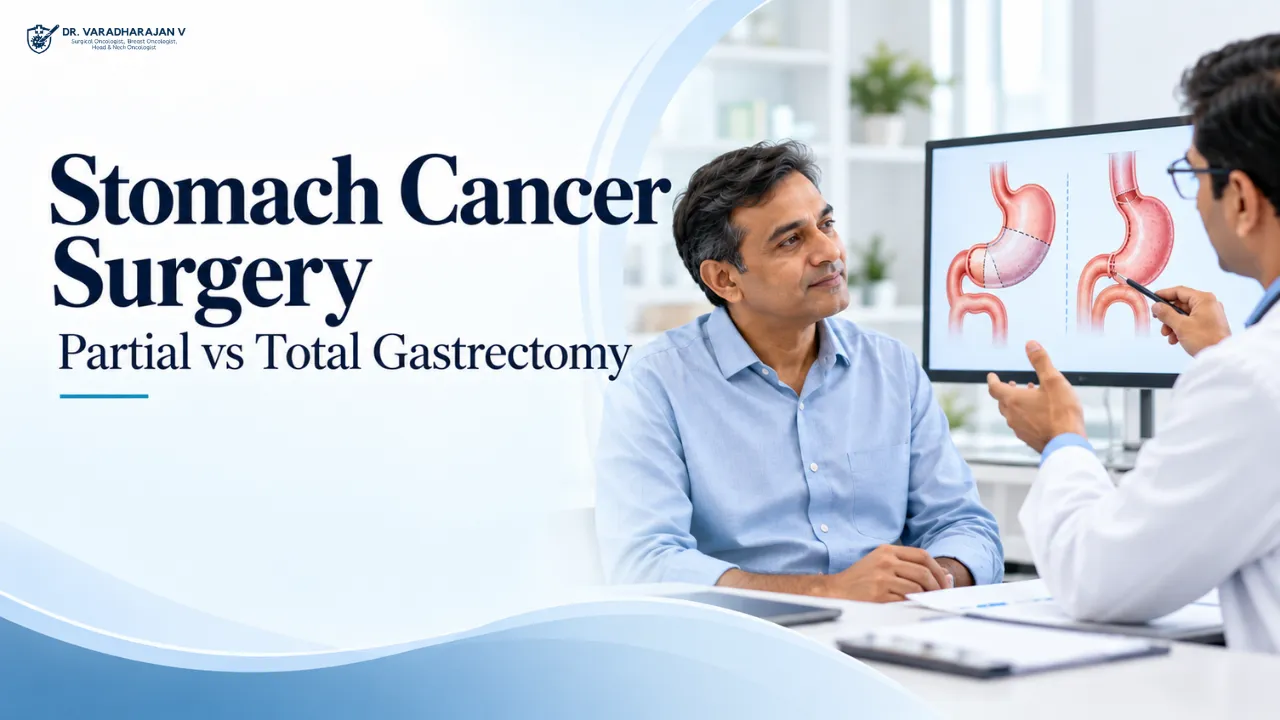
Stomach Cancer Surgery: Partial vs Total Gastrectomy
Gastrectomy removes part or all of the stomach to treat cancer. Learn how surgeons choose between partial and total gastrectomy, what recovery involves.

GI Cancer Surgery
Whipple Procedure for Pancreatic Cancer: What to Know
The Whipple procedure removes the head of the pancreas and nearby organs to treat certain cancers. Learn who needs it, how it is done, the risks.

GI Cancer Surgery
Liver Resection for Cancer: Who Is a Candidate?
Liver resection removes part of the liver to treat primary liver cancer or cancer that has spread there. Learn who qualifies, how the liver regrows.

GI Cancer Surgery
Eating After GI Cancer Surgery: A Practical Guide
After GI cancer surgery, eating habits often need to change. Learn how to restart food safely, manage common problems like bloating or dumping.
Breast Cancer & Oncoplastic Surgery

Complete guide
Breast Cancer & Oncoplastic Surgery: What to Know
Breast cancer surgery and oncoplastic techniques explained: lumpectomy, mastectomy, reshaping options, who is a candidate, recovery and questions to ask.

Breast Cancer & Oncoplastic Surgery
Lumpectomy vs Mastectomy: How to Decide
Lumpectomy saves the breast while mastectomy removes it. Learn how tumour size, genetics, radiation and personal preference shape the choice.

Breast Cancer & Oncoplastic Surgery
What Is Oncoplastic Breast Surgery?
Oncoplastic surgery combines cancer removal with plastic surgery techniques to preserve breast shape. Learn how it works, who may benefit and what results to.

Breast Cancer & Oncoplastic Surgery
Sentinel Lymph Node Biopsy in Breast Cancer
Sentinel node biopsy checks whether breast cancer has spread to the armpit by removing only the first few nodes. Learn how it works and why it lowers.

Breast Cancer & Oncoplastic Surgery
Breast Lump: When to Worry and Which Tests Help
Most breast lumps are not cancer, but every new lump should be checked. Learn the warning signs, common harmless causes and the tests doctors use to find the.

Breast Cancer & Oncoplastic Surgery
Recovery After Breast Cancer Surgery and Lymphedema
Recovery after breast cancer surgery involves wound care, drains, arm exercises and watching for lymphedema. Learn what to expect week by week.
Gynecological Oncology

Complete guide
Gynecological Oncology: Cancers, Treatment & Surgery
Gynecological oncology covers cancers of the cervix, uterus, ovaries, vagina and vulva. Learn how surgery, staging and fertility preservation are planned.

Gynecological Oncology
Ovarian Cancer Symptoms Women Often Miss
Ovarian cancer often causes vague symptoms like bloating and early fullness. Learn the warning signs that persist, who is at higher risk and which tests help.

Gynecological Oncology
Cervical Cancer Stages and Treatment Options
Cervical cancer treatment depends on stage, from minor surgery for early disease to chemoradiation for advanced cancer. Learn the stages, options.

Gynecological Oncology
Endometrial Cancer: Warning Signs and Surgery
Endometrial cancer often shows early through abnormal bleeding, especially after menopause. Learn the warning signs, risk factors, tests and how surgery is.

Gynecological Oncology
Radical Hysterectomy: What It Involves and Recovery
Radical hysterectomy removes the uterus, cervix, surrounding tissue and upper vagina to treat early cervical cancer. Learn how it differs from simple.

Gynecological Oncology
Postmenopausal Bleeding: When Is It a Warning Sign?
Any vaginal bleeding after menopause needs medical attention. Learn the common causes, why cancer must be ruled out and which tests doctors use to find the.
Head & Neck Cancer Surgery

Complete guide
Head & Neck Cancer Surgery: Types, Treatment & Recovery
Head and neck cancer surgery covers oral, tongue, throat, laryngeal and thyroid cancers. Learn about neck dissection, reconstruction and recovery.

Head & Neck Cancer Surgery
Mouth Cancer Early Signs You Should Not Ignore
Mouth cancer often starts as a non-healing ulcer or white or red patch. Learn the early signs, high-risk habits and why any mouth sore lasting more than two.

Head & Neck Cancer Surgery
Tobacco, Gutka and Head and Neck Cancer Risk
Tobacco in any form, including gutka, khaini and areca nut, sharply raises head and neck cancer risk. Learn how it damages tissue, warning signs.

Head & Neck Cancer Surgery
Thyroid Cancer Surgery: Types and Recovery
Thyroid cancer is often treated with surgery to remove part or all of the thyroid. Learn about lobectomy vs total thyroidectomy, risks to voice and calcium.

Head & Neck Cancer Surgery
Neck Dissection: Why Lymph Nodes Are Removed
Neck dissection removes lymph nodes in the neck to treat or prevent cancer spread. Learn the types, why it is done, possible effects on shoulder movement.

Head & Neck Cancer Surgery
Speech and Swallowing After Head and Neck Surgery
Head and neck cancer surgery can affect speech and swallowing. Learn why changes happen, how speech and swallow therapy helps and what to expect during.
CRS & HIPEC

Complete guide
CRS & HIPEC: Procedure, Benefits, Risks & Recovery
CRS and HIPEC combine cytoreductive surgery with heated chemotherapy inside the abdomen. Learn who qualifies, what the PCI score means and recovery.
CRS & HIPEC
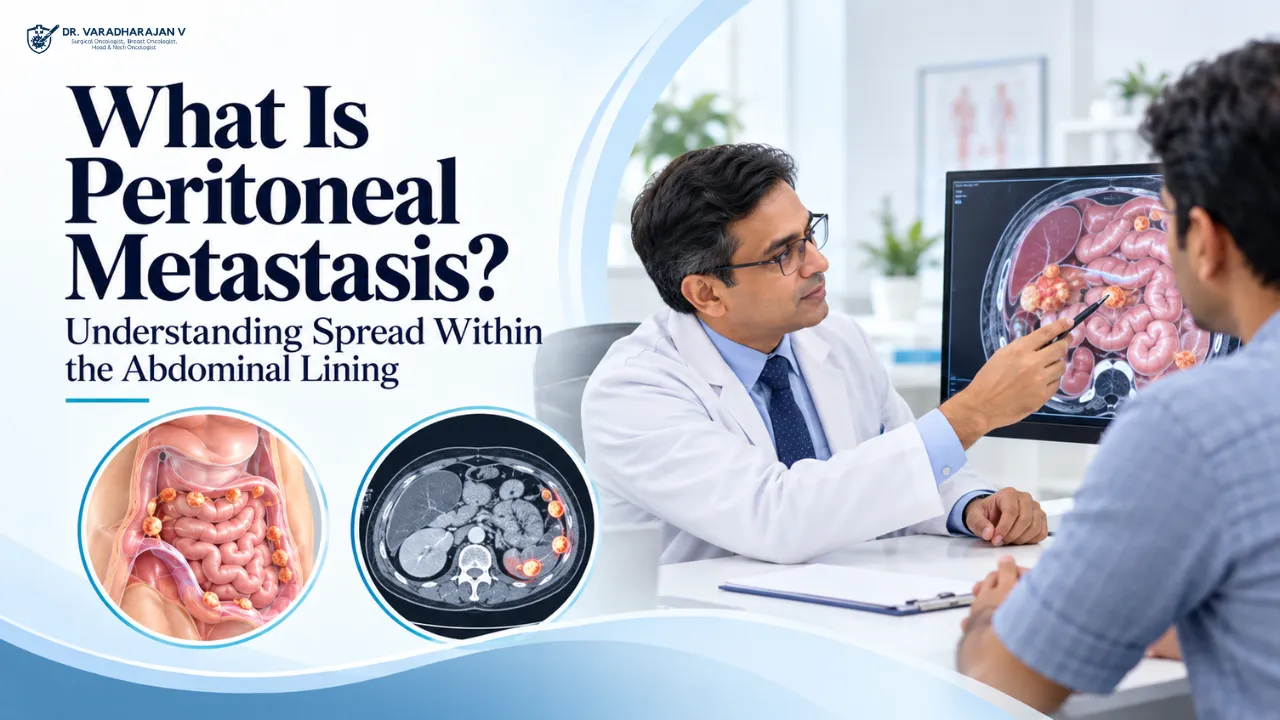
What Is Peritoneal Metastasis?
Peritoneal metastasis is cancer spread to the lining of the abdomen. Learn which cancers cause it, common symptoms, how it is diagnosed and when CRS.

CRS & HIPEC
Who Is a Candidate for CRS and HIPEC?
CRS and HIPEC can help selected patients with cancer spread to the abdominal lining. Learn the key criteria, which cancers respond best and why careful.
CRS & HIPEC
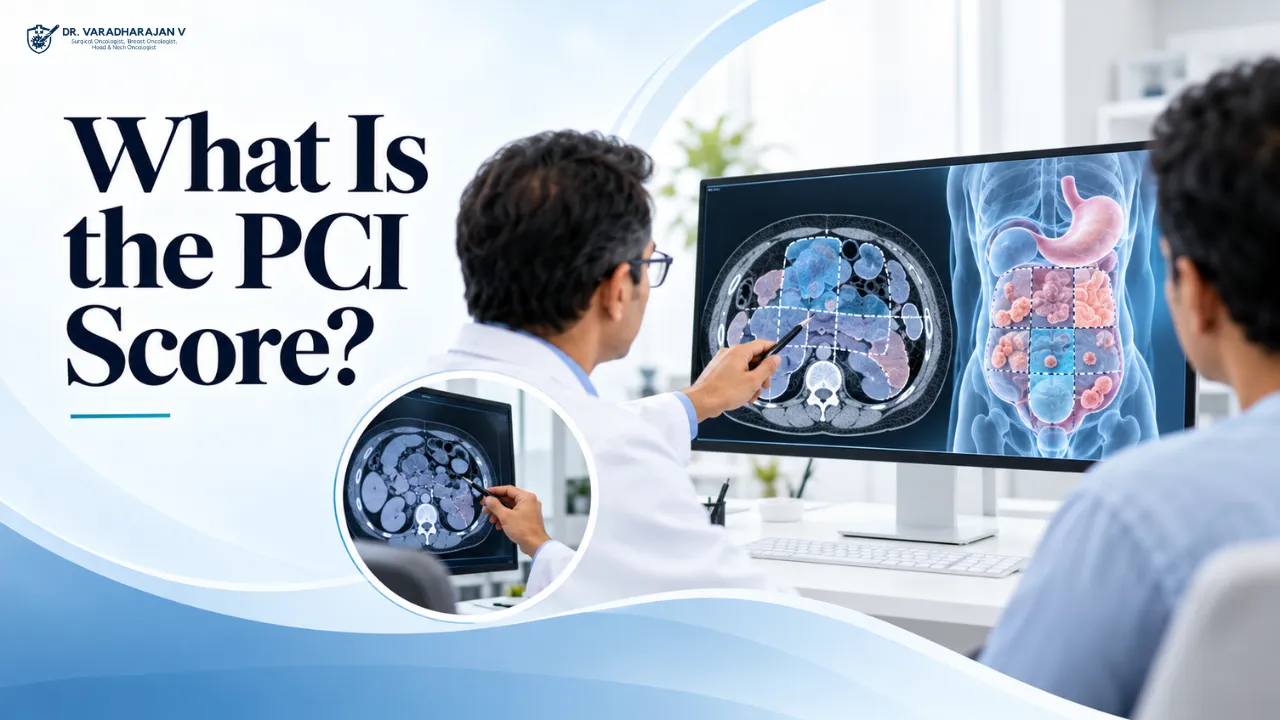
What Is the PCI Score in Peritoneal Cancer?
The Peritoneal Cancer Index (PCI) scores how much cancer has spread in the abdomen. Learn how it is calculated, what the numbers mean and how it guides CRS.

CRS & HIPEC
Pseudomyxoma Peritonei: Symptoms and Treatment
Pseudomyxoma peritonei is a rare condition where jelly-like mucus fills the abdomen, often from an appendix tumour. Learn the symptoms, diagnosis.

CRS & HIPEC
Recovery After CRS and HIPEC: What to Expect
Recovery after CRS and HIPEC takes time. Learn what to expect in the ICU, on the ward and at home, common side effects and practical tips to regain strength.
Minimally Invasive & Laparoscopic Oncology

Complete guide
Minimally Invasive & Laparoscopic Oncology: Benefits, Procedures, Recovery & Suitability
Laparoscopic and robotic cancer surgery use small incisions for selected operations. Learn the benefits, limits, safety and how surgeons choose the approach.

Minimally Invasive & Laparoscopic Oncology
Laparoscopic vs Open Cancer Surgery: Key Differences
Laparoscopic cancer surgery uses small cuts and a camera, while open surgery uses one larger incision. Learn the benefits, limits and how surgeons choose the.

Minimally Invasive & Laparoscopic Oncology
Robotic Cancer Surgery: Benefits and Limits
Robotic surgery gives surgeons 3D vision and precise instruments for complex cancer operations. Learn how it works, where it helps most, its limits.

Minimally Invasive & Laparoscopic Oncology
Is Laparoscopic Surgery Safe for Cancer?
Laparoscopic surgery is safe and effective for many cancers when done by trained surgeons. Learn what research shows, common concerns like tumour spread.
Minimally Invasive & Laparoscopic Oncology
Staging Laparoscopy: Why It Is Done in Cancer Care
Staging laparoscopy uses a small camera to look inside the abdomen for hidden cancer spread that scans may miss. Learn why it is done, how it works.

Minimally Invasive & Laparoscopic Oncology
Recovery After Laparoscopic Cancer Surgery
Recovery after laparoscopic cancer surgery is often faster than open surgery. Learn what to expect in hospital and at home, how to manage pain.
Colorectal Cancer

Complete guide
Colorectal Cancer: Symptoms, Stages, Treatment & Surgery
Colorectal cancer symptoms, staging and surgery explained: colonoscopy, stoma questions, laparoscopic options and what recovery and follow-up involve.
Colorectal Cancer
Blood in Stool: Piles or Colorectal Cancer?
Blood in stool is often due to piles, but it can also be a sign of colorectal cancer. Learn the differences, red flag symptoms and when a colonoscopy is needed.

Colorectal Cancer
Colonoscopy: Preparation and What to Expect
Colonoscopy examines the whole colon and can find and remove polyps. Learn how to prepare, what happens during the test, sedation, recovery.

Colorectal Cancer
Living With a Colostomy or Ileostomy
A stoma can feel overwhelming at first, but most people adapt well. Learn the difference between colostomy and ileostomy, daily care, diet tips.

Colorectal Cancer
Rectal Cancer: Sphincter-Saving Surgery Explained
Sphincter-saving surgery removes rectal cancer while keeping the anal muscles, avoiding a permanent stoma for many patients. Learn who qualifies and what to.

Colorectal Cancer
Colorectal Cancer in Young Adults: Signs Not to Ignore
Colorectal cancer is rising in people under 50. Learn the warning signs young adults often dismiss, possible risk factors and why persistent symptoms need.
Advanced Cancer Surgery

Complete guide
Advanced Cancer Surgery: What Patients Should Know
Advanced cancer surgery treats large or complex tumours needing specialised planning. Learn how surgeons decide, what a tumour board does and recovery.

Advanced Cancer Surgery
Can Stage 4 Cancer Be Operated On?
Surgery is sometimes possible in stage 4 cancer, especially with limited spread. Learn when it may help, what oligometastatic disease means.

Advanced Cancer Surgery
Neoadjuvant Chemotherapy: Why Treatment Comes Before Surgery
Neoadjuvant chemotherapy is given before surgery to shrink tumours and treat hidden spread. Learn why it is used, which cancers benefit and how it affects.

Advanced Cancer Surgery
What Is a Tumour Board and How Does It Help You?
A tumour board is a meeting where cancer specialists review your case together to plan the best treatment. Learn who attends, what they discuss.

Advanced Cancer Surgery
Palliative Surgery: Goals and Expectations
Palliative surgery aims to relieve symptoms and improve quality of life in advanced cancer, not to cure it. Learn when it is used, common procedures.

Advanced Cancer Surgery
Recurrent Cancer: Is Surgery an Option?
Surgery may still be possible when cancer comes back, especially if the recurrence is limited. Learn when repeat surgery helps, what tests are needed.
Cancer Screening & Early Detection

Complete guide
Cancer Screening & Early Detection: What You Should Know
Cancer screening finds selected cancers before symptoms appear. Learn which tests exist, who needs earlier checks and what an abnormal result means.

Cancer Screening & Early Detection
Breast Cancer Screening: Self-Exam and Mammogram
Breast cancer screening helps detect cancer early when treatment works best. Learn about breast self-awareness, clinical exams, mammograms, when to start.

Cancer Screening & Early Detection
Pap Smear and HPV Test: Cervical Cancer Screening
Pap smears and HPV tests can find cervical changes before they become cancer. Learn how they work, when to start, how often to test and what abnormal results.

Cancer Screening & Early Detection
Oral Cancer Screening: Who Needs It and How It Works
Oral cancer screening is a quick mouth examination that can find early cancer and pre-cancerous patches. Learn who should be screened, how it is done.

Cancer Screening & Early Detection
Colorectal Cancer Screening Options Explained
Colorectal cancer screening can find polyps before they turn into cancer. Learn about stool tests, colonoscopy and CT colonography, when to start.

Cancer Screening & Early Detection
Tumour Markers: What They Can and Cannot Tell You
Tumour markers like CEA, CA-125 and PSA can help monitor cancer, but they are not reliable for diagnosing it alone. Learn how they are used.
Recovery & Survivorship

Complete guide
Post Surgery Recovery & Cancer Survivorship: What Patients Should Know
Recovery after cancer surgery and long-term survivorship explained: timelines, wound care, nutrition, follow-up schedules and warning signs to report.

Recovery & Survivorship
How Long Does Recovery Take After Cancer Surgery?
Recovery after cancer surgery ranges from days to months depending on the operation. Learn typical timelines, what affects healing and how to support a.

Recovery & Survivorship
Warning Signs After Cancer Surgery: When to Call
Some symptoms after cancer surgery are expected, while others need urgent attention. Learn the warning signs of infection, leaks, clots and bleeding.

Recovery & Survivorship
Cancer Follow-Up Schedule After Surgery
Regular follow-up after cancer surgery helps detect recurrence early and manage long-term effects. Learn typical schedules, which tests are done.

Recovery & Survivorship
Nutrition During Cancer Recovery: What Helps
Good nutrition helps the body heal after cancer surgery and treatment. Learn which foods support recovery, how to handle appetite loss and when supplements.

Recovery & Survivorship
Returning to Work and Exercise After Cancer Surgery
Returning to work and exercise after cancer surgery is an important step in recovery. Learn when it is usually safe, how to build up gradually.