
Skip to content

Head & Neck Cancer Surgery

Speech and Swallowing After Head and Neck Surgery

Written by Dr. Varadharajan V, Surgical Oncologist, Chennai

Published · Updated · Medically reviewed by Dr. Varadharajan V · Last reviewed: · 4 min read

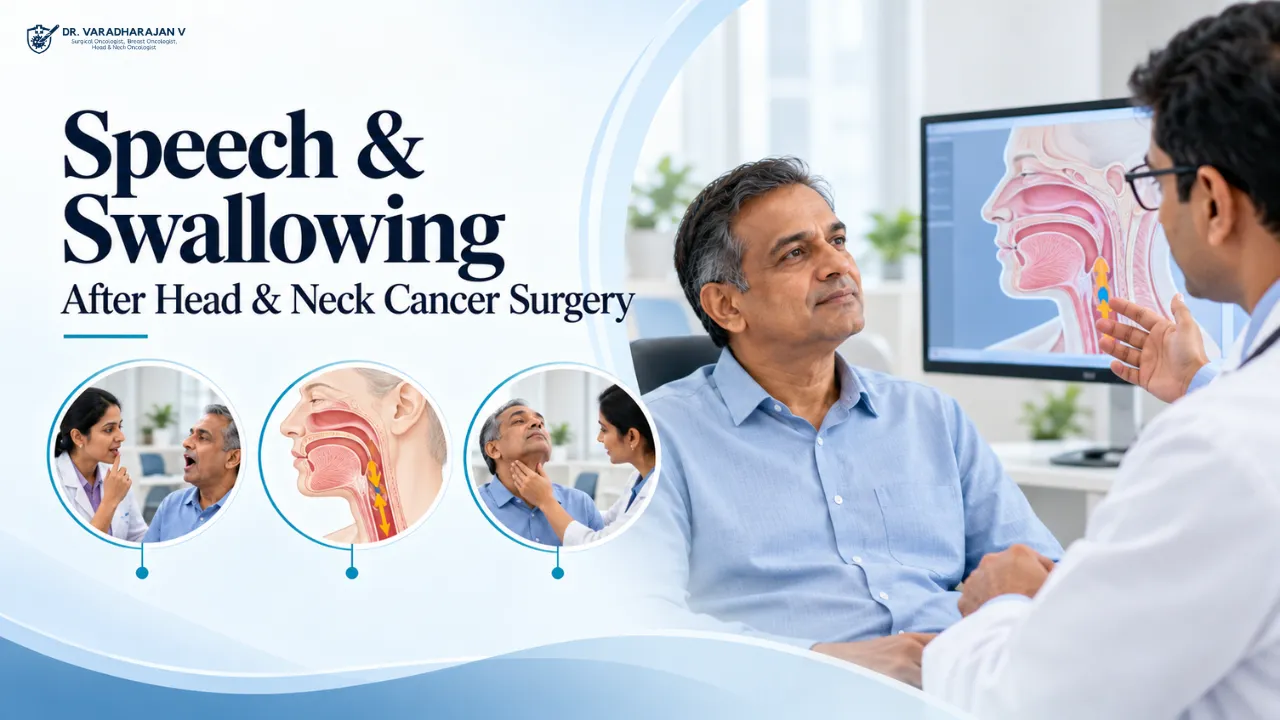
Therapist guiding a patient through swallowing exercises in rehabilitation

Quick Answer

Speech and swallowing may change because muscles, nerves or tissues involved in these functions are removed or reconstructed. A speech and swallowing therapist assesses your ability, teaches exercises and safe swallowing techniques, and adjusts food textures. Some people need a temporary feeding tube. Starting therapy early improves recovery.

Surgery for cancers of the mouth, tongue, throat or voice box can affect how you speak and swallow. Changes depend on which area is treated, how much tissue is removed and whether radiation follows. With speech and swallowing therapy, most people improve significantly over weeks to months and return to eating and communicating comfortably.

Why Do Changes Happen?

  • Removal of part of the tongue, palate, jaw or throat
  • Swelling after surgery
  • Nerve changes affecting muscle control
  • Reconstruction with tissue flaps that move differently
  • Radiation causing stiffness and dryness
  • Tracheostomy affecting airflow for speech

Common Speech Changes

  • Slurred or unclear words
  • Nasal-sounding voice
  • Hoarseness
  • Reduced loudness
  • Difficulty with certain sounds

Common Swallowing Changes

  • Difficulty moving food in the mouth
  • Food sticking in the throat
  • Coughing or choking while eating
  • Food or liquid going into the airway (aspiration)
  • Dry mouth after radiation

How Does Therapy Help?

Assessment

A speech and swallowing therapist checks muscle strength, movement and swallowing safety. Tests such as video fluoroscopy or endoscopic swallow studies may be used.

Exercises

Tongue, jaw, lip and throat exercises strengthen muscles and improve range of motion.

Swallowing strategies

Head positions, small bites, double swallows and slow eating improve safety.

Diet changes

Food textures may start as liquids or purees and progress to soft and regular foods.

Speech practice

Exercises improve clarity and voice strength.

Feeding Tubes

Some people need a temporary nasogastric tube or a feeding tube in the stomach to maintain nutrition while healing. Most can return to oral eating as swallowing improves.

Living With Changes

  • Practise exercises daily
  • Keep the mouth moist with water and saliva substitutes
  • Maintain oral hygiene
  • Eat in a calm environment
  • Join support groups if available

When to Seek Help

  • Frequent coughing or choking during meals
  • Chest infections or fever
  • Weight loss
  • Difficulty being understood

Key Takeaways

  • Surgery can affect speech and swallowing.
  • Changes depend on the area treated.
  • Therapy improves function significantly.
  • Diet textures may need adjustment.
  • Early rehabilitation gives the best results.

Final Thoughts

Speech and swallowing changes can feel overwhelming at first, but steady therapy brings real progress. You are not alone in this recovery. For head and neck cancer surgery and rehabilitation planning, you can consult Dr. Varadharajan, a surgical oncologist in Chennai.
Discuss this with a specialist

If you or a family member is dealing with head & neck cancer surgery, the safest next step is a personal evaluation. Book an appointment with Dr. Varadharajan to review your reports and options.

Find the clinic location, hours and directions at Iswarya Hospital, Tharamani, Chennai.

Frequently Asked Questions

Need answers? Find them here...

Part of the Head & Neck Cancer Surgery guide

This article is part of our complete Head & Neck Cancer Surgery guide, linked above, which explains the bigger picture and every related topic.

Related reading

About the Author

Dr. Varadharajan V, Surgical Oncology

Dr. Varadharajan V

Surgical Oncologist, Breast Oncologist, Head & Neck Oncologist

M.Ch Surgical Oncology, FIAGES, FALS, FMAS, M.S General Surgery, MBBS

Iswarya Hospital, Chennai

Dr. Varadharajan V is a highly trained Surgical Oncologist committed to delivering ethical, patient-centric, and evidence-based cancer care. With strong academic credentials and extensive hands-on experience across multiple oncological subspecialties, he is skilled in managing a wide spectrum of malignancies, including breast, gastrointestinal, gynecologic, and peritoneal surface cancers. His clinical foundation comes from institutions such as Sri Ramachandra Institute of Higher Education and Gleneagles Global Health City, where he has served in senior oncology roles.

Seek urgent medical care for severe bleeding, fever above 100.4 F, breathing difficulty, chest pain, uncontrolled vomiting, a wound that opens or leaks, or any sudden worsening after surgery.

This article is general medical information only. It is not a diagnosis and does not replace a consultation with your own oncologist or with Dr. Varadharajan V. Diagnosis, stage and fitness decide the right treatment for each person. In an emergency, go to the nearest hospital.

Location & Contact

Contact Information

Address

110, Rajiv Gandhi Salai, OMR, Tharamani, Chennai 600041, Tamil Nadu

Working Hours

Mon to Sat, 9:00 AM to 5:00 PM · Sunday closed

Book an Appointment

Online booking is temporarily unavailable. Please call +91 94442 64315 or message us on WhatsApp.

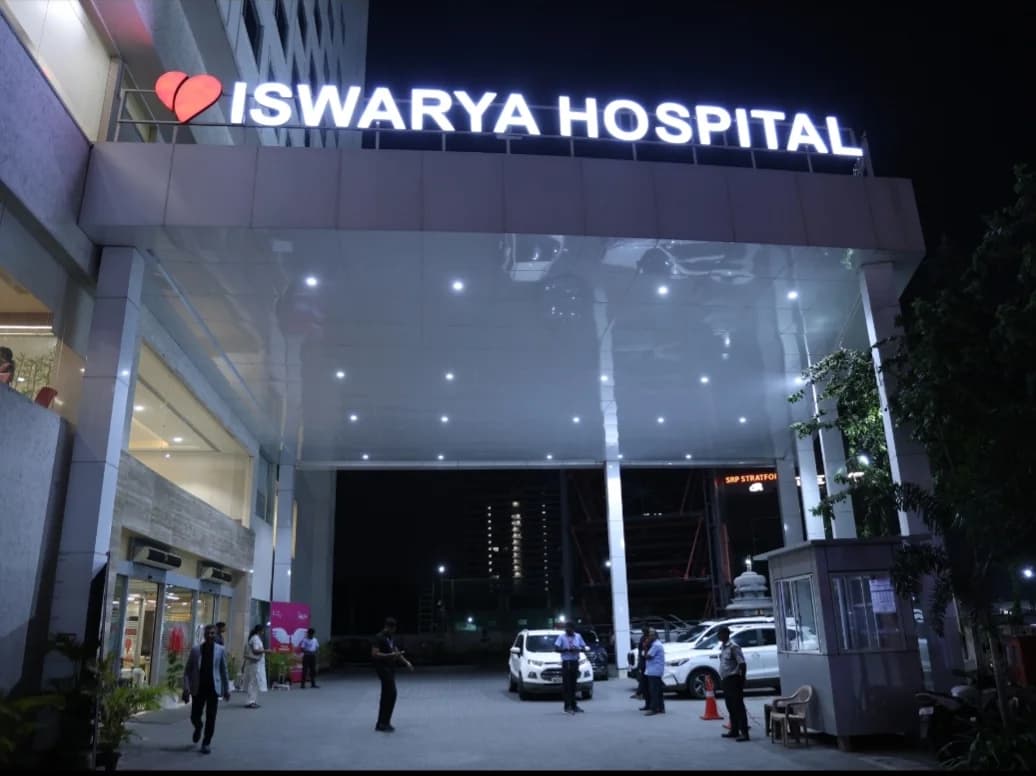
Iswarya Hospital exterior, OMR, Chennai
Book NowCall NowWhatsApp