
Skip to content

Head & Neck Cancer Surgery

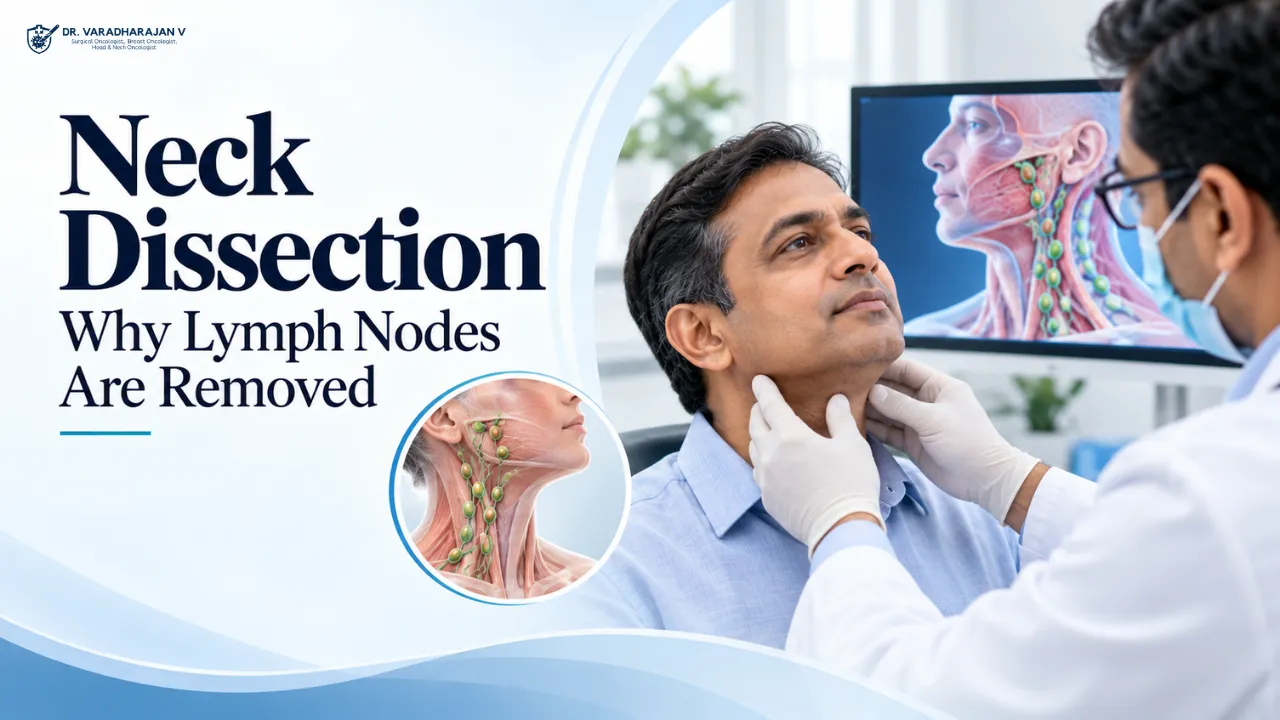
Neck Dissection: Why Lymph Nodes Are Removed

Written by Dr. Varadharajan V, Surgical Oncologist, Chennai

Published · Updated · Medically reviewed by Dr. Varadharajan V · Last reviewed: · 4 min read

Patient doing shoulder rotation exercises with a physiotherapist

Quick Answer

Neck dissection is done to treat cancer that has spread to neck nodes (therapeutic) or to remove nodes at high risk of hidden spread (elective). It helps with staging and guides further treatment such as radiation. Types range from selective dissection, which removes certain node groups, to more extensive dissection. Recovery usually takes a few weeks, with physiotherapy for shoulder movement.

A neck dissection is surgery to remove lymph nodes and surrounding tissue from the neck. It is commonly done for head and neck cancers, such as mouth, throat, voice box and thyroid cancer, because these cancers often spread to neck lymph nodes first. It may be done to remove known cancer spread or to remove nodes that might contain hidden cancer cells.

Why Is It Done?

  • To remove lymph nodes with known cancer
  • To remove nodes that may contain microscopic cancer
  • To stage the cancer accurately
  • To decide whether radiation or chemotherapy is needed

Types of Neck Dissection

Selective neck dissection

Removes specific groups of lymph nodes most at risk. Important nerves, muscles and veins are preserved.

Modified radical neck dissection

Removes all lymph node groups on one side, preserving one or more important structures.

Radical neck dissection

Removes all lymph nodes plus certain muscles, a major vein and a nerve. Used less often today, mainly for extensive disease.

Possible Effects

  • Shoulder stiffness or weakness: if the nerve to the shoulder muscle is affected
  • Numbness: of the neck, ear or skin around the scar
  • Swelling: of the face or neck, usually temporary
  • Fluid collection or chyle leak: uncommon
  • Scar: along the neck crease

Recovery

  • Hospital stay of a few days, often combined with the main tumour surgery
  • Drains removed within several days
  • Gentle neck and shoulder exercises begin early
  • Physiotherapy helps restore shoulder movement
  • Return to light activities within a few weeks

What Happens After?

The pathologist examines the nodes. If cancer is found in many nodes or spread outside the node, radiation or chemoradiation may be recommended.

Key Takeaways

  • Neck dissection removes lymph nodes in the neck.
  • It treats or prevents cancer spread.
  • Selective dissection preserves key structures.
  • Shoulder stiffness can occur and improves with physiotherapy.
  • Results guide further treatment.

Final Thoughts

Neck dissection is an important part of head and neck cancer care that helps control disease and plan treatment. Physiotherapy and follow-up support a smooth recovery. For head and neck cancer surgery, you can consult Dr. Varadharajan, a surgical oncologist in Chennai.
Discuss this with a specialist

If you or a family member is dealing with head & neck cancer surgery, the safest next step is a personal evaluation. Book an appointment with Dr. Varadharajan to review your reports and options.

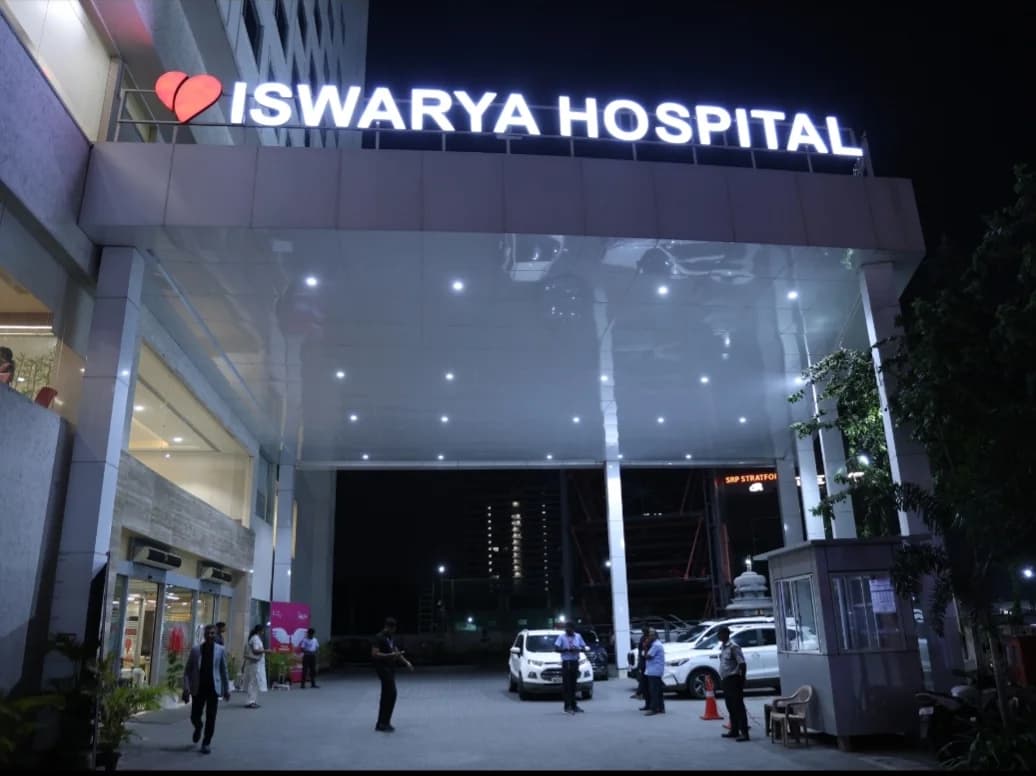
Find the clinic location, hours and directions at Iswarya Hospital, Tharamani, Chennai.

Frequently Asked Questions

Need answers? Find them here...

Part of the Head & Neck Cancer Surgery guide

This article is part of our complete Head & Neck Cancer Surgery guide, linked above, which explains the bigger picture and every related topic.

Related reading

About the Author

Dr. Varadharajan V, Surgical Oncology

Dr. Varadharajan V

Surgical Oncologist, Breast Oncologist, Head & Neck Oncologist

M.Ch Surgical Oncology, FIAGES, FALS, FMAS, M.S General Surgery, MBBS

Iswarya Hospital, Chennai

Dr. Varadharajan V is a highly trained Surgical Oncologist committed to delivering ethical, patient-centric, and evidence-based cancer care. With strong academic credentials and extensive hands-on experience across multiple oncological subspecialties, he is skilled in managing a wide spectrum of malignancies, including breast, gastrointestinal, gynecologic, and peritoneal surface cancers. His clinical foundation comes from institutions such as Sri Ramachandra Institute of Higher Education and Gleneagles Global Health City, where he has served in senior oncology roles.

Seek urgent medical care for severe bleeding, fever above 100.4 F, breathing difficulty, chest pain, uncontrolled vomiting, a wound that opens or leaks, or any sudden worsening after surgery.

This article is general medical information only. It is not a diagnosis and does not replace a consultation with your own oncologist or with Dr. Varadharajan V. Diagnosis, stage and fitness decide the right treatment for each person. In an emergency, go to the nearest hospital.

Location & Contact

Contact Information

Address

110, Rajiv Gandhi Salai, OMR, Tharamani, Chennai 600041, Tamil Nadu

Working Hours

Mon to Sat, 9:00 AM to 5:00 PM · Sunday closed

Book an Appointment

Online booking is temporarily unavailable. Please call +91 94442 64315 or message us on WhatsApp.

Iswarya Hospital exterior, OMR, Chennai
Book NowCall NowWhatsApp