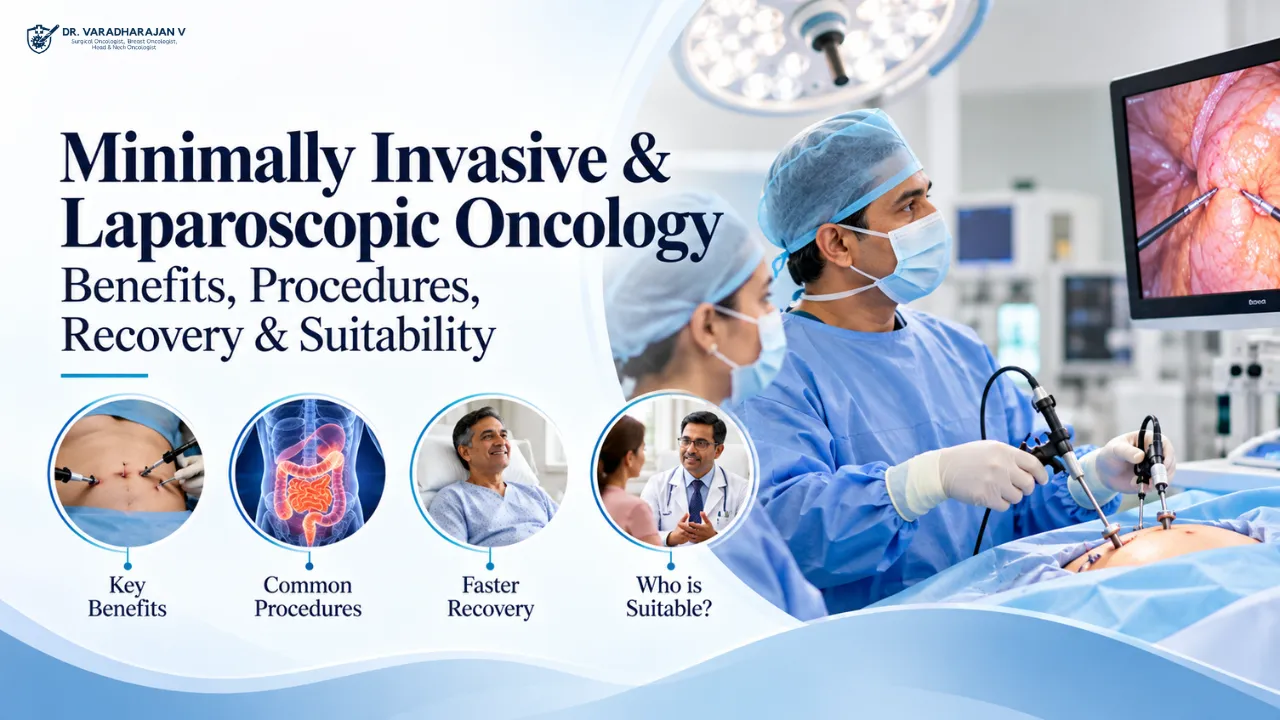
Minimally invasive and laparoscopic oncology has become an important part of modern cancer surgery. These techniques allow selected cancer operations to be performed through small surgical openings instead of the larger incision traditionally associated with open surgery.
Laparoscopic surgery is often called keyhole surgery because the surgeon works through small access points using a camera and specially designed instruments. The camera provides a magnified view of the surgical area on a monitor, while the surgeon carefully performs the required procedure using instruments introduced through the small openings.
In oncology, however, the purpose of surgery goes far beyond making smaller incisions. The central goal remains the proper removal of cancer while following accepted surgical and oncological principles. Depending on the type of cancer, this may involve removing the primary tumor, a portion or entire affected organ, nearby tissues and regional lymph nodes.
For an appropriate patient, a minimally invasive approach may offer several recovery advantages. Smaller incisions can mean less wound discomfort, reduced scarring and, in selected operations, a shorter hospital stay. Patients may also be able to return to everyday activities gradually after surgery.
These benefits do not mean that laparoscopic surgery is appropriate for every cancer. Tumor size, location, stage, involvement of nearby structures, previous operations, overall health and the complexity of the required procedure all influence the decision.
This article explains minimally invasive oncology, the role of laparoscopic cancer surgery, commonly treated cancers, possible benefits and risks, preparation, recovery and the factors a surgical oncologist considers before recommending this approach.
What Is Minimally Invasive Oncology Surgery?
Minimally invasive oncology surgery is cancer surgery performed through relatively small surgical openings with the help of specialized instruments and visualization technology.
In conventional open surgery, the surgeon creates a larger incision to access the affected area directly. In minimally invasive surgery, access is achieved through smaller openings. A camera provides a detailed view inside the body, and specially designed instruments are used to perform the operation.
Laparoscopic surgery is one of the main forms of minimally invasive surgery used for selected abdominal and pelvic cancers.
The approach can be particularly useful when the cancer can be removed safely without compromising the extent or quality of the operation. The external appearance of the surgery may be different, but the underlying purpose remains the same.
The surgeon still needs to identify the tumor, assess the surrounding anatomy and remove the cancer according to appropriate oncological principles.
This distinction is important. Minimally invasive cancer surgery is not simply about having a smaller scar. It is about using a different surgical access route while maintaining the standards required for effective cancer treatment.
What Is Laparoscopic Surgery?
Laparoscopic surgery is a surgical technique in which procedures inside the abdomen are performed through small openings rather than one large incision.
A laparoscope is a thin instrument equipped with a camera and light source. It is introduced through one of the small openings in the abdominal wall. The camera sends images to a monitor, allowing the surgeon to view internal structures in an enlarged form.
Additional instruments are inserted through other small openings. These instruments can be used to dissect tissue, control blood vessels, remove affected organs or tissues and complete other parts of the operation.
Carbon dioxide gas is commonly introduced into the abdominal cavity during many laparoscopic procedures. This creates working space and allows the surgical team to visualize the organs more clearly.
The number and location of the openings vary according to the operation. Once the procedure is completed, the instruments are removed and the incisions are closed.
Laparoscopic techniques are now used in many areas of surgery and have an established role in selected cancer procedures.
How Is Laparoscopic Cancer Surgery Different From Open Surgery?
The most obvious difference is the method used to reach the surgical area.
Open surgery generally requires a larger incision that allows direct access to the organs and surrounding tissues. Laparoscopic surgery uses smaller openings, a camera and specialized instruments.
Both approaches can be used for major cancer operations. The choice is not based simply on which technique has the smallest incision.
A surgeon may consider the location and size of the tumor, cancer stage, involvement of nearby organs, previous abdominal operations, the need for reconstruction and the patient's general health.
The complexity of the operation also matters. A procedure that appears suitable for laparoscopic surgery before the operation may become more challenging if unexpected findings are discovered.
The primary objective is always safe and appropriate cancer removal. If an open operation provides a better or safer route for a particular patient, it may be recommended.
Which Cancers May Be Treated With Laparoscopic Oncology Surgery?
Minimally invasive techniques are used for selected cancers involving the gastrointestinal system and other abdominal or pelvic organs.
The exact availability and suitability of laparoscopic surgery depend on the cancer and the operation required.
Colorectal Cancer
Laparoscopic techniques are widely used for suitable colon and rectal cancer operations.
The procedure may involve removal of the portion of the bowel containing the tumor along with surrounding tissue and regional lymph nodes. The remaining sections of bowel may then be joined when it is considered safe and appropriate.
Some patients may require a temporary or permanent stoma depending on the location of the tumor, extent of surgery and safety of reconstruction.
Stomach Cancer
Selected patients with stomach cancer may undergo minimally invasive gastric surgery. The appropriate procedure depends on the tumor location, stage and amount of stomach and surrounding tissue that needs to be removed.
Esophageal Cancer
Minimally invasive techniques may form part of surgery for selected esophageal cancers. These procedures can be complex and require careful planning because of the location of the esophagus and the structures surrounding it.
Liver Tumors
Certain liver tumors can be treated with minimally invasive liver surgery when the tumor location, size and required extent of liver removal make this approach suitable.
Other Abdominal and Pelvic Cancers
Minimally invasive approaches may also be considered for selected tumors involving other abdominal or pelvic organs.
The important point is that eligibility is determined by the individual cancer and surgical requirements rather than by the organ name alone.
What Is Laparoscopic Colorectal Cancer Surgery?
Colorectal cancer is an important area of minimally invasive surgical oncology.
During laparoscopic colorectal surgery, the surgeon removes the section of the colon or rectum containing the cancer. Surrounding tissue and regional lymph nodes may also be removed as part of the cancer operation.
After the affected section has been removed, the remaining bowel may be connected together when the surgeon considers the reconstruction safe.
In certain situations, a stoma may be necessary. A stoma creates an opening through the abdominal wall through which bowel contents pass into a collection bag.
The possibility of a stoma depends on factors such as the location of the tumor, the amount of bowel removed and whether a safe bowel connection can be created.
Although the operation is performed through smaller openings, colorectal cancer surgery remains a major procedure. The surgeon must balance minimally invasive access with the need for adequate tumor removal and safe reconstruction.
What Is Minimally Invasive GI Cancer Surgery?
Minimally invasive GI cancer surgery refers to laparoscopic or other minimally invasive procedures used to treat selected cancers of the gastrointestinal tract.
The gastrointestinal system includes the esophagus, stomach, small intestine, colon and rectum.
Depending on the diagnosis, surgery may involve removal of part of an organ, regional lymph nodes and surrounding tissues. In some cases, reconstruction is also required.
The decision to use laparoscopic surgery depends heavily on tumor stage, location and anatomy.
Some cancers may be particularly suitable for minimally invasive surgery when they can be removed safely through this approach. Other tumors may require a more extensive operation that is better performed through an open incision.
The surgical plan should therefore be individualized rather than based on the assumption that minimally invasive surgery is always preferable.
What Happens During Laparoscopic Cancer Surgery?
Before surgery, the patient undergoes a detailed assessment. The surgical team reviews the diagnosis, pathology, imaging studies and previous treatment.
Once anesthesia has been administered, small openings are created in the abdominal wall. The laparoscope is introduced through one opening and other instruments are placed through additional openings.
The surgeon examines the surgical area and identifies the tumor and surrounding structures.
The required cancer operation is then performed. Depending on the diagnosis, this may involve removal of part or all of an organ, surrounding tissue and regional lymph nodes.
The surgical specimen may be removed through one of the existing openings or through a slightly enlarged incision if necessary.
After the procedure is complete, the instruments are removed and the small openings are closed.
The exact steps vary considerably between different cancer operations.
Why Is a Camera Used During Laparoscopic Surgery?
The laparoscopic camera provides the surgeon with a magnified view of the operating area.
This can help the surgeon identify important anatomical structures, blood vessels and tissues during the operation.
The camera image is displayed on a monitor, allowing the surgical team to observe the procedure.
Because the surgeon works through small openings rather than placing their hands directly into the abdomen, laparoscopic surgery requires specific technical skills and training.
Cancer surgery adds another level of complexity because the surgeon must combine minimally invasive techniques with an understanding of tumor behavior, lymphatic drainage, tissue planes and oncological principles.
For this reason, laparoscopic oncological procedures should be performed by teams with appropriate training and experience.
What Are the Benefits of Minimally Invasive Cancer Surgery?
For appropriately selected patients, minimally invasive cancer surgery may offer several potential benefits.
Smaller incisions can reduce wound discomfort and may result in less noticeable scars. Some patients may also experience easier movement during the early recovery period.
For certain operations, minimally invasive surgery can be associated with a shorter hospital stay and an earlier return to everyday activities.
There may also be a lower risk of some wound related complications compared with certain open procedures.
However, these advantages vary from patient to patient. A laparoscopic cancer operation can still be a significant procedure involving major organ removal or reconstruction.
The potential benefits should therefore be discussed in relation to the specific operation rather than assumed for every patient.
Does Laparoscopic Surgery Cause Less Pain?
Many patients experience less discomfort from the surgical wounds after laparoscopic surgery because the external openings are smaller.
Pain after surgery, however, is influenced by several factors.
The amount of internal surgery, the organs involved, tissue handling and individual pain sensitivity can all affect how a patient feels after the operation.
A laparoscopic bowel or stomach operation can still produce temporary discomfort because significant internal surgery may have been performed.
Modern pain management is an important part of recovery. Doctors may use a combination of medications and other measures to keep pain under control while allowing the patient to move safely.
Can Minimally Invasive Surgery Reduce Hospital Stay?
For selected cancer operations, minimally invasive surgery may allow patients to leave the hospital sooner than they might after a comparable open procedure.
Discharge depends on recovery rather than the number of days alone.
The medical team generally considers pain control, mobility, nutrition, bowel or bladder function and the absence of significant complications before discharge.
The length of hospital stay can vary substantially between different cancer operations.
A patient undergoing a relatively limited procedure may recover more quickly than someone who has undergone complex colorectal, gastric or liver surgery.
Does Laparoscopic Cancer Surgery Mean Faster Recovery?
A minimally invasive approach may support a smoother recovery in selected patients.
Smaller wounds can make movement more comfortable and may reduce some of the discomfort associated with a larger abdominal incision.
However, the overall recovery period depends on the extent of the cancer surgery.
A patient who undergoes extensive bowel surgery may need several weeks to regain strength even if the operation was completed laparoscopically.
Nutrition, age, general fitness, previous treatment and the presence of other medical conditions can also influence recovery.
Patients should follow their surgical team's advice and gradually increase activity rather than trying to return to their previous routine too quickly.
Is Minimally Invasive Surgery Suitable for Advanced Cancer?
Advanced cancer does not automatically mean that minimally invasive surgery is impossible.
Some patients with more advanced disease may still be candidates for minimally invasive procedures when the cancer can be removed safely and the surgical team has appropriate experience.
However, advanced tumors can sometimes involve nearby organs, major blood vessels or extensive areas of tissue. Such circumstances may make open surgery more suitable.
The decision requires careful review of imaging and the intended extent of surgery.
A surgeon may recommend minimally invasive surgery, open surgery or another treatment strategy depending on the individual situation.
The important question is not whether the operation can be performed through small incisions at any cost. The important question is whether the cancer can be treated appropriately and safely.
When Might Open Surgery Be Preferred?
Open surgery may be recommended when the cancer requires extensive removal or reconstruction.
A very large tumor, involvement of important structures or disease extending into nearby organs can make minimally invasive access less suitable.
Previous abdominal surgery may also result in internal scar tissue called adhesions. Extensive adhesions can make laparoscopic surgery technically difficult.
There are also situations in which the surgeon begins laparoscopically but determines during the operation that an open approach would provide a safer or more effective route.
This decision is made to protect the patient and maintain the quality of cancer surgery.
A larger incision should not be viewed as a sign that treatment is less advanced. In some cases, it is simply the most appropriate surgical approach.
Can Laparoscopic Surgery Be Converted to Open Surgery?
Yes. A laparoscopic procedure can sometimes be converted to open surgery.
This may happen because of unexpected tumor involvement, bleeding, dense scar tissue, difficulty identifying anatomy or concerns about safely completing the operation.
Conversion is generally a decision made in the patient's best interest.
The purpose of minimally invasive surgery is not to avoid an open incision under every circumstance. The priority is to complete the required cancer operation safely.
Patients are usually informed about the possibility of conversion before surgery as part of the consent process.
How Is a Patient Evaluated Before Minimally Invasive Oncology Surgery?
Preoperative evaluation helps the surgical team determine whether minimally invasive surgery is appropriate.
The team reviews pathology reports and imaging studies and considers the stage and location of the cancer.
Depending on the diagnosis, investigations may include CT, MRI, PET CT or other specialized imaging.
Blood tests and assessments of heart, lung, kidney and liver function may also be performed when appropriate.
The surgeon will consider previous abdominal operations, medications, nutritional status and general fitness.
This information helps the team understand the risks of surgery and choose the most appropriate approach.
What Role Does Cancer Staging Play?
Cancer staging provides important information about how far the disease has progressed.
It can show the size and location of the primary tumor, whether regional lymph nodes are involved and whether cancer has spread to distant organs.
This information influences decisions about surgery and other treatments.
Some patients may receive chemotherapy, radiation therapy, targeted therapy or immunotherapy before surgery. Treatment given before surgery is often referred to as neoadjuvant treatment.
The response to such treatment may also be considered when planning the operation.
As a result, laparoscopic cancer surgery is not decided in isolation. It forms part of a larger cancer treatment plan.
What Happens to the Cancer After It Is Removed?
The tissue removed during surgery is sent to a pathology laboratory.
A pathologist examines the specimen and prepares a detailed report.
The report may provide information about the type and size of the tumor, surgical margins, lymph node involvement and other features relevant to the cancer.
The pathology findings help the oncology team understand the final stage and characteristics of the disease.
Additional treatment may be recommended depending on the pathology results.
This could include chemotherapy, radiation therapy or other systemic treatments when clinically appropriate.
Therefore, surgery is often one important part of cancer treatment rather than the entire course of treatment.
What Are the Risks of Laparoscopic Oncology Surgery?
Minimally invasive surgery does not remove the general risks associated with major surgery.
Possible complications include bleeding, infection, blood clots, injury to nearby organs and reactions related to anesthesia.
Patients undergoing abdominal cancer surgery may also experience temporary changes in bowel function.
For procedures involving bowel reconstruction, leakage from the bowel connection is a possible complication. Abdominal infection and other postoperative problems can also occur.
Some patients may require conversion to open surgery or an additional procedure if unexpected difficulties arise.
The level of risk depends on the cancer, operation, patient's health and complexity of the surgery.
The treating team should explain the expected benefits and individual risks before surgery.
What Is Recovery Like After Minimally Invasive Cancer Surgery?
Recovery begins immediately after the operation.
Patients are generally encouraged to start moving as soon as it is medically safe. Early movement can help maintain strength and may reduce certain complications associated with prolonged bed rest.
Food and fluids are usually introduced according to the type of surgery and the patient's recovery.
Pain relief is provided as required.
The surgical team monitors the wounds, vital signs, bowel function and other factors relevant to the particular operation.
Once the patient is ready to leave the hospital, detailed instructions are provided regarding medications, wound care, diet, physical activity and follow up.
The small size of the external wounds does not mean that internal healing is complete. Patients should allow adequate time for recovery.
What Can Patients Expect During the First Few Days?
The first few days after surgery are focused on monitoring and gradual recovery.
Medical staff monitor vital signs and assess pain, wound healing and other signs of recovery.
Patients who have undergone abdominal surgery may initially have reduced appetite or temporary changes in bowel function.
Fluids may be given through a vein until the patient is able to drink adequately. Food is generally introduced gradually according to the type of operation and bowel recovery.
Walking is encouraged when safe.
The healthcare team also watches for warning signs such as fever, unusual bleeding, increasing abdominal pain, wound problems or abnormal bowel function.
The hospital stay and immediate recovery experience vary according to the operation.
When Can Patients Return to Normal Activities?
There is no universal recovery period for minimally invasive cancer surgery.
A relatively straightforward procedure may allow a faster return to daily activities, while major colorectal, stomach or liver surgery may require a longer period of recovery.
Patients can usually increase light activity gradually when they feel comfortable and their surgeon agrees.
Heavy lifting and strenuous exercise may need to be avoided for some time.
The timing of return to work also depends on the patient's occupation. Someone with a desk based job may return sooner than someone whose work involves physical effort.
Follow up appointments help the surgical team assess recovery and provide individualized guidance.
Does Minimally Invasive Surgery Leave Scars?
Yes. Laparoscopic surgery still produces scars, although they are generally smaller than those associated with many open procedures.
The number and location of scars depend on the operation.
In some cases, the incision used to remove the surgical specimen may need to be slightly enlarged.
Scars usually change in appearance as they heal. Individual healing varies depending on skin type, genetics, wound care and other factors.
Although scar appearance can be important to patients, the primary goal of cancer surgery is safe and appropriate removal of the disease.
What Is Robotic Surgery and How Is It Related to Minimally Invasive Oncology?
Robotic surgery is another form of minimally invasive surgery.
During a robotic procedure, the surgeon controls specialized instruments through a robotic surgical platform. The instruments enter the body through small openings.
The system can provide magnified three dimensional visualization and allow precise movement of surgical instruments.
Robotic surgery and conventional laparoscopy share the principle of operating through small access points.
However, robotic surgery is not automatically superior to laparoscopic or open surgery.
The most appropriate approach depends on the cancer, the planned procedure, available technology and the surgeon's experience.
The objective remains effective cancer treatment rather than simply using the newest technology.
Is Minimally Invasive Oncology Surgery Safe?
When appropriately selected and performed by a trained surgical team, minimally invasive cancer surgery can be an effective and safe treatment option for many patients.
As with all major operations, it carries potential risks.
Patient selection is particularly important. The surgical team needs to determine whether the tumor can be removed adequately through a minimally invasive approach.
Safety also depends on preoperative planning, anesthesia support, surgical expertise, hospital facilities and postoperative monitoring.
A smaller incision should never be the only reason for choosing a surgical technique.
The approach must be appropriate for the patient's cancer and overall health.
How Does the Surgical Team Decide Which Technique to Use?
The decision between laparoscopic, robotic and open surgery is individualized.
The team considers the type and stage of cancer, tumor size and location, involvement of surrounding structures and the amount of tissue that needs to be removed.
Previous abdominal operations can also influence the decision.
The patient's general health, nutritional condition and ability to tolerate surgery are considered as well.
The surgeon's experience with the proposed operation and the resources available at the hospital are also relevant.
Patients should be encouraged to ask why a particular surgical approach has been recommended and what alternatives may be available.
Why Does Surgeon Experience Matter?
Minimally invasive cancer surgery requires more than familiarity with laparoscopic instruments.
The surgeon needs a strong understanding of cancer biology and surgical oncology while also having the technical ability to operate through a restricted access route.
Complex procedures may involve careful dissection around blood vessels, lymph nodes and other important structures.
Experience can help the surgeon anticipate technical challenges and determine when a different approach may be safer.
Patients considering laparoscopic cancer surgery should discuss the proposed operation with a surgical oncologist and understand why the technique is appropriate for their particular cancer.
The availability of multidisciplinary cancer care is also an important part of comprehensive treatment.
What Should Patients Do Before Surgery?
Preparation can help patients approach surgery in better condition.
Nutrition is particularly important. Patients who have experienced weight loss, poor appetite or nutritional deficiencies may benefit from assessment and support before surgery.
When medically appropriate, maintaining gentle physical activity can help preserve strength.
Smoking cessation is strongly encouraged because smoking can interfere with healing and increase respiratory and surgical risks.
Patients should provide the healthcare team with a complete list of medicines, vitamins and supplements they take.
Blood thinning medicines require particular attention. Patients should not stop or change prescribed medicines without instructions from their treating doctor.
Following fasting, medication and admission instructions carefully can also help avoid unnecessary delays.
What Role Does Multidisciplinary Cancer Care Play?
Cancer treatment often requires the expertise of several specialists.
A multidisciplinary cancer team may include surgical oncology, medical oncology, radiation oncology, radiology, pathology, anesthesia and nutrition specialists.
The team reviews the patient's diagnosis and determines the most suitable sequence of treatment.
For some patients, surgery may be the first major treatment.
For others, chemotherapy or radiation may be recommended before surgery to reduce the tumor burden or improve the chances of successful treatment.
After surgery, the pathology report may guide further treatment.
This coordinated approach allows the surgical decision to be considered alongside the patient's complete cancer treatment plan.
Minimally Invasive Cancer Surgery in Chennai
Patients searching for minimally invasive cancer surgery in Chennai may wonder whether laparoscopic treatment is appropriate for their diagnosis.
The answer depends on the individual cancer rather than the patient's preference for a smaller incision alone.
A surgical oncologist can review the pathology report, imaging studies, previous treatment and general health before discussing the available surgical approaches.
Patients attending a consultation may find it useful to bring biopsy reports, CT or MRI scans, PET CT reports when applicable, previous operation records and details of chemotherapy or radiation treatment.
This information allows the specialist to understand the disease more completely and determine what type of surgery may be appropriate.
For individuals considering laparoscopic cancer surgery in Chennai, Dr. Varadharajan can assess the cancer diagnosis and surgical requirements and discuss whether a minimally invasive approach may be suitable.
The final decision should always be based on cancer stage, tumor anatomy, treatment goals, patient safety and the expected ability to perform adequate cancer surgery.
Questions to Ask Before Minimally Invasive Cancer Surgery
A detailed consultation can help patients understand what to expect before undergoing cancer surgery.
Useful questions include:
What type and stage of cancer do I have?
Is minimally invasive surgery suitable for my specific cancer?
What part of the organ or surrounding tissue needs to be removed?
Will regional lymph nodes need to be removed?
Is there a possibility that the operation may need to be converted to open surgery?
What is the expected hospital stay?
What complications are possible with this operation?
Will chemotherapy or radiation be required before or after surgery?
How long might recovery take?
When should the final pathology report be expected?
Having clear answers can help patients and families understand the treatment plan and prepare for recovery.
Is Minimally Invasive Surgery Always Better?
No. Minimally invasive surgery offers meaningful benefits for appropriately selected patients, but it is not automatically the best option for every cancer.
Some tumors require extensive removal, complex reconstruction or access to structures that may be difficult to manage through small openings.
In such situations, open surgery may provide the surgeon with better access and control.
The success of cancer surgery should not be judged by incision size alone.
The most important objectives are appropriate cancer removal, adequate margins when required, proper management of regional disease and patient safety.
A larger incision can sometimes be the right choice.
Likewise, a laparoscopic approach can be highly appropriate when it allows the required cancer operation to be completed safely.
Key Takeaways
Minimally invasive and laparoscopic oncology provides a modern approach to selected cancer operations using small surgical openings, specialized instruments and camera based visualization.
Laparoscopic techniques can be used for selected colorectal, gastrointestinal, liver and other abdominal cancer procedures.
For suitable patients, potential benefits may include smaller incisions, reduced wound discomfort, smaller scars and a potentially shorter hospital stay.
Recovery still depends on the complexity of the cancer operation. A minimally invasive procedure can involve major organ removal and therefore should not be considered minor surgery simply because the external wounds are small.
Not every patient is suitable for laparoscopic cancer surgery. Tumor size, location, stage, involvement of surrounding structures, previous surgery and overall health all influence the decision.
The surgical team's experience also matters because successful minimally invasive oncology requires both technical laparoscopic skill and a strong understanding of cancer surgery.
If unexpected findings occur, a laparoscopic procedure may be converted to open surgery. This is done when necessary to protect the patient or ensure appropriate cancer removal.
The Bottom Line
Minimally invasive and laparoscopic oncology has become an important part of modern surgical cancer care for appropriately selected patients.
By using small surgical openings, a camera and specialized instruments, surgeons can perform many complex procedures without the large incision required for traditional open surgery.
For suitable patients, the approach may provide benefits such as smaller scars, reduced wound discomfort and a potentially quicker return to normal activities. At the same time, the internal operation may still be extensive, so patients should understand that minimally invasive surgery remains major cancer surgery when significant organs or tissues need to be removed.
Not every cancer can or should be treated laparoscopically. Tumor size, location, cancer stage, involvement of nearby organs, previous abdominal surgery and the need for complex reconstruction can all influence the surgical plan.
The most important consideration is not simply choosing the smallest incision. The priority is choosing the surgical approach that provides the best balance of effective cancer removal, safety and recovery for the individual patient.
If you or a family member has been advised to undergo cancer surgery and want to know whether a minimally invasive approach is possible, consultation with a surgical oncologist can provide a clearer understanding of the available options.
For patients looking for minimally invasive and laparoscopic oncology care in Chennai, Dr. Varadharajan can assess the diagnosis, imaging, previous treatment and surgical requirements and discuss whether minimally invasive cancer surgery may be appropriate.
The final treatment decision should always be based on an individualized medical evaluation and a clear understanding of the benefits, limitations and potential risks of each surgical approach.