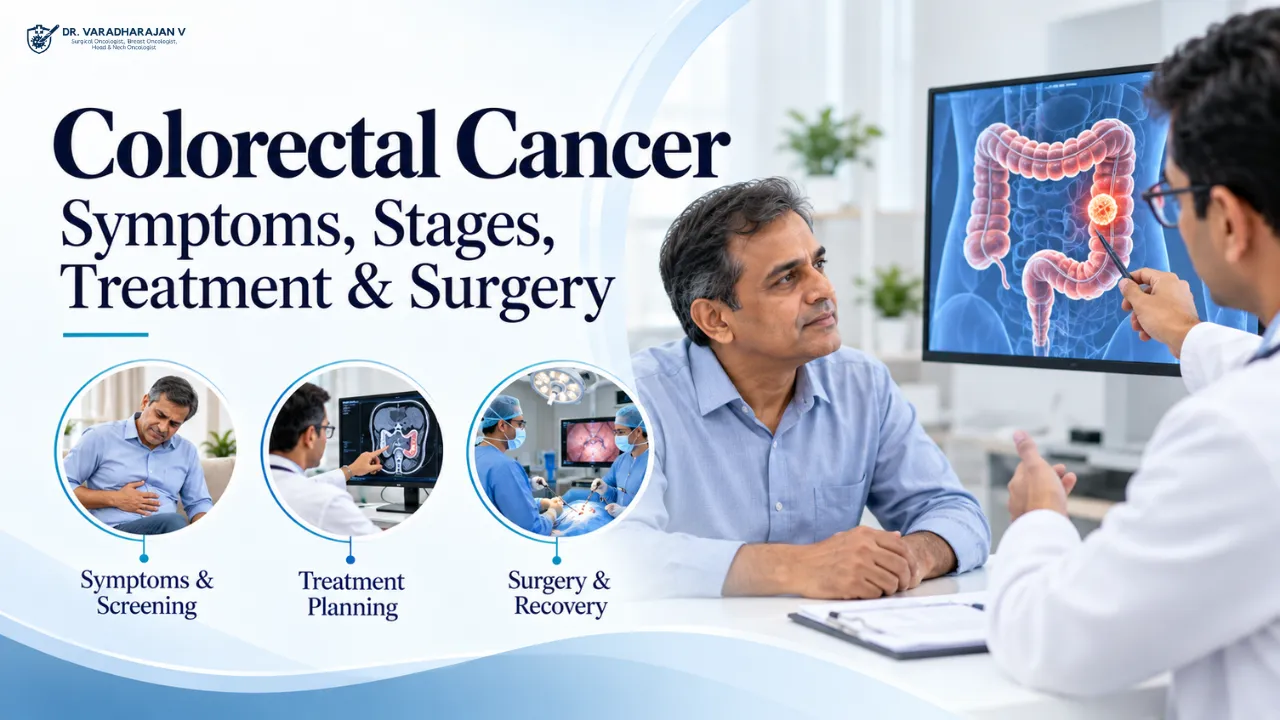
Colorectal cancer is a cancer that begins in the colon or rectum, which together form the lower part of the digestive system. It can develop gradually, sometimes starting as a polyp on the inner lining of the bowel. Some polyps remain harmless, while others can undergo changes over time and eventually become cancerous.
One of the challenges with colorectal cancer is that it may not cause obvious symptoms during its early stages. When symptoms do occur, they can include changes in bowel habits, blood in the stool, abdominal discomfort, unexplained weight loss, persistent tiredness or a feeling that the bowel has not emptied completely.
These symptoms do not necessarily mean that a person has cancer. Several common digestive conditions can produce similar symptoms. However, symptoms that persist, worsen or appear without an obvious explanation should not be ignored.
Colorectal cancer treatment depends on several factors. Doctors consider whether the tumor is located in the colon or rectum, how deeply it has grown, whether nearby lymph nodes are involved, whether it has spread to distant organs and the overall health of the patient.
Surgery is an important treatment for many patients, particularly when the cancer is localized or can be removed safely. Depending on the diagnosis, chemotherapy, radiation therapy, targeted treatment or immunotherapy may also form part of the treatment plan.
This guide explains colorectal cancer symptoms, diagnosis, stages, surgery, treatment options, recovery and the importance of specialist evaluation.
What Is Colorectal Cancer?
Colorectal cancer develops in the colon or rectum. The colon and rectum are parts of the large intestine. They play important roles in absorbing water, forming stool and storing waste before it leaves the body.
Many colorectal cancers develop from polyps. A polyp is a growth that forms on the inner surface of the bowel. Polyps are relatively common, and most do not become cancerous. However, certain types can develop abnormal cellular changes over several years.
This gradual process is one reason colorectal cancer screening can be valuable. Detecting and removing certain precancerous polyps can help reduce the chance of cancer developing.
Once cancer develops, it can grow into the deeper layers of the bowel wall. It may then spread to nearby lymph nodes or, in more advanced cases, to distant organs.
The liver and lungs are among the organs that can be affected when colorectal cancer spreads.
Because the behavior of colorectal cancer differs between patients, treatment cannot be determined simply by identifying a tumor. Doctors need information about its location, stage, pathology and biological characteristics before recommending a treatment strategy.
Are Colon Cancer and Rectal Cancer the Same?
Colon cancer and rectal cancer are both classified as colorectal cancer, but their treatment can be different.
Colon cancer develops in the colon, which makes up most of the large intestine.
Rectal cancer develops in the rectum, the final part of the large intestine before the anus.
The distinction is important because the rectum is located within the pelvis and is close to structures involved in bowel control, urinary function and sexual function.
Rectal cancer may therefore require a more specialized treatment approach. Some patients with locally advanced rectal cancer receive chemotherapy and radiation therapy before surgery.
Colon cancer is often managed with surgery when the disease is localized, with chemotherapy added in selected situations based on the stage and pathology.
The treatment plan is always individualized.
What Causes Colorectal Cancer?
There is no single cause of colorectal cancer.
The disease develops when cells lining the colon or rectum acquire changes that allow them to grow and divide abnormally. Several factors can increase the likelihood of these changes occurring.
Age is an important risk factor, although colorectal cancer can occur in younger adults as well.
A personal or family history of colorectal cancer or certain types of polyps can increase risk. Some inherited conditions, including certain hereditary cancer syndromes, can also significantly increase the likelihood of developing the disease.
Longstanding inflammatory bowel disease may increase risk, particularly when the condition has been present for many years.
Lifestyle factors can also influence risk. Smoking, excess body weight, physical inactivity and certain dietary patterns have been associated with a higher risk of colorectal cancer.
Alcohol consumption may also contribute to risk.
Having one or more risk factors does not mean that cancer will definitely develop. Similarly, people without obvious risk factors can still develop colorectal cancer.
What Are the Symptoms of Colorectal Cancer?
The symptoms of colorectal cancer can vary depending on where the tumor develops and how large it becomes.
Some people have no symptoms during the early stages.
When symptoms occur, they may include:
- A persistent change in bowel habits
- Blood in or on the stool
- Abdominal discomfort or cramping
- Unexplained weight loss
- Persistent tiredness
- A feeling that the bowel has not emptied completely
- Changes in stool appearance or consistency
A change in bowel habits may involve constipation, diarrhea or an alteration in a person's usual bowel pattern that continues for several weeks.
Rectal cancer may cause rectal bleeding, increased urgency to pass stool or a sensation of incomplete bowel emptying.
These symptoms are not specific to cancer. Hemorrhoids, infections, inflammatory bowel disease, polyps and other digestive conditions can cause similar symptoms.
The important point is persistence. If a bowel change or bleeding continues, medical evaluation can help determine the cause instead of assuming that the symptom is harmless.
Can Blood in the Stool Mean Colorectal Cancer?
Blood in the stool can be a symptom of colorectal cancer, but it can also result from many other conditions.
Bright red blood may occur with problems affecting the anus or lower rectum, including hemorrhoids. However, rectal bleeding should not automatically be attributed to hemorrhoids without appropriate assessment.
Some colorectal tumors bleed slowly. A person may not notice visible blood but may gradually develop iron deficiency anemia.
Dark or altered stool color can also have several possible causes.
Anyone experiencing unexplained or persistent rectal bleeding should discuss it with a healthcare professional. The appropriate investigation depends on factors such as age, symptoms, family history, medical history and other risk factors.
How Is Colorectal Cancer Diagnosed?
Diagnosis usually involves several steps.
The doctor begins by discussing symptoms, medical history and risk factors. A physical examination may also be performed.
Colonoscopy is an important diagnostic test because it allows the doctor to examine the lining of the colon and rectum directly. If an abnormal area or polyp is found, tissue can be removed for laboratory examination.
The biopsy is examined by a pathologist to determine whether cancer is present.
Blood tests may also be performed. These can identify anemia and provide information about general health.
A blood marker called carcinoembryonic antigen, or CEA, can be useful in selected colorectal cancer patients. It may help doctors monitor treatment or look for signs of recurrence after treatment. However, CEA alone cannot diagnose colorectal cancer.
Imaging is also important after a diagnosis has been established. CT scans are commonly used to look for disease outside the bowel.
For rectal cancer, pelvic MRI can provide detailed information about the tumor and its relationship with surrounding pelvic structures.
Why Is Colonoscopy Important?
Colonoscopy allows a doctor to inspect the entire colon and rectum using a flexible camera.
It can identify abnormal tissue, polyps and tumors. When a suspicious area is found, the doctor can usually take a biopsy during the same procedure.
One of the important advantages of colonoscopy is that certain precancerous polyps can be removed before they have the opportunity to develop into cancer.
The timing and type of colorectal cancer screening depend on individual risk and current screening recommendations.
People with a family history of colorectal cancer, previous polyps or certain inherited conditions may need screening earlier or more frequently.
People experiencing concerning symptoms may need diagnostic evaluation regardless of whether they have reached the usual age for routine screening.
What Is the Role of Biopsy?
A biopsy involves taking a small sample of tissue for examination under a microscope.
When a suspected colorectal tumor is identified during colonoscopy, the tissue is commonly sent to a pathology laboratory.
The pathology report confirms whether the abnormal area contains cancer and identifies important characteristics of the tumor.
Further laboratory testing may be performed on the cancer tissue.
Molecular testing can provide information about specific changes in the tumor that may influence treatment, particularly in advanced colorectal cancer.
This information can help the oncology team determine whether certain targeted treatments or immunotherapy approaches may be suitable.
A biopsy is therefore an important part of establishing an accurate diagnosis and developing an appropriate treatment plan.
How Is Colorectal Cancer Staged?
Staging describes how far colorectal cancer has developed or spread.
Doctors commonly use the TNM staging system. This considers the primary tumor, nearby lymph nodes and distant metastases.
In broad terms, colorectal cancer can be described as localized, regional or metastatic disease.
In stage I, the cancer is relatively limited and has grown into certain layers of the bowel wall without reaching distant organs.
In stage II, the tumor has grown more deeply through the bowel wall or into nearby tissues but has not spread to regional lymph nodes.
In stage III, nearby lymph nodes are involved.
In stage IV, the cancer has spread to distant organs.
Stage IV disease can involve the liver, lungs or other sites.
The exact staging system is more detailed than this simplified explanation, and the final stage depends on pathology and imaging findings.
Staging is essential because treatment recommendations can differ substantially between early, locally advanced and metastatic disease.
What Are the Main Colorectal Cancer Treatment Options?
Treatment depends on the stage, location and biological characteristics of the cancer.
For many patients with localized colon cancer, surgery is the main treatment. Chemotherapy may be recommended after surgery when the cancer has certain features or has reached the lymph nodes.
Rectal cancer can require a combination of treatments. Depending on the stage, chemotherapy and radiation therapy may be given before surgery.
Advanced colorectal cancer may require systemic treatment such as chemotherapy, targeted therapy or immunotherapy.
Surgery can still play an important role in selected patients with metastatic disease.
Because colorectal cancer treatment can involve several specialties, patients are often managed through a multidisciplinary cancer team.
When Is Surgery Recommended for Colorectal Cancer?
Surgery is commonly recommended when colorectal cancer can be removed safely and effectively.
The operation depends on the location and extent of the tumor.
For colon cancer, the surgeon generally removes the portion of the colon containing the tumor together with surrounding tissue and regional lymph nodes.
For rectal cancer, the operation is influenced by the tumor's position within the rectum, its relationship to the anal sphincter and nearby pelvic structures and the response to any treatment given before surgery.
The objective is to remove the cancer with an appropriate margin while preserving normal bowel function whenever this is possible without compromising cancer treatment.
Surgery may also be considered in selected patients whose cancer has spread to organs such as the liver or lungs.
What Happens During Colon Cancer Surgery?
Colon cancer surgery is often referred to as a colectomy when part of the colon is removed.
The surgeon removes the section containing the tumor and the associated lymphatic tissue.
The remaining bowel may be joined together to restore continuity. This connection is known as an anastomosis.
The exact type of colectomy depends on where the tumor is located.
For example, a tumor affecting the right side of the colon may require a right colectomy, while a tumor in the left side may require a different resection.
Colon cancer surgery can be performed through an open incision or, in selected patients, through minimally invasive laparoscopic or robotic techniques.
The choice depends on the individual cancer and the requirements of the operation.
What Is Rectal Cancer Surgery?
Rectal cancer surgery can be technically demanding because the rectum is located deep within the pelvis.
It lies close to important nerves, muscles and organs that contribute to bowel, urinary and sexual function.
The type of surgery depends on tumor location, cancer stage, involvement of nearby structures and the response to treatment given before surgery.
Some patients may undergo surgery that preserves the anus and allows the bowel to be reconnected.
In other situations, the rectum and anus may need to be removed, resulting in a permanent colostomy.
The goal is to remove the cancer safely while preserving normal function whenever this can be achieved without compromising the cancer operation.
What Is Lymph Node Removal in Colorectal Cancer Surgery?
Lymph nodes are small structures that are part of the lymphatic system.
Colorectal cancer can spread from the primary tumor to nearby lymph nodes.
During colorectal cancer surgery, regional lymph nodes are generally removed along with the affected section of bowel.
The lymph nodes are then examined by a pathologist.
If cancer cells are found in the lymph nodes, this information contributes to the final stage of the disease.
The pathology findings can also influence whether additional treatment such as chemotherapy is recommended.
Proper lymph node assessment is therefore an important part of colorectal cancer surgery and staging.
What Is Minimally Invasive Colorectal Surgery?
Minimally invasive colorectal surgery uses laparoscopic or robotic techniques to perform selected bowel operations through smaller incisions.
During laparoscopic surgery, a camera is introduced through a small opening in the abdomen. Additional instruments are inserted through other small openings.
The surgeon views the operating area on a monitor while performing the procedure.
For suitable patients, minimally invasive surgery may provide smaller scars, less wound discomfort and a potentially shorter hospital stay.
However, these benefits must be balanced against the complexity of the cancer operation.
Not every colorectal tumor is suitable for a minimally invasive approach. Tumor size, location, involvement of surrounding structures, previous abdominal operations and the extent of resection can all affect the decision.
Is Laparoscopic Surgery Suitable for Colorectal Cancer?
Laparoscopic colorectal surgery can be an appropriate option for many selected patients.
The surgeon must first determine whether the cancer can be removed adequately through a minimally invasive approach.
The same oncological principles apply whether surgery is performed laparoscopically or through an open incision.
The surgeon must remove the tumor with the required surrounding tissue and regional lymph nodes.
If extensive disease, dense scar tissue or another unexpected problem makes laparoscopic surgery unsafe, the procedure may be converted to open surgery.
This is not necessarily a sign that the treatment has failed. It is a decision made to maintain patient safety and the quality of the cancer operation.
Can Colorectal Cancer Surgery Require a Stoma?
A stoma is not necessary for every colorectal cancer patient.
In certain operations, the bowel can be reconnected immediately after the diseased section is removed.
In other situations, the surgeon may create a stoma.
A colostomy brings part of the colon through the abdominal wall, while an ileostomy brings part of the small intestine through the abdominal wall.
The bowel contents then pass through the stoma into a collection bag.
A stoma may be temporary or permanent.
Its need depends on factors such as tumor location, the extent of surgery, the condition of the bowel and whether a safe connection can be created.
When a stoma is likely, the surgical team should discuss it with the patient before the operation and provide appropriate support and education.
Does Colorectal Cancer Always Require Chemotherapy?
No.
Chemotherapy is not required for every patient with colorectal cancer.
Some early cancers can be treated successfully with surgery alone.
Chemotherapy may be recommended after surgery when the cancer has spread to lymph nodes or has other features associated with a higher risk of recurrence.
This is known as adjuvant chemotherapy.
For some locally advanced rectal cancers, chemotherapy may be combined with radiation therapy before surgery.
Patients with metastatic colorectal cancer may receive chemotherapy as part of a broader systemic treatment plan.
The recommendation depends on the final pathology, stage, tumor biology and overall health of the patient.
What Is the Role of Radiation Therapy?
Radiation therapy has a particularly important role in selected rectal cancers.
The rectum is located within the pelvis, where local recurrence can be difficult to manage. Radiation may therefore be used to reduce the risk of the cancer returning in the pelvic region and to help control locally advanced disease.
It may be combined with chemotherapy before surgery.
Radiation is not routinely required for every patient with colon cancer.
The decision depends on the tumor location, stage and overall treatment strategy.
Can Targeted Therapy or Immunotherapy Be Used?
Some patients with advanced colorectal cancer may benefit from targeted therapy or immunotherapy.
These treatments are not suitable for every patient.
The tumor may undergo molecular testing to identify characteristics that could influence treatment selection.
Certain colorectal cancers contain molecular features that make them more likely to respond to immunotherapy.
Other tumors may have characteristics that allow the use of specific targeted medicines.
Treatment selection is therefore increasingly based not only on the location and stage of the cancer but also on its biological and molecular profile.
What Happens After Colorectal Cancer Surgery?
After surgery, patients are monitored while they recover from anesthesia and the effects of the operation.
Pain management, movement, nutrition and prevention of complications are important parts of postoperative care.
Patients usually begin moving as soon as it is medically safe.
After abdominal surgery, food and fluids may initially be introduced gradually while the bowel begins to function normally again.
The surgical specimen is sent to pathology.
The final pathology report provides important information about the tumor, margins and lymph nodes.
This report may confirm the final stage and help the oncology team decide whether additional treatment is required.
Follow up appointments are then arranged according to the patient's treatment plan.
How Long Does Recovery Take After Colorectal Cancer Surgery?
Recovery varies considerably depending on the operation.
Patients undergoing minimally invasive colorectal surgery may sometimes return to normal activities sooner than patients undergoing comparable open procedures.
However, colorectal surgery is still major surgery.
Fatigue, reduced appetite and temporary changes in bowel function are common during recovery.
Patients are generally advised to gradually increase activity and avoid heavy lifting until their surgeon confirms that healing is adequate.
The time needed before returning to work depends on the operation, the patient's recovery and the physical demands of their job.
A person with a desk based occupation may be able to return earlier than someone whose work involves heavy physical activity.
Can Bowel Habits Change After Colorectal Cancer Surgery?
Yes.
Changes in bowel habits are relatively common after colorectal surgery.
Depending on the type of operation, patients may experience more frequent bowel movements, urgency, loose stools or changes in stool consistency.
These changes can be particularly noticeable after rectal surgery.
Some patients experience a collection of symptoms known as low anterior resection syndrome after certain rectal procedures.
Symptoms can improve over time as the body adapts.
Dietary changes, medications and bowel rehabilitation may be recommended when necessary.
Persistent, severe or worsening symptoms should be discussed with the treating team.
What Are the Possible Risks of Colorectal Cancer Surgery?
Colorectal surgery carries potential risks, as does any major operation.
General complications can include bleeding, infection, blood clots, wound problems and complications related to anesthesia.
Specific complications may include delayed bowel function, bowel obstruction, abdominal infection or leakage from the bowel connection.
Some patients may require a temporary or permanent stoma.
The risk of complications varies according to the patient's health, age, nutritional status, cancer stage and complexity of the procedure.
The surgeon should discuss the individual risks before surgery so that the patient understands what to expect.
Can Colorectal Cancer Come Back After Treatment?
Yes. Colorectal cancer can recur after treatment.
The risk of recurrence depends on factors such as the original stage, lymph node involvement, tumor characteristics and response to treatment.
Regular follow up is therefore an important part of long term care.
Depending on the patient's situation, follow up may involve physical examinations, blood tests, CEA testing, colonoscopy and imaging studies such as CT scans.
The schedule is individualized according to the original cancer and treatment.
Follow up is also an opportunity to discuss bowel changes, nutrition, fatigue and other issues that may occur after treatment.
What Happens If Colorectal Cancer Has Spread to the Liver?
The liver is one of the most common locations for colorectal cancer to spread.
A diagnosis of liver metastases does not automatically mean that surgery is impossible.
Some patients with a limited number of liver metastases may be considered for liver surgery or another local treatment.
Chemotherapy and other systemic treatments may also be used.
The decision depends on the number, size and location of liver lesions, the condition of the remaining liver, the primary colorectal tumor and whether the disease elsewhere in the body can be controlled.
These cases often require careful discussion by a multidisciplinary team.
What If Colorectal Cancer Has Spread to the Lungs?
The lungs can also be affected when colorectal cancer spreads.
Selected patients with a limited number of lung metastases may be considered for surgery or another local treatment.
However, treatment depends on the overall pattern of disease.
Doctors consider the number and location of lung lesions, disease in other organs, response to systemic treatment and the patient's general health.
Advanced colorectal cancer may therefore require a combination of treatments rather than a single procedure.
How Can Patients Prepare for Colorectal Cancer Surgery?
Preparing for surgery begins with understanding the planned procedure and following the medical team's instructions.
The preoperative assessment may include blood tests, imaging, nutritional evaluation and heart or lung assessment depending on the patient's health and the type of surgery.
Patients who have experienced weight loss or poor appetite may benefit from nutritional support before surgery.
Maintaining appropriate physical activity can also help preserve strength when medically safe.
Smoking cessation is encouraged because smoking can interfere with wound healing and increase certain respiratory and surgical risks.
Patients should provide the surgical team with a complete list of prescription medicines, over the counter medicines, vitamins and supplements.
Blood thinning medicines require particular attention. Patients should never stop prescribed medication without instructions from their doctor.
The team will also explain whether bowel preparation, fasting or other specific preparation is required.
Why Is Nutrition Important in Colorectal Cancer?
Good nutrition supports recovery from both cancer and major surgery.
Some patients lose weight before diagnosis because of reduced appetite, digestive symptoms or the effects of the disease.
After surgery, the body requires energy and protein to repair tissues and regain strength.
A dietitian may become part of the treatment team when nutritional support is needed.
The recommended diet depends on the type of surgery and the patient's bowel function.
Some patients gradually return to their normal diet, while others may need temporary dietary changes.
Hydration can be especially important for patients who have an ileostomy because fluid and electrolyte losses may be higher.
Why Does Early Evaluation Matter?
Persistent digestive symptoms should not automatically be dismissed as minor problems.
Rectal bleeding, a prolonged change in bowel habits, unexplained anemia, persistent abdominal symptoms or unexplained weight loss can have several causes, including conditions that are not cancer.
However, evaluation can help identify the cause.
When colorectal cancer is diagnosed early, treatment options may be more straightforward than when the disease is discovered after it has spread.
Screening can also identify certain precancerous polyps before they become cancerous.
The appropriate investigation depends on the person's symptoms, age, family history and other risk factors.
Colorectal Cancer Screening and Prevention
Colorectal cancer screening aims to identify cancer at an earlier stage and detect certain precancerous changes.
The appropriate screening test and timing depend on individual risk and current medical recommendations.
Colonoscopy is one established screening method because it allows direct examination of the bowel and removal of certain polyps during the same procedure.
Other screening approaches may be appropriate for some people.
Individuals with a family history of colorectal cancer, previous polyps, inherited cancer syndromes or inflammatory bowel disease may require a different screening strategy.
Lifestyle habits can also contribute to overall colorectal health. Maintaining a healthy body weight, staying physically active, avoiding tobacco and following a balanced diet can support general health.
No lifestyle measure can completely eliminate the possibility of colorectal cancer, so screening and appropriate medical evaluation remain important.
Colorectal Cancer Treatment in Chennai
Patients searching for colorectal cancer treatment in Chennai may be at very different stages of their diagnosis.
Some may have recently developed symptoms and need diagnostic evaluation. Others may already have a colonoscopy and biopsy confirming cancer.
The first step is to understand the diagnosis and stage.
A surgical oncology consultation may involve reviewing the pathology report, colonoscopy findings and imaging studies. The surgeon may also discuss whether surgery is required and whether an open, laparoscopic or robotic approach could be appropriate.
Patients should bring relevant medical records to the consultation, including biopsy reports, colonoscopy findings, CT or MRI scans, PET CT reports when applicable and details of previous chemotherapy or radiation.
For patients who require surgery, the surgical plan is based on the location and extent of the cancer rather than simply on the preferred surgical technique.
For advanced disease, surgery may form one part of a larger treatment plan involving medical oncology, radiation oncology and other specialists.
Dr. Varadharajan can assess the surgical aspects of colorectal cancer and discuss the available treatment options according to the patient's diagnosis.
When Should You See a Surgical Oncologist?
A surgical oncology consultation is appropriate when colorectal cancer has been diagnosed and surgery is being considered.
It can also be useful when imaging identifies a tumor that may require complex surgery or when a patient wants another professional opinion about the surgical approach.
A specialist can explain the proposed operation and discuss issues such as bowel reconstruction, lymph node removal, possible stoma formation and minimally invasive surgery.
Patients seeking a surgical oncologist in Chennai should ideally bring all available reports to the appointment.
Having the complete medical information available can make the consultation more useful and allow the surgeon to understand the cancer more accurately.
Why Is Multidisciplinary Care Important?
Colorectal cancer treatment often involves several medical specialties.
A multidisciplinary team may include a surgical oncologist, medical oncologist, radiation oncologist, radiologist, pathologist, gastroenterologist, anesthetist, dietitian and specialist nursing staff.
The team considers the diagnosis, stage, tumor biology and general health before deciding how treatment should be sequenced.
For example, a patient with early colon cancer may proceed directly to surgery.
A patient with locally advanced rectal cancer may receive chemotherapy and radiation before surgery.
A patient with metastatic disease may require systemic treatment first, followed by consideration of surgery or local treatment for selected areas of disease.
This coordinated approach helps ensure that surgery is considered as part of the complete cancer treatment strategy.
Questions to Ask Before Colorectal Cancer Surgery
A diagnosis of cancer can make it difficult to absorb everything discussed during a consultation. Preparing questions in advance can help.
Patients may want to ask:
Where exactly is my tumor located?
What stage is my colorectal cancer?
Do I need surgery now, or should another treatment be given first?
How much of my bowel needs to be removed?
Will nearby lymph nodes be removed?
Is a temporary or permanent stoma possible?
Can my operation be performed laparoscopically or robotically?
What are the main risks associated with the proposed surgery?
Will I need chemotherapy or radiation after surgery?
How might the operation affect my bowel function?
Clear answers to these questions can help patients understand the treatment plan and prepare for the recovery period.
Key Takeaways
Colorectal cancer begins in the colon or rectum and may develop from certain types of polyps over time.
Symptoms can include persistent bowel changes, blood in the stool, abdominal discomfort, unexplained weight loss and anemia, although early colorectal cancer may cause no noticeable symptoms.
Colonoscopy and biopsy are important tools for diagnosing colorectal cancer, while imaging helps determine the extent of disease.
Staging helps doctors understand how far the cancer has spread and plays a major role in treatment planning.
Surgery is an important treatment for many localized colorectal cancers. Selected patients may undergo laparoscopic or robotic surgery.
Chemotherapy, radiation therapy, targeted treatment and immunotherapy may be recommended depending on the cancer's stage and biological characteristics.
Follow up remains important after treatment because colorectal cancer can recur and bowel function may change after surgery.
THE BOTTOM LINE
Colorectal cancer is a significant but treatable cancer, particularly when it is identified and managed according to its stage, location and individual characteristics.
The disease can begin in the colon or rectum and may develop gradually from certain types of polyps. Because early colorectal cancer may cause few or no symptoms, appropriate screening and timely evaluation of persistent bowel changes can play an important role in detection.
When cancer is diagnosed, staging helps determine the most appropriate treatment strategy. Surgery is a major part of treatment for many localized cancers. Depending on the diagnosis, chemotherapy, radiation therapy, targeted therapy or immunotherapy may also be required.
Colon and rectal cancers are not treated in exactly the same way. Rectal cancer can require specialized treatment because of the anatomy of the pelvis and the need to preserve bowel control and surrounding structures whenever possible.
Minimally invasive colorectal surgery can be an option for selected patients. Laparoscopic and robotic techniques may provide smaller incisions and support recovery, but the surgical approach should always be chosen according to the cancer and the operation required.
A larger incision does not mean that cancer treatment is less advanced. Similarly, a minimally invasive procedure is not automatically better simply because the scars are smaller.
The most important goal is appropriate cancer removal, safe surgery and a treatment plan that addresses the patient's individual needs.
If you have persistent rectal bleeding, unexplained bowel changes, ongoing abdominal symptoms, unexplained weight loss or other concerning symptoms, medical evaluation is important.
If you have already been diagnosed with colorectal cancer or have been advised to undergo surgery, a consultation with a surgical oncologist can help you understand the stage of the disease, the proposed operation, possible alternatives and expected recovery.
For patients looking for colorectal cancer treatment or colorectal cancer surgery in Chennai, Dr. Varadharajan can review the diagnosis, imaging and treatment history and discuss the surgical options that may be appropriate.
The final treatment decision should always be based on an individualized medical assessment and discussion with the treating cancer team.