
Skip to content

Colorectal Cancer

Living With a Colostomy or Ileostomy

Written by Dr. Varadharajan V, Surgical Oncologist, Chennai

Published · Updated · Medically reviewed by Dr. Varadharajan V · Last reviewed: · 4 min read

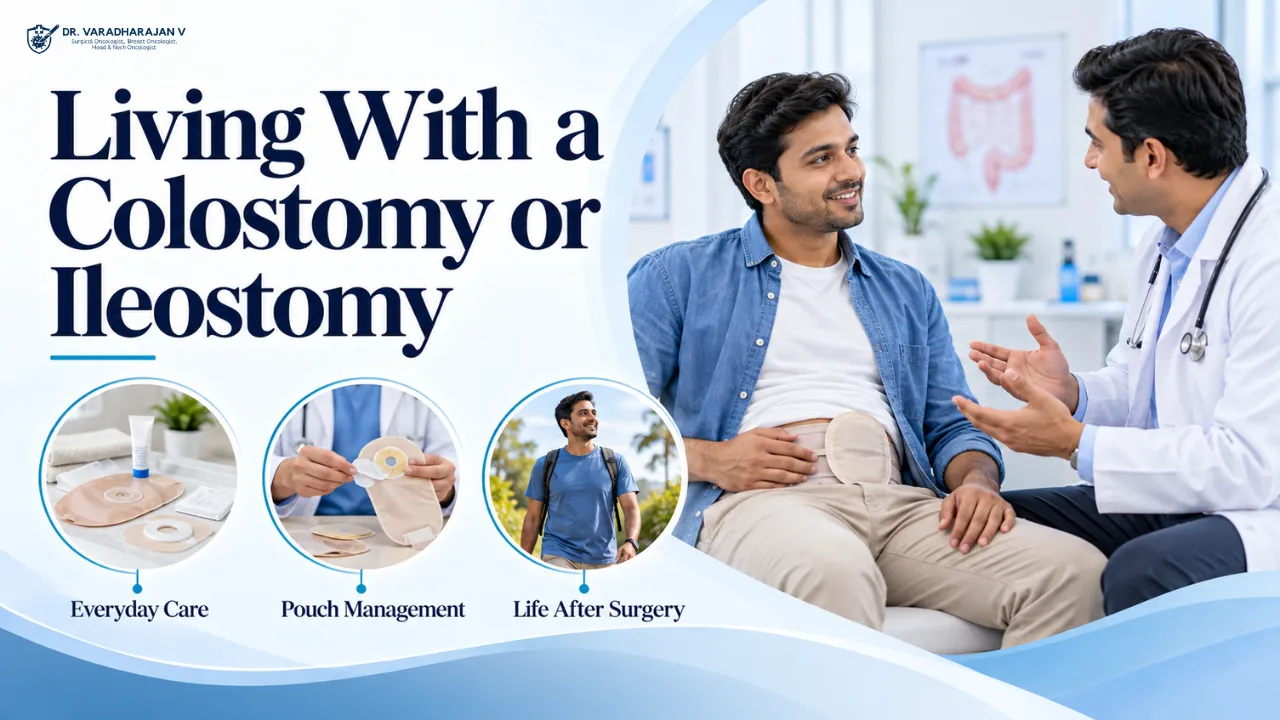
Man with a stoma chatting confidently with friends at a cafe

Quick Answer

A colostomy usually produces thicker stool and is often on the left side. An ileostomy produces looser output and is usually on the right side. Daily care involves emptying and changing the pouch, protecting the skin and staying hydrated. A stoma nurse teaches care skills. Many temporary stomas can be reversed after a few months.

A stoma is an opening on the abdomen created during bowel surgery so that stool can leave the body into a pouch. A colostomy is made from the large bowel, and an ileostomy from the small bowel. Stomas can be temporary, to protect a healing bowel join, or permanent. With good guidance, most people return to work, travel, exercise and social life.

Colostomy vs Ileostomy

Colostomy

  • Made from the colon
  • Output is usually semi-formed to formed
  • Often on the left side of the abdomen

Ileostomy

  • Made from the small intestine (ileum)
  • Output is more liquid
  • Usually on the right side
  • Higher risk of dehydration

Why Is a Stoma Needed?

  • To protect a new bowel join after rectal cancer surgery
  • When the rectum and anus are removed
  • In emergencies such as bowel blockage or perforation
  • After some complex cancer surgeries

Daily Stoma Care

  • Empty the pouch when it is one-third to half full
  • Change the pouch or base plate as advised
  • Clean the skin gently with water and dry well
  • Measure the stoma regularly in the early weeks, as it shrinks
  • Check skin for redness or irritation

Diet Tips

Early weeks

  • Eat small, regular meals
  • Chew well
  • Introduce high-fibre foods slowly

Ongoing

  • Drink plenty of fluids, especially with an ileostomy
  • Add salty foods or oral rehydration if advised
  • Be careful with foods that may block the stoma, like popcorn, nuts or fibrous vegetables, if chewed poorly
  • Note foods that cause gas or odour

Living a Normal Life

  • Work: most people return to work
  • Clothing: pouches are discreet under normal clothes
  • Exercise: walking, yoga and swimming are possible; avoid heavy lifting early on
  • Travel: carry extra supplies
  • Intimacy: possible with communication and support

When Is Reversal Possible?

Temporary stomas are often reversed after healing, usually several weeks to months after surgery or after chemotherapy. Tests check that the join has healed before reversal.

When to Seek Help

  • No output for many hours with pain or vomiting
  • Very high output with signs of dehydration
  • Stoma turning dark or black
  • Bleeding that does not stop
  • Severe skin irritation
  • Bulging around the stoma (parastomal hernia)

Key Takeaways

  • A stoma diverts stool into a pouch.
  • Colostomy output is thicker; ileostomy is looser.
  • Stoma nurses teach essential care skills.
  • Hydration is especially important with ileostomy.
  • Many stomas can be reversed.

Final Thoughts

A stoma is a change, not the end of a full life. With knowledge, practice and support, most people regain confidence quickly. For colorectal cancer surgery and stoma planning, you can consult Dr. Varadharajan, a surgical oncologist in Chennai.

Discuss this with a specialist

If you or a family member is dealing with colorectal cancer, the safest next step is a personal evaluation. Book an appointment with Dr. Varadharajan to review your reports and options.

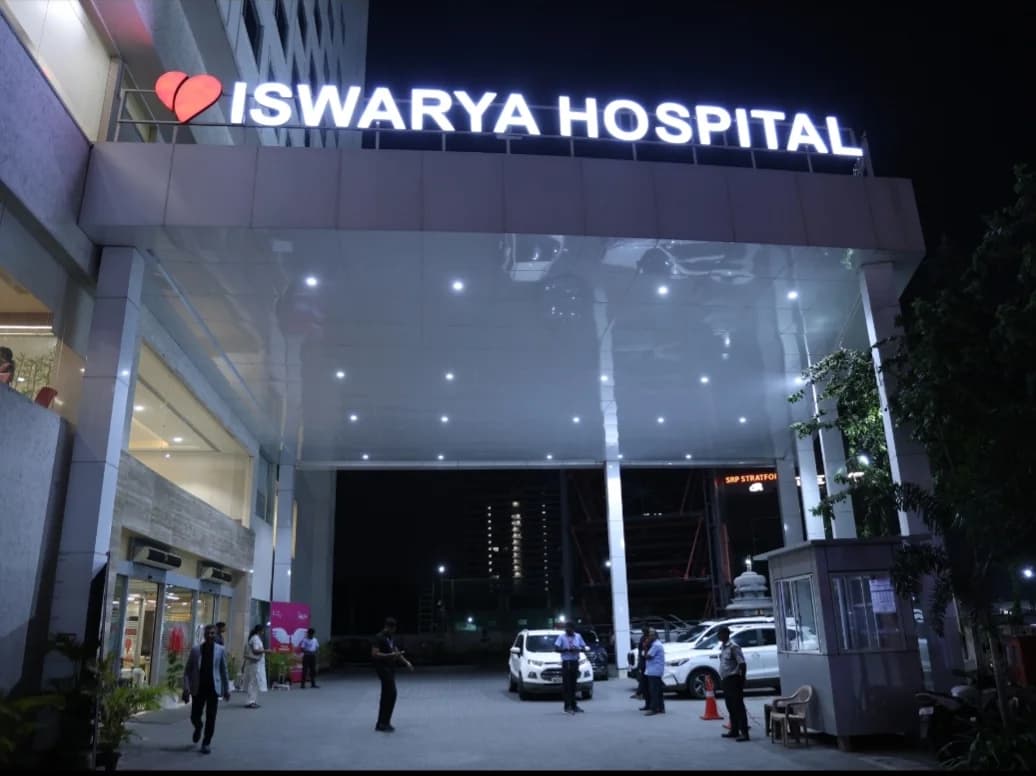
Find the clinic location, hours and directions at Iswarya Hospital, Tharamani, Chennai.

Sources and further reading

Frequently Asked Questions

Need answers? Find them here...

Part of the Colorectal Cancer guide

This article is part of our complete Colorectal Cancer guide, linked above, which explains the bigger picture and every related topic.

Related reading

About the Author

Dr. Varadharajan V, Surgical Oncology

Dr. Varadharajan V

Surgical Oncologist, Breast Oncologist, Head & Neck Oncologist

M.Ch Surgical Oncology, FIAGES, FALS, FMAS, M.S General Surgery, MBBS

Iswarya Hospital, Chennai

Dr. Varadharajan V is a highly trained Surgical Oncologist committed to delivering ethical, patient-centric, and evidence-based cancer care. With strong academic credentials and extensive hands-on experience across multiple oncological subspecialties, he is skilled in managing a wide spectrum of malignancies, including breast, gastrointestinal, gynecologic, and peritoneal surface cancers. His clinical foundation comes from institutions such as Sri Ramachandra Institute of Higher Education and Gleneagles Global Health City, where he has served in senior oncology roles.

Seek urgent medical care for severe bleeding, fever above 100.4 F, breathing difficulty, chest pain, uncontrolled vomiting, a wound that opens or leaks, or any sudden worsening after surgery.

This article is general medical information only. It is not a diagnosis and does not replace a consultation with your own oncologist or with Dr. Varadharajan V. Diagnosis, stage and fitness decide the right treatment for each person. In an emergency, go to the nearest hospital.

Location & Contact

Contact Information

Address

110, Rajiv Gandhi Salai, OMR, Tharamani, Chennai 600041, Tamil Nadu

Working Hours

Mon to Sat, 9:00 AM to 5:00 PM · Sunday closed

Book an Appointment

Online booking is temporarily unavailable. Please call +91 94442 64315 or message us on WhatsApp.

Iswarya Hospital exterior, OMR, Chennai
Book NowCall NowWhatsApp