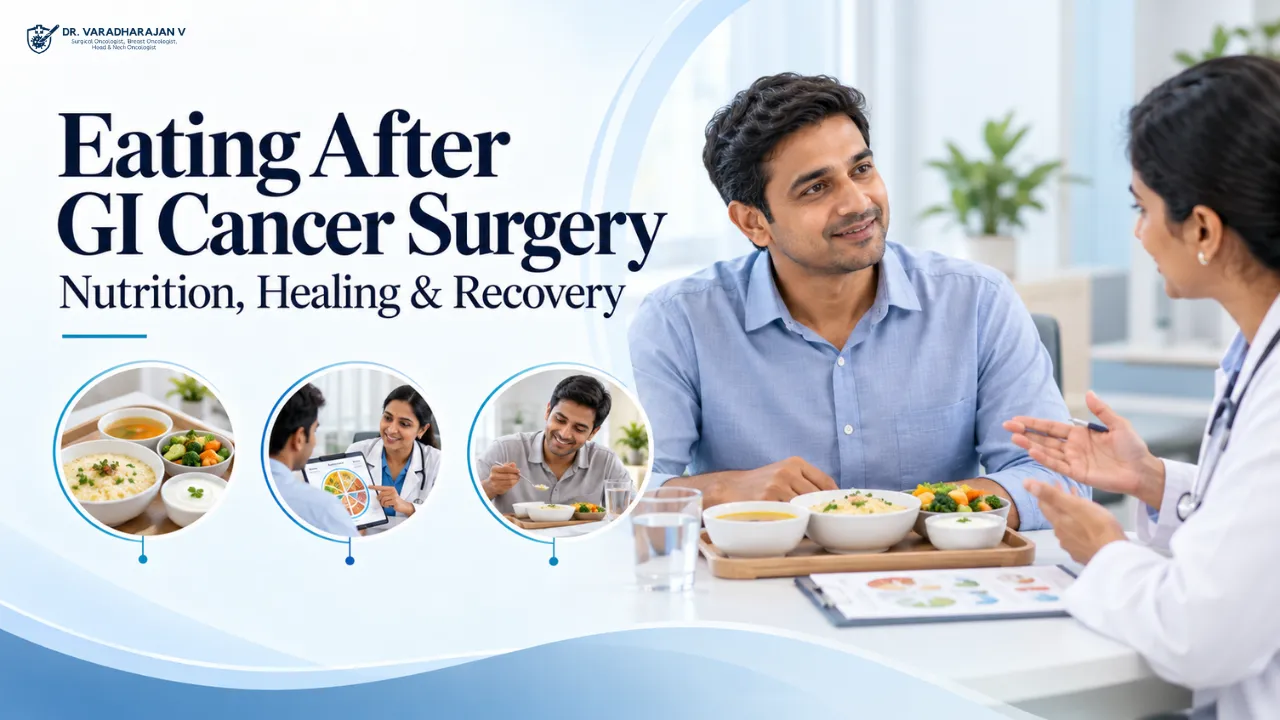
After surgery on the esophagus, stomach, pancreas, liver or bowel, your digestive system needs time to heal and adjust. Most people start with fluids, move to soft foods and then return to a normal but modified diet over weeks. Small, frequent, protein-rich meals help recovery, prevent weight loss and reduce discomfort.
Stages of Eating After Surgery
Stage 1: Clear fluids
Water, clear soups, coconut water or tender coconut, as allowed.
Stage 2: Full liquids
Buttermilk, milk-based drinks, thin porridge or kanji, strained soups.
Stage 3: Soft foods
Idli, soft dosa, upma, khichdi, curd rice, mashed vegetables, soft eggs, well-cooked dal.
Stage 4: Regular diet
Gradually reintroduce other foods, one at a time, watching for discomfort.
Your team will guide timing based on the type of surgery.
General Eating Tips
- Eat small meals every two to three hours
- Chew food thoroughly
- Sit upright while eating and for 30 minutes after
- Drink fluids between meals rather than with them, if advised
- Include protein: dal, eggs, paneer, fish, chicken, curd
- Limit fried, spicy and very sugary foods early on
- Keep a food diary to note what causes discomfort
Managing Common Problems
Early fullness
Eat smaller portions more often.
Dumping syndrome
Avoid sweets and sugary drinks, eat protein and fibre, separate liquids from meals.
Bloating and gas
Limit fizzy drinks and gas-forming foods for a while.
Diarrhoea
Choose bland foods, stay hydrated and report if it continues. Pancreatic enzymes may help after pancreatic surgery.
Reflux
Avoid large meals, eat early in the evening and raise the head of the bed.
Poor appetite
Choose nutrient-dense foods and consider supplements if advised.
After Specific Surgeries
- Esophagus or stomach: smaller meals, B12 and iron monitoring
- Pancreas: enzyme capsules with meals if prescribed, sugar monitoring
- Bowel or stoma: chew well, increase fluids, adjust fibre as advised
When to Contact Your Doctor
- Persistent vomiting
- Unable to eat or drink
- Severe abdominal pain
- Rapid or continued weight loss
- Signs of dehydration
Key Takeaways
- Eating progresses from fluids to regular foods.
- Small, frequent, protein-rich meals help recovery.
- Chew well and eat slowly.
- Many digestive problems are manageable.
- A dietitian can personalise your plan.
Final Thoughts
Food is a key part of healing after GI cancer surgery. With patience and guidance, most people find a comfortable new eating routine. For surgical care and recovery support, you can consult Dr. Varadharajan, a surgical oncologist in Chennai.