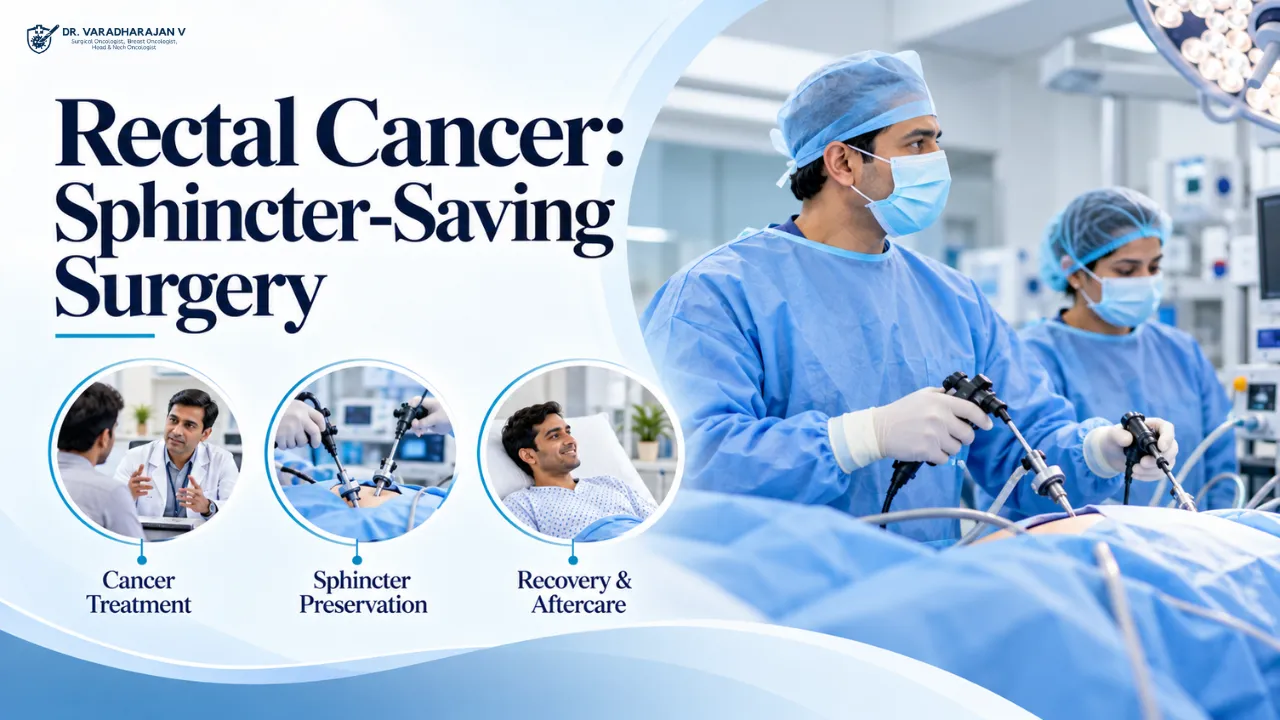
Sphincter-saving surgery removes rectal cancer while preserving the anal sphincter muscles that control bowel movements. This allows many patients to avoid a permanent colostomy. Advances in surgical techniques, along with chemotherapy and radiation before surgery, have made sphincter preservation possible even for many low rectal tumours.
Types of Sphincter-Saving Surgery
Low anterior resection (LAR)
Removes the affected part of the rectum and joins the colon to the remaining rectum or anal canal.
Ultra-low anterior resection
For tumours very low in the rectum, joining the colon close to the anus.
Intersphincteric resection
Removes part of the inner sphincter muscle for very low tumours while preserving the outer muscle.
Total mesorectal excision (TME)
A key technique that removes the rectum along with its surrounding fatty tissue and lymph nodes, lowering recurrence risk.
Who May Be Suitable?
- Tumour not involving the anal sphincter muscles
- Ability to achieve clear surgical margins
- Good pre-surgery bowel control
- Favourable response to chemoradiation, if given
When Is a Permanent Stoma Needed?
- Tumour invading the sphincter muscles
- Very poor sphincter function before surgery
- Clear margins cannot be achieved otherwise
In such cases, abdominoperineal resection with a permanent colostomy may be recommended.
Role of Treatment Before Surgery
Chemoradiation or chemotherapy before surgery can shrink tumours, improving the chance of sphincter preservation and lowering recurrence. In some patients with complete response, a watch-and-wait approach may be discussed in expert centres.
Temporary Stoma
A temporary ileostomy is often created to protect the new join while it heals. It is usually reversed after several weeks to months.
Life After Surgery
Low anterior resection syndrome (LARS) is common and may include:
- Frequent or urgent bowel movements
- Clustering of stools
- Incontinence episodes
These often improve over months with diet changes, medicines and pelvic floor exercises.
Key Takeaways
- Sphincter-saving surgery avoids a permanent stoma for many.
- TME is the key technique for rectal cancer.
- Pre-surgery treatment can improve preservation chances.
- A temporary stoma often protects the join.
- Bowel changes usually improve with time.
Final Thoughts
Many people with rectal cancer can keep normal bowel function with modern surgery. A careful plan balances cancer control with quality of life. For rectal cancer surgery evaluation, you can consult Dr. Varadharajan, a surgical oncologist in Chennai.