
Skip to content

Colorectal Cancer

Blood in Stool: Piles or Colorectal Cancer?

Written by Dr. Varadharajan V, Surgical Oncologist, Chennai

Published · Updated · Medically reviewed by Dr. Varadharajan V · Last reviewed: · 4 min read

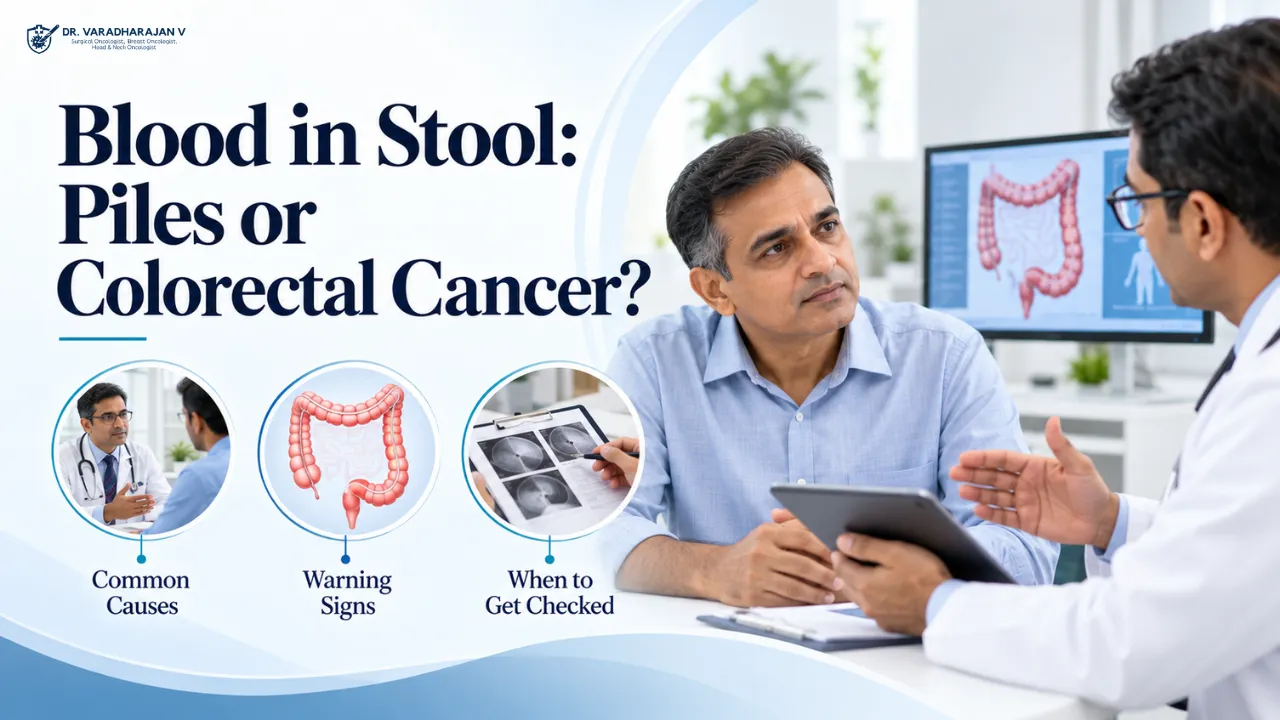
Man speaking privately with a doctor about rectal bleeding

Quick Answer

Piles usually cause bright red blood on toilet paper or dripping after stools, often with itching or a lump. Colorectal cancer may cause dark or mixed blood, change in bowel habits, weight loss, tiredness from anaemia and abdominal pain. Anyone with rectal bleeding should be examined. A colonoscopy is often advised to rule out cancer.

Blood in stool is commonly caused by piles (haemorrhoids) or anal fissures, but it can also be a warning sign of colorectal cancer. The two can look similar, so it is not safe to assume bleeding is due to piles without a proper examination, especially if you are over 40, have other symptoms or have a family history of bowel cancer.

Common Causes of Blood in Stool

  • Piles (haemorrhoids)
  • Anal fissure
  • Colorectal polyps
  • Colorectal cancer
  • Inflammatory bowel disease
  • Infections
  • Diverticular disease

Bleeding From Piles

  • Bright red blood
  • Blood on toilet paper or dripping into the pan
  • Often painless
  • May have itching or a lump near the anus
  • Often related to constipation or straining

Bleeding From Colorectal Cancer

  • Dark red or maroon blood, or blood mixed with stool
  • Black, tarry stools in some cases
  • May be hidden and only found on tests

Red Flag Symptoms

See a doctor promptly if bleeding comes with:

  • Change in bowel habits lasting more than a few weeks
  • Feeling of incomplete emptying
  • Unexplained weight loss
  • Tiredness or breathlessness from anaemia
  • Abdominal pain or a lump
  • Narrow, pencil-like stools
  • Age over 40 to 45
  • Family history of colorectal cancer or polyps

How Is It Evaluated?

  • Digital rectal examination
  • Proctoscopy: to see piles or fissures
  • Colonoscopy: examines the full colon and allows biopsy or polyp removal
  • Blood tests: to check for anaemia
  • Stool tests: for hidden blood in some cases

Why Not Assume It Is Piles?

Piles are common, and people often delay seeing a doctor. But piles and colorectal cancer can occur together. Missing cancer can delay treatment. A simple examination and, when needed, colonoscopy give peace of mind.

Key Takeaways

  • Blood in stool is often from piles, but not always.
  • Dark or mixed blood may suggest a deeper cause.
  • Bowel habit change and weight loss are red flags.
  • Colonoscopy helps rule out cancer.
  • Never assume bleeding is only piles without a check.

Final Thoughts

Rectal bleeding is a symptom that deserves attention, not embarrassment. Early evaluation often brings reassurance, and if cancer is found, early treatment works best. For colorectal assessment, you can consult Dr. Varadharajan, a surgical oncologist in Chennai.

Discuss this with a specialist

If you or a family member is dealing with colorectal cancer, the safest next step is a personal evaluation. Book an appointment with Dr. Varadharajan to review your reports and options.

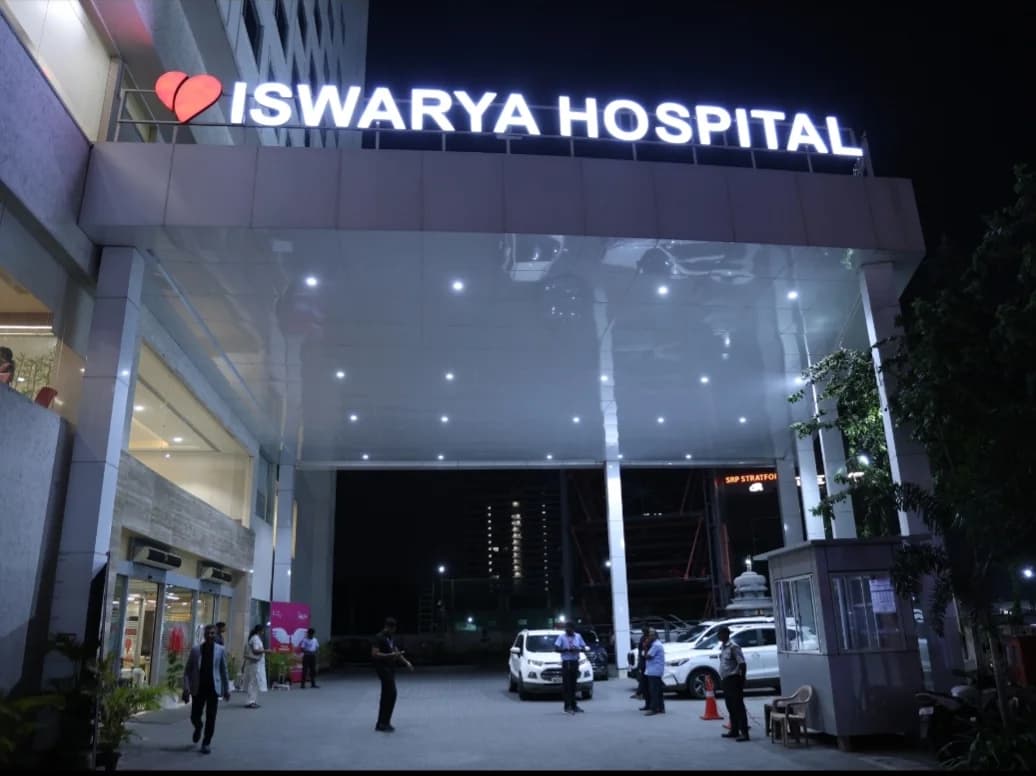
Find the clinic location, hours and directions at Iswarya Hospital, Tharamani, Chennai.

Frequently Asked Questions

Need answers? Find them here...

Part of the Colorectal Cancer guide

This article is part of our complete guide to colorectal cancer surgery, which explains the bigger picture and links to every related topic.

Related reading

About the Author

Dr. Varadharajan V, Surgical Oncology

Dr. Varadharajan V

Surgical Oncologist, Breast Oncologist, Head & Neck Oncologist

M.Ch Surgical Oncology, FIAGES, FALS, FMAS, M.S General Surgery, MBBS

Iswarya Hospital, Chennai

Dr. Varadharajan V is a highly trained Surgical Oncologist committed to delivering ethical, patient-centric, and evidence-based cancer care. With strong academic credentials and extensive hands-on experience across multiple oncological subspecialties, he is skilled in managing a wide spectrum of malignancies, including breast, gastrointestinal, gynecologic, and peritoneal surface cancers. His clinical foundation comes from institutions such as Sri Ramachandra Institute of Higher Education and Gleneagles Global Health City, where he has served in senior oncology roles.

Seek urgent medical care for severe bleeding, fever above 100.4 F, breathing difficulty, chest pain, uncontrolled vomiting, a wound that opens or leaks, or any sudden worsening after surgery.

This article is general medical information only. It is not a diagnosis and does not replace a consultation with your own oncologist or with Dr. Varadharajan V. Diagnosis, stage and fitness decide the right treatment for each person. In an emergency, go to the nearest hospital.

Location & Contact

Contact Information

Address

110, Rajiv Gandhi Salai, OMR, Tharamani, Chennai 600041, Tamil Nadu

Working Hours

Mon to Sat, 9:00 AM to 5:00 PM · Sunday closed

Book an Appointment

Online booking is temporarily unavailable. Please call +91 94442 64315 or message us on WhatsApp.

Iswarya Hospital exterior, OMR, Chennai
Book NowCall NowWhatsApp