
Skip to content

Minimally Invasive & Laparoscopic Oncology

Robotic Cancer Surgery: Benefits and Limits

Written by Dr. Varadharajan V, Surgical Oncologist, Chennai

Published · Updated · Medically reviewed by Dr. Varadharajan V · Last reviewed: · 4 min read

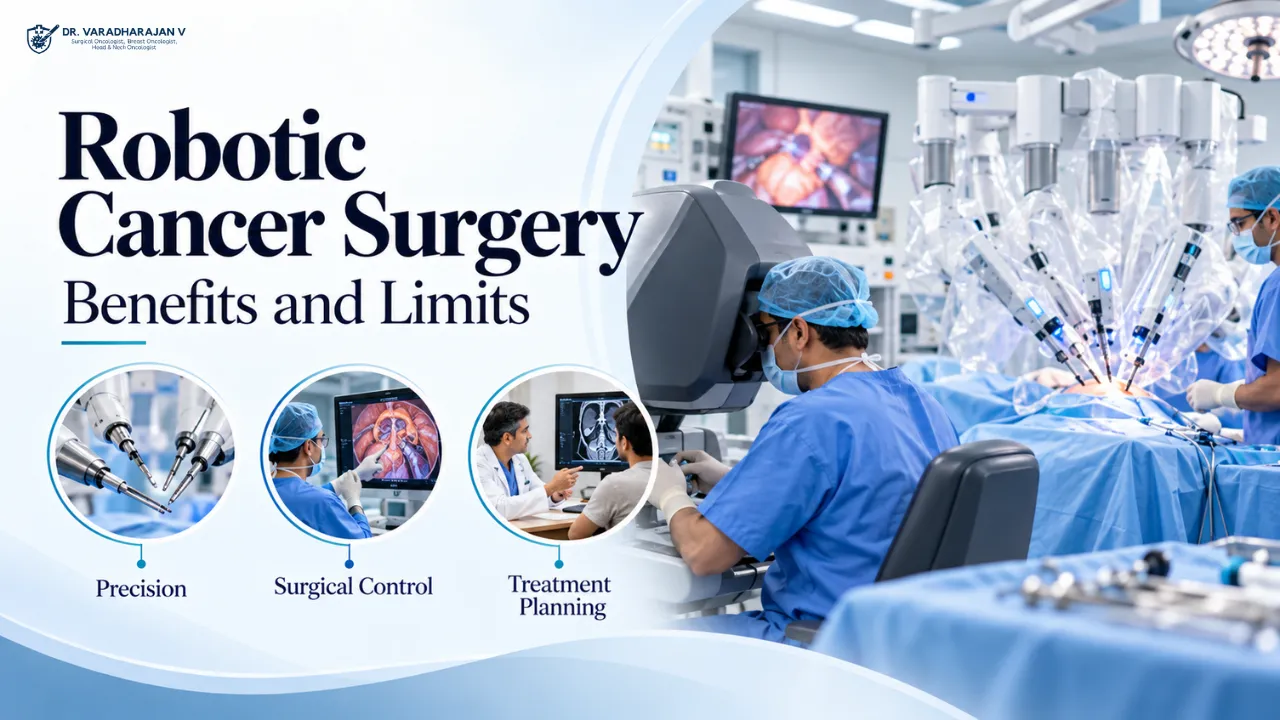
Surgeon operating a robotic surgery console in an operating theatre

Quick Answer

Robotic surgery may offer greater precision, better visualisation and easier work in narrow areas, which can benefit cancers of the rectum, prostate, uterus, kidney and some head and neck sites. Recovery benefits are often similar to laparoscopic surgery. Limits include higher cost, longer setup time and availability. Cancer outcomes depend mostly on surgeon expertise and correct patient selection.

Robotic cancer surgery is a form of minimally invasive surgery where the surgeon controls robotic arms from a console. The system provides a magnified 3D view and instruments that bend and rotate more than the human wrist. The robot does not operate on its own. It helps the surgeon perform precise movements, especially in tight spaces like the pelvis.

How Does Robotic Surgery Work?

  • Small incisions are made, similar to laparoscopy
  • Robotic arms hold the camera and instruments
  • The surgeon sits at a console and controls movements
  • 3D high-definition view with magnification
  • Filters hand tremor for steady movements

Where Can It Help?

  • Rectal cancer surgery in a narrow pelvis
  • Prostate cancer
  • Gynecological cancers such as endometrial cancer
  • Kidney cancer, especially partial kidney removal
  • Some stomach, esophageal and head and neck cancers

Potential Benefits

  • Precise dissection near nerves and vessels
  • Better ergonomics for the surgeon
  • Less blood loss in some procedures
  • Smaller incisions and less pain than open surgery
  • Shorter hospital stay than open surgery
  • Possibly better preservation of nerve function in pelvic surgery

Limitations

  • Higher cost than laparoscopic or open surgery
  • Not available in all hospitals
  • Longer setup and operating time in some cases
  • No sense of touch for the surgeon
  • Not suitable for every tumour or patient
  • Benefit over laparoscopy is not clear for every cancer

Is Robotic Surgery Better Than Laparoscopic Surgery?

For many cancers, outcomes are similar. Robotic surgery may have advantages in specific operations, especially deep in the pelvis. Surgeon skill and experience are more important than the platform.

Questions to Ask Your Surgeon

  • Is robotic surgery suitable for my cancer?
  • What are the benefits compared with laparoscopy or open surgery?
  • How many robotic procedures of this type have you done?
  • What is the cost difference?
  • What happens if conversion is needed?

Key Takeaways

  • The surgeon controls the robot at all times.
  • It provides 3D vision and precise instruments.
  • It may help most in narrow spaces like the pelvis.
  • Costs are higher than other approaches.
  • Surgeon expertise matters more than technology.

Final Thoughts

Robotic surgery is a valuable tool in modern cancer care, but it is one option among several. The right choice balances benefit, safety and cost for your case. For minimally invasive cancer surgery assessment, you can consult Dr. Varadharajan, a surgical oncologist in Chennai.

Discuss this with a specialist

If you or a family member is dealing with minimally invasive & laparoscopic oncology, the safest next step is a personal evaluation. Book an appointment with Dr. Varadharajan to review your reports and options.

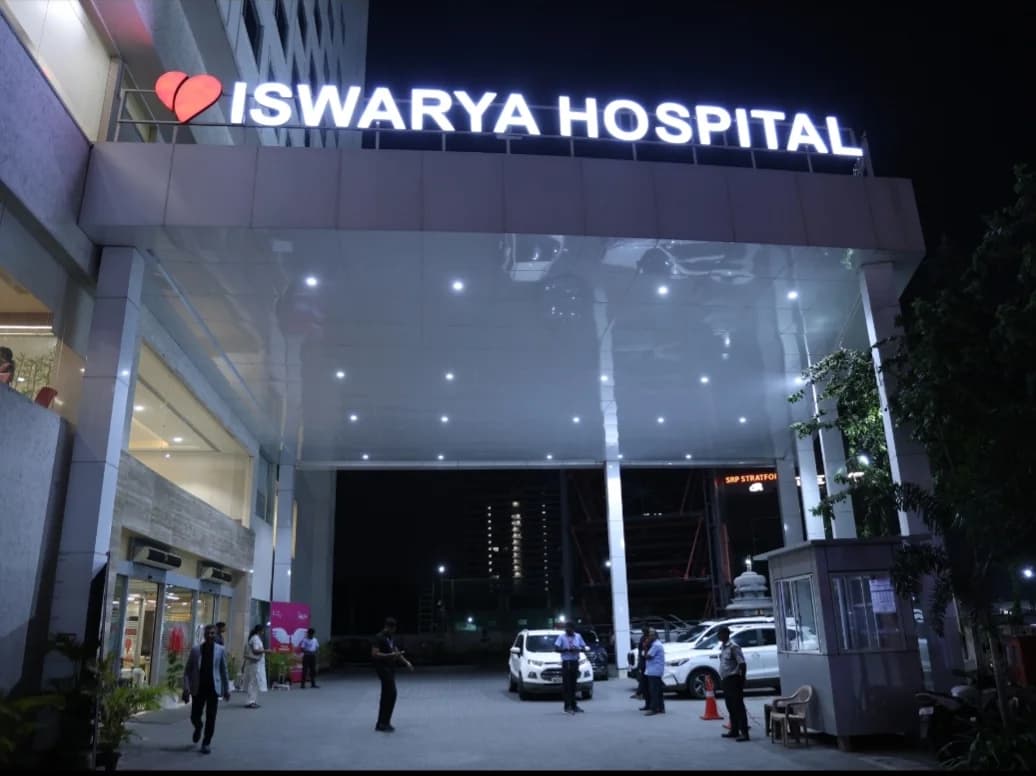
Find the clinic location, hours and directions at Iswarya Hospital, Tharamani, Chennai.

Frequently Asked Questions

Need answers? Find them here...

Part of the Minimally Invasive & Laparoscopic Oncology guide

This article is part of our complete guide to laparoscopic cancer surgery, which explains the bigger picture and links to every related topic.

Related reading

About the Author

Dr. Varadharajan V, Surgical Oncology

Dr. Varadharajan V

Surgical Oncologist, Breast Oncologist, Head & Neck Oncologist

M.Ch Surgical Oncology, FIAGES, FALS, FMAS, M.S General Surgery, MBBS

Iswarya Hospital, Chennai

Dr. Varadharajan V is a highly trained Surgical Oncologist committed to delivering ethical, patient-centric, and evidence-based cancer care. With strong academic credentials and extensive hands-on experience across multiple oncological subspecialties, he is skilled in managing a wide spectrum of malignancies, including breast, gastrointestinal, gynecologic, and peritoneal surface cancers. His clinical foundation comes from institutions such as Sri Ramachandra Institute of Higher Education and Gleneagles Global Health City, where he has served in senior oncology roles.

Seek urgent medical care for severe bleeding, fever above 100.4 F, breathing difficulty, chest pain, uncontrolled vomiting, a wound that opens or leaks, or any sudden worsening after surgery.

This article is general medical information only. It is not a diagnosis and does not replace a consultation with your own oncologist or with Dr. Varadharajan V. Diagnosis, stage and fitness decide the right treatment for each person. In an emergency, go to the nearest hospital.

Location & Contact

Contact Information

Address

110, Rajiv Gandhi Salai, OMR, Tharamani, Chennai 600041, Tamil Nadu

Working Hours

Mon to Sat, 9:00 AM to 5:00 PM · Sunday closed

Book an Appointment

Online booking is temporarily unavailable. Please call +91 94442 64315 or message us on WhatsApp.

Iswarya Hospital exterior, OMR, Chennai
Book NowCall NowWhatsApp