
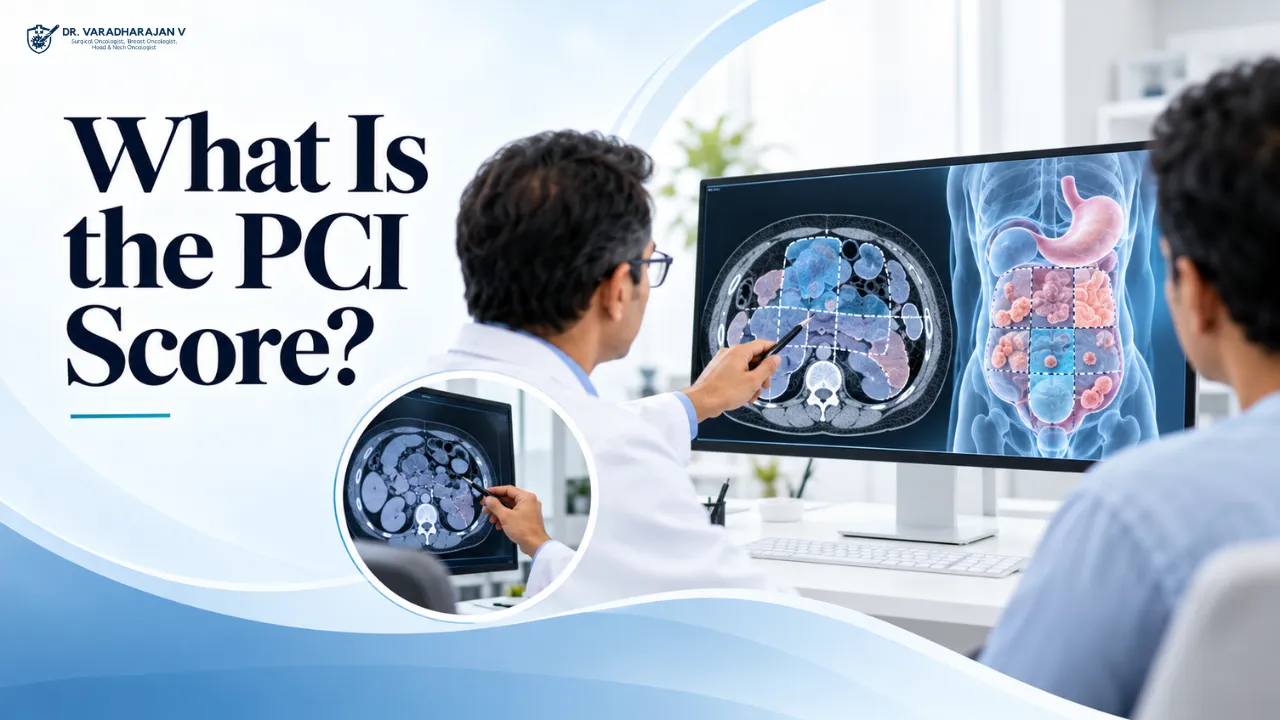
The Peritoneal Cancer Index (PCI) is a scoring system that measures how much cancer has spread across the lining of the abdomen. Surgeons divide the abdomen into 13 regions and score the size of tumour deposits in each from 0 to 3. The total ranges from 0 to 39. The PCI helps decide whether cytoreductive surgery and HIPEC are likely to help.
How Is the PCI Calculated?
13 regions
The abdomen is divided into:
- 9 regions in a grid covering the abdomen
- 4 regions covering parts of the small intestine
Lesion size score
Each region is scored:
- 0: no visible tumour
- 1: tumour up to 0.5 cm
- 2: tumour from 0.5 to 5 cm
- 3: tumour larger than 5 cm or merging deposits
The scores are added to give the total PCI.
How Is PCI Measured?
- Imaging: CT, MRI or PET-CT can estimate PCI but may underestimate small deposits
- Diagnostic laparoscopy: allows direct viewing and more accurate scoring
- During surgery: the final PCI is recorded at the time of operation
Why Does PCI Matter?
- Predicts whether complete removal is possible
- Helps estimate outcomes
- Guides decisions about surgery versus chemotherapy
- Allows comparison over time and between treatments
PCI and Different Cancers
- Pseudomyxoma peritonei: may be treated even with high PCI
- Colorectal cancer: lower PCI scores are generally preferred for benefit
- Ovarian cancer: decisions depend on PCI and the ability to remove all disease
- Stomach cancer: usually only very low PCI is considered
Exact thresholds vary between guidelines and centres.
Other Factors Besides PCI
- Small bowel involvement
- Spread outside the abdomen
- Patient fitness
- Response to chemotherapy
- Tumour biology
Key Takeaways
- PCI measures peritoneal cancer spread.
- It ranges from 0 to 39.
- Lower scores usually mean better outcomes.
- Acceptable scores vary by cancer type.
- Laparoscopy gives more accurate scoring.
Final Thoughts
The PCI score is one important tool, but decisions are always based on the full clinical picture. Understanding it helps you follow treatment discussions with confidence. For CRS and HIPEC evaluation, you can consult Dr. Varadharajan, a surgical oncologist in Chennai.