
Skip to content

CRS & HIPEC

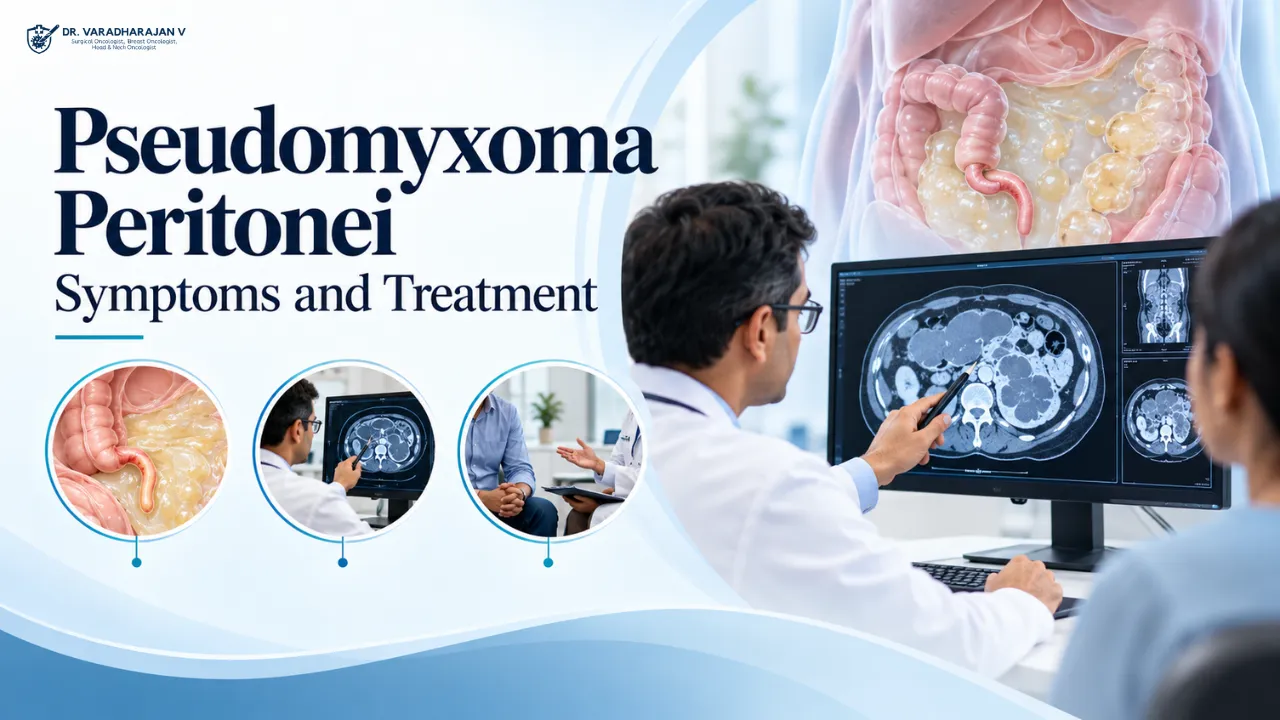
Pseudomyxoma Peritonei: Symptoms and Treatment

Written by Dr. Varadharajan V, Surgical Oncologist, Chennai

Published · Updated · Medically reviewed by Dr. Varadharajan V · Last reviewed: · 4 min read

Woman listening to a surgeon explain pseudomyxoma peritonei treatment

Quick Answer

Common symptoms are gradual abdominal swelling, bloating, increasing waist size, discomfort, hernias and sometimes appendicitis-like pain. CT scans and tumour markers help diagnosis. CRS removes all visible mucus and tumour, and HIPEC treats remaining cells. Outcomes are often good in experienced centres.

Pseudomyxoma peritonei (PMP) is a rare condition in which tumour cells produce large amounts of jelly-like mucus that collects in the abdomen. It most often starts from a tumour of the appendix. Although it spreads slowly, untreated mucus can build up and press on organs. The standard treatment for suitable patients is cytoreductive surgery (CRS) with HIPEC, which can offer long-term control and even cure.

What Causes PMP?

  • Most often a mucinous tumour of the appendix
  • Less commonly from ovarian, colon or other mucinous tumours

When the tumour ruptures or spreads, cells and mucus spread across the abdominal lining.

Common Symptoms

  • Slowly increasing abdominal size
  • Bloating or a feeling of fullness
  • Abdominal discomfort or pain
  • New hernia, especially near the navel or groin
  • Change in bowel habits
  • Weight gain around the abdomen despite weight loss elsewhere
  • Sometimes found during surgery for suspected appendicitis or an ovarian mass

How Is It Diagnosed?

  • CT scan: shows typical mucus patterns in the abdomen
  • MRI: may add detail
  • Tumour markers: CEA, CA 19-9 and CA-125 may be raised
  • Biopsy or surgical findings: confirm the diagnosis and grade

Grades of PMP

  • Low-grade: slow-growing, better outlook
  • High-grade: more aggressive behaviour

The grade influences prognosis and treatment planning.

How Is It Treated?

Cytoreductive surgery (CRS)

Removes all visible tumour and mucus, along with affected organs or peritoneal surfaces. This can be lengthy surgery.

HIPEC

Heated chemotherapy circulated in the abdomen after CRS to target remaining tumour cells.

Follow-up

Regular scans and tumour markers to detect recurrence early.

Other treatments

Systemic chemotherapy may be used for high-grade or non-resectable disease. Debulking surgery may relieve symptoms when complete removal is not possible.

Why Is Specialist Care Important?

PMP is rare and complex. Treatment in a centre experienced in peritoneal surface oncology improves the chance of complete removal and good recovery.

Key Takeaways

  • PMP is a rare mucus-producing condition.
  • It usually starts from the appendix.
  • Increasing abdominal size is a common sign.
  • CRS and HIPEC are the main treatment.
  • Experienced centres achieve better results.

Final Thoughts

Pseudomyxoma peritonei is rare, but effective treatment exists. Early referral to a specialist team can make a meaningful difference. For PMP evaluation and CRS-HIPEC care, you can consult Dr. Varadharajan, a surgical oncologist in Chennai.

Discuss this with a specialist

If you or a family member is dealing with crs & hipec, the safest next step is a personal evaluation. Book an appointment with Dr. Varadharajan to review your reports and options.

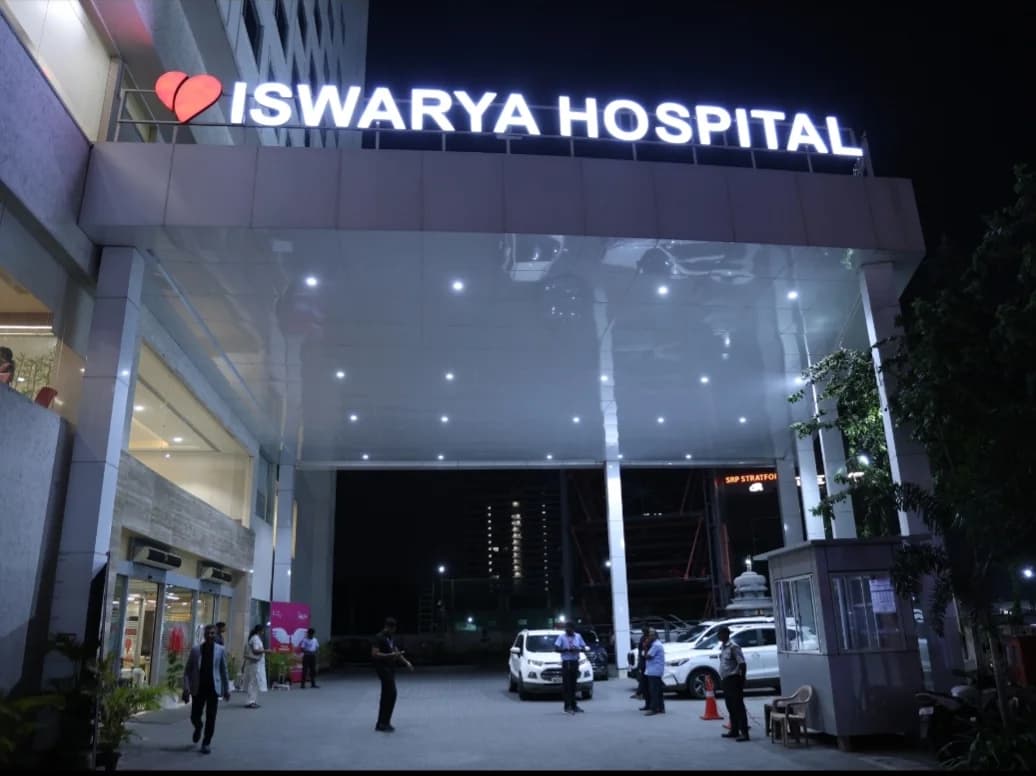
Find the clinic location, hours and directions at Iswarya Hospital, Tharamani, Chennai.

Frequently Asked Questions

Need answers? Find them here...

Part of the CRS & HIPEC guide

This article is part of our complete guide to HIPEC surgery, which explains the bigger picture and links to every related topic.

Related reading

About the Author

Dr. Varadharajan V, Surgical Oncology

Dr. Varadharajan V

Surgical Oncologist, Breast Oncologist, Head & Neck Oncologist

M.Ch Surgical Oncology, FIAGES, FALS, FMAS, M.S General Surgery, MBBS

Iswarya Hospital, Chennai

Dr. Varadharajan V is a highly trained Surgical Oncologist committed to delivering ethical, patient-centric, and evidence-based cancer care. With strong academic credentials and extensive hands-on experience across multiple oncological subspecialties, he is skilled in managing a wide spectrum of malignancies, including breast, gastrointestinal, gynecologic, and peritoneal surface cancers. His clinical foundation comes from institutions such as Sri Ramachandra Institute of Higher Education and Gleneagles Global Health City, where he has served in senior oncology roles.

Seek urgent medical care for severe bleeding, fever above 100.4 F, breathing difficulty, chest pain, uncontrolled vomiting, a wound that opens or leaks, or any sudden worsening after surgery.

This article is general medical information only. It is not a diagnosis and does not replace a consultation with your own oncologist or with Dr. Varadharajan V. Diagnosis, stage and fitness decide the right treatment for each person. In an emergency, go to the nearest hospital.

Location & Contact

Contact Information

Address

110, Rajiv Gandhi Salai, OMR, Tharamani, Chennai 600041, Tamil Nadu

Working Hours

Mon to Sat, 9:00 AM to 5:00 PM · Sunday closed

Book an Appointment

Online booking is temporarily unavailable. Please call +91 94442 64315 or message us on WhatsApp.

Iswarya Hospital exterior, OMR, Chennai
Book NowCall NowWhatsApp