
Skip to content

Gynecological Oncology

Radical Hysterectomy: What It Involves and Recovery

Written by Dr. Varadharajan V, Surgical Oncologist, Chennai

Published · Updated · Medically reviewed by Dr. Varadharajan V · Last reviewed: · 4 min read

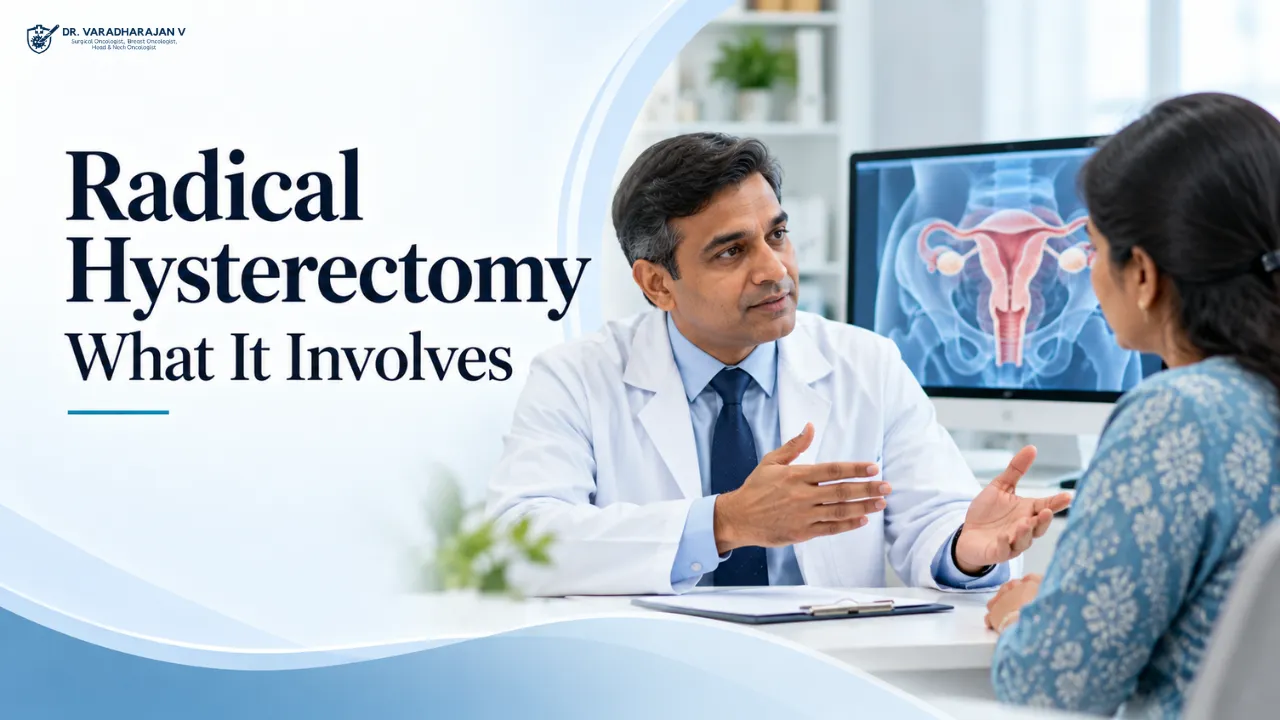
Surgeon explaining radical hysterectomy on a pelvic anatomy model

Quick Answer

Radical hysterectomy is done to remove cancer with a wide margin of healthy tissue. It may be open or minimally invasive, depending on the case and current evidence. Hospital stay is often several days. Recovery usually takes six to eight weeks. Some women may have temporary bladder problems because of nerves near the operated area.

A radical hysterectomy is surgery that removes the uterus, cervix, the tissues beside the uterus (parametrium) and the upper part of the vagina. Pelvic lymph nodes are usually removed too. It is mainly used for early-stage cervical cancer and some other gynecological cancers. It is more extensive than a simple hysterectomy, which removes only the uterus and cervix.

Simple vs Radical Hysterectomy

Simple hysterectomy

Removes the uterus and cervix.

Radical hysterectomy

Removes the uterus, cervix, parametrium, upper vagina and usually pelvic lymph nodes.

Ovaries

Ovaries may or may not be removed, depending on age, cancer type and risk. Younger women may keep their ovaries to avoid early menopause.

Who Needs It?

  • Early-stage cervical cancer
  • Some endometrial cancers involving the cervix
  • Selected other gynecological cancers

Surgical Approaches

  • Open surgery: through an abdominal incision
  • Laparoscopic or robotic surgery: through small cuts

For cervical cancer, many centres now prefer open radical hysterectomy based on research findings. Your surgeon will explain the safest approach for your situation.

What Happens After Surgery?

  • Hospital stay of several days
  • A urinary catheter for some days, sometimes longer
  • Pain relief and early walking
  • Gradual return to eating and activity

Possible Side Effects

  • Temporary difficulty emptying the bladder
  • Constipation
  • Lymphedema of the legs if lymph nodes are removed
  • Shortening of the vagina, which may affect intercourse
  • Early menopause if ovaries are removed

Recovery at Home

  • Avoid heavy lifting for about six weeks
  • Avoid intercourse until your doctor confirms healing
  • Walk daily to support recovery
  • Watch for fever, heavy bleeding, wound problems or leg swelling

Will I Need Further Treatment?

Depending on final pathology, some women need radiation or chemoradiation after surgery.

Key Takeaways

  • Radical hysterectomy is more extensive than simple hysterectomy.
  • It is mainly used for early cervical cancer.
  • Pelvic lymph nodes are often removed.
  • Temporary bladder issues are possible.
  • Recovery usually takes six to eight weeks.

Final Thoughts

Knowing what radical hysterectomy involves helps you prepare and recover with confidence. Open discussion with your team about every question is encouraged. For gynecological cancer surgery, you can consult Dr. Varadharajan, a surgical oncologist in Chennai.

Discuss this with a specialist

If you or a family member is dealing with gynecological oncology, the safest next step is a personal evaluation. Book an appointment with Dr. Varadharajan to review your reports and options.

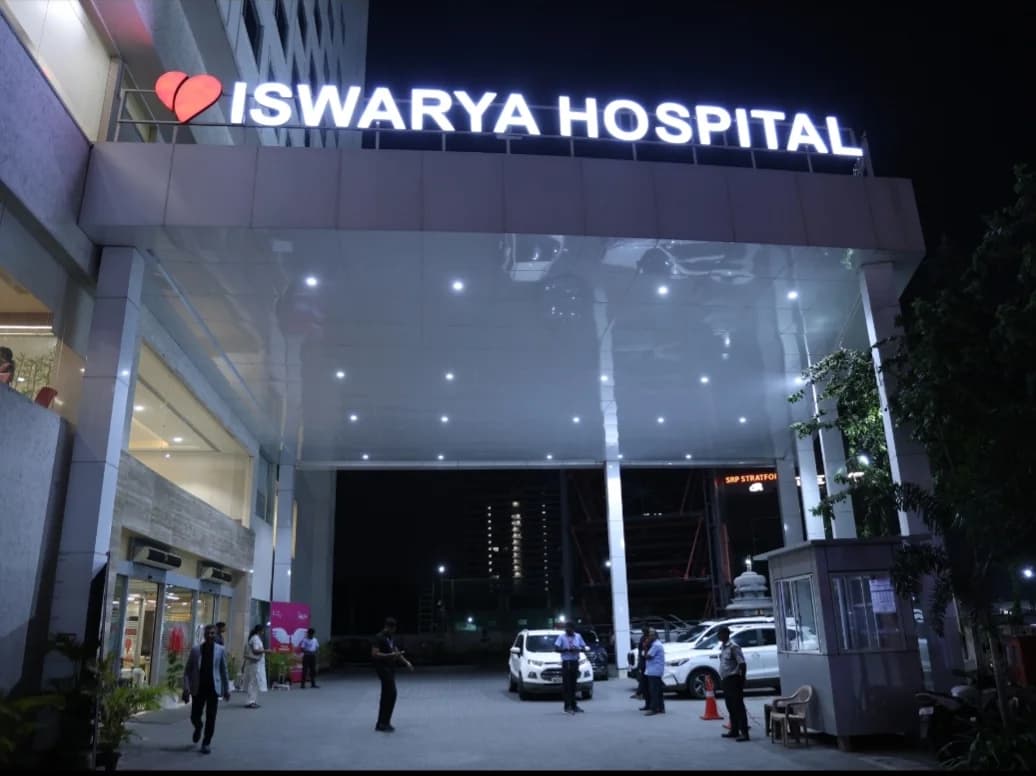
Find the clinic location, hours and directions at Iswarya Hospital, Tharamani, Chennai.

Frequently Asked Questions

Need answers? Find them here...

Part of the Gynecological Oncology guide

This article is part of our complete Gynecological Oncology guide, linked above, which explains the bigger picture and every related topic.

Related reading

About the Author

Dr. Varadharajan V, Surgical Oncology

Dr. Varadharajan V

Surgical Oncologist, Breast Oncologist, Head & Neck Oncologist

M.Ch Surgical Oncology, FIAGES, FALS, FMAS, M.S General Surgery, MBBS

Iswarya Hospital, Chennai

Dr. Varadharajan V is a highly trained Surgical Oncologist committed to delivering ethical, patient-centric, and evidence-based cancer care. With strong academic credentials and extensive hands-on experience across multiple oncological subspecialties, he is skilled in managing a wide spectrum of malignancies, including breast, gastrointestinal, gynecologic, and peritoneal surface cancers. His clinical foundation comes from institutions such as Sri Ramachandra Institute of Higher Education and Gleneagles Global Health City, where he has served in senior oncology roles.

Seek urgent medical care for severe bleeding, fever above 100.4 F, breathing difficulty, chest pain, uncontrolled vomiting, a wound that opens or leaks, or any sudden worsening after surgery.

This article is general medical information only. It is not a diagnosis and does not replace a consultation with your own oncologist or with Dr. Varadharajan V. Diagnosis, stage and fitness decide the right treatment for each person. In an emergency, go to the nearest hospital.

Location & Contact

Contact Information

Address

110, Rajiv Gandhi Salai, OMR, Tharamani, Chennai 600041, Tamil Nadu

Working Hours

Mon to Sat, 9:00 AM to 5:00 PM · Sunday closed

Book an Appointment

Online booking is temporarily unavailable. Please call +91 94442 64315 or message us on WhatsApp.

Iswarya Hospital exterior, OMR, Chennai
Book NowCall NowWhatsApp