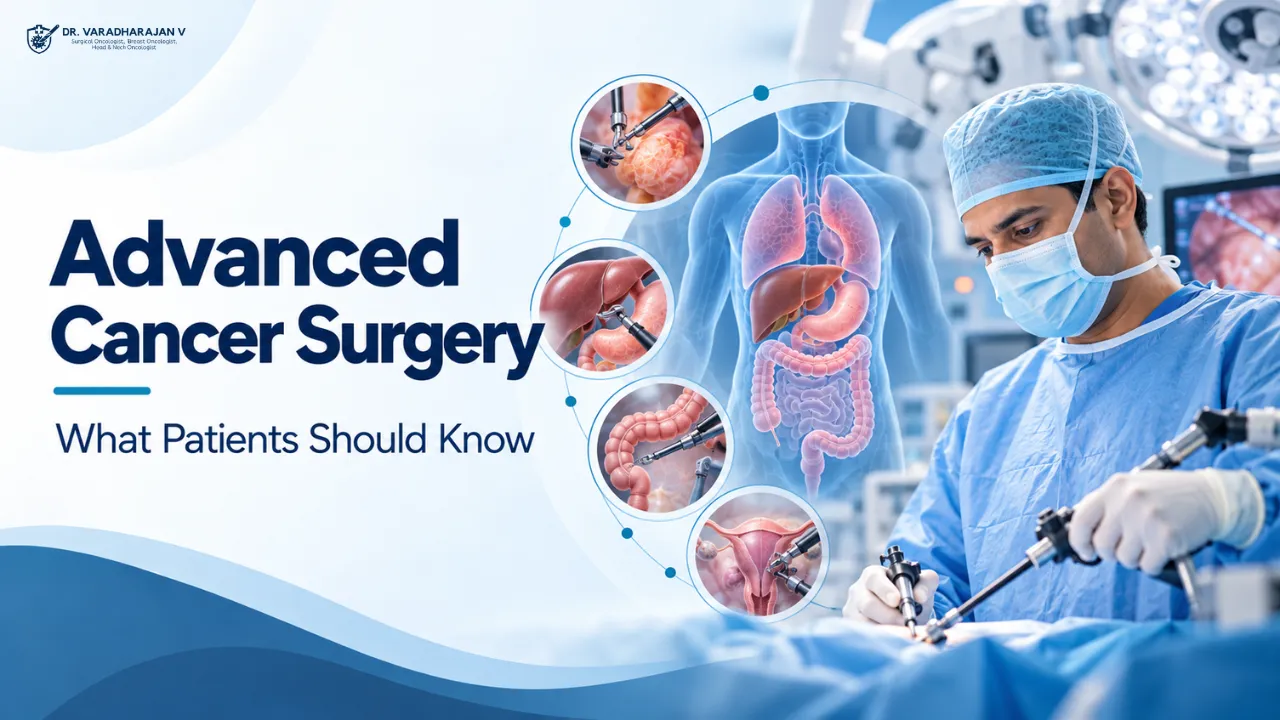
What Advanced Cancer Surgery Actually Means
Advanced cancer surgery refers to complex surgical procedures used to treat tumors that are large, deeply located, involve multiple organs, or have spread beyond their site of origin. It is not one operation but an entire category, spanning extensive tumor removal, vascular reconstruction, and rebuilding organs or digestive pathways after resection. Patients usually hear the term when a cancer cannot be handled with a simple, localized procedure and instead needs specialized planning, an experienced surgical team, and frequently a combination with chemotherapy or radiation.
That is the reality most people do not learn until they are already deep into a diagnosis. A tumor that looks small on an initial scan can turn out to involve nearby blood vessels, organs, or lymph node clusters once a surgeon reviews detailed cross sectional imaging or actually enters the surgical field. That shift, from what looked routine to something genuinely complex, is where the conversation about advanced cancer surgery usually begins.
Why This Distinction Matters for Patients
Not every cancer needs advanced surgical intervention. Early stage disease confined to a small area is often removed with standard procedures and comparatively short recovery. Advanced surgery becomes necessary when the tumor is locally advanced, meaning it has grown into surrounding structures, or when achieving clear margins requires removing part of an organ along with connected tissue and its blood supply.
Clear margins remain the surgical goal in nearly every cancer operation. This means removing the tumor with a rim of healthy tissue around it, later confirmed by a pathologist under a microscope. Achieving clean margins the first time lowers the chance of the cancer returning at the same site. It sounds straightforward on paper. In a tumor wrapped around a major vessel or pressed against the liver capsule, it rarely is.
There is also a financial and emotional dimension patients underestimate early on. Advanced surgery usually means a longer hospital stay, a more involved recovery, and a treatment sequence that may stretch across several months once neoadjuvant therapy and postoperative recovery are both factored in. Understanding this upfront changes how a family plans around the diagnosis, not just how the surgeon plans the operation.
Gastrointestinal Cancers and Why They Often Require Advanced Surgery
Gastrointestinal cancers, including those of the stomach, colon, rectum, pancreas, and esophagus, frequently require advanced surgical approaches. These organs sit close to major blood vessels and adjacent structures, so tumors here rarely stay neatly self contained.
Pancreatic cancer is a clear example. The pancreas sits deep in the abdomen, surrounded by the stomach, duodenum, spleen, and several critical vessels including the superior mesenteric artery and vein. A tumor here often requires the Whipple procedure, technically pancreaticoduodenectomy, which removes the head of the pancreas, part of the small intestine, the gallbladder, and sometimes part of the stomach, followed by reconstructing the digestive tract so it functions again afterward. It remains one of the more demanding operations in general surgery, technically for the surgeon and physically for the patient recovering from it. Recovery after a Whipple procedure typically involves a hospital stay of one to two weeks, careful monitoring for pancreatic leak, and a gradual reintroduction of normal diet over several weeks.
Gastric cancer surgery, or gastrectomy, presents a different set of demands. Depending on the tumor's location within the stomach, surgeons may perform a partial or total gastrectomy, followed by reconstructing the digestive pathway so food can still move from the esophagus into the small intestine. Total gastrectomy patients need lifelong adjustments to eating patterns, usually smaller and more frequent meals, since the stomach's reservoir function is gone.
Esophageal cancer surgery, known as esophagectomy, is arguably one of the most physiologically demanding cancer operations that exists. It often involves removing part of the esophagus along with nearby lymph nodes, then reconstructing continuity using a portion of the stomach or, less commonly, a segment of colon. This surgery frequently combines an abdominal and chest approach, and increasingly, minimally invasive or robotic techniques are used to reduce the impact of accessing both cavities.
Colorectal cancers that have spread locally may require removing sections of the bowel along with regional lymph nodes, and in some cases adjacent organs if the tumor has grown into them. Rectal cancer surgery in particular has to balance complete tumor removal against preserving bowel function and, where anatomically possible, avoiding a permanent colostomy. Neoadjuvant chemoradiation before surgery has become standard for many locally advanced rectal cancers precisely because shrinking the tumor beforehand improves the odds of a sphincter sparing operation.
Hepatobiliary Surgery: Operating on the Liver and Bile Ducts
Hepatobiliary surgery covers operations on the liver, gallbladder, and bile ducts, and it remains one of the more technically unforgiving areas of cancer surgery. The liver has an extensive blood supply and a complex internal architecture of vessels and bile ducts, so removing a tumor without damaging the remaining healthy tissue requires precise anatomical knowledge and detailed preoperative imaging, often including three dimensional reconstruction of the liver's vascular anatomy before the first incision is even made.
Liver resections range from removing a small wedge of tissue to a major hepatectomy, where an entire lobe is removed. The liver has a notable capacity to regenerate, and a healthy liver can often regrow close to its original size within a few months after a major resection. That regenerative ability is what makes aggressive liver surgery possible at all. It does not, however, make the surgery itself any less demanding, and surgeons must carefully calculate how much liver volume will remain after resection to avoid postoperative liver failure, a serious and sometimes fatal complication if the remnant liver is insufficient.
Bile duct cancers, known as cholangiocarcinoma, often require even more extensive procedures because the bile ducts run through the liver and connect directly to the small intestine. Depending on where the tumor sits along this pathway, surgery may involve removing part of the liver, the bile duct itself, and reconstructing the connection to the intestine using a segment of bowel. Gallbladder cancer, when caught at a more advanced stage, sometimes requires extending the resection to include part of the adjacent liver and surrounding lymph nodes, since the gallbladder sits directly against the liver surface with no natural barrier between them.
Minimally Invasive Cancer Surgery: Smaller Incisions, Same Standards
A common misconception holds that minimally invasive surgery means a less thorough operation. It does not. Minimally invasive cancer surgery, whether laparoscopic or robot assisted, follows the same oncological principles as open surgery. The tumor still needs complete removal with clear margins, and lymph nodes still need proper assessment. What changes is the access. Instead of one large incision, the surgeon works through several small ports using a camera and long instruments, or increasingly through a robotic surgical system that offers finer control and better visualization in tight anatomical spaces like the pelvis or the area around the pancreas.
Recovery time is usually shorter. Blood loss tends to be lower. Hospital stays are often reduced by several days compared to open surgery for the same procedure, and patients typically return to normal activity faster. These are real, measurable benefits, not marketing language. What minimally invasive surgery cannot do is make an inappropriate case appropriate. A tumor that is too large, too close to major vessels, or too advanced for a minimally invasive approach still needs open surgery, and a good surgical oncologist will say so directly rather than force a technique that does not fit the tumor's anatomy.
Robotic surgery in particular has expanded what is technically feasible in narrow spaces. The wristed instruments allow movement that mimics the human hand more closely than straight laparoscopic tools, which matters considerably during fine dissection near nerves or blood vessels. That said, the outcome still depends far more on the surgeon's judgment and experience than on the platform itself. A skilled surgeon using standard laparoscopic tools will often outperform a less experienced one using a robotic system.
How a Surgical Oncologist Decides the Right Approach
Every surgical plan starts with staging, the process of determining how far a cancer has spread. This typically involves imaging such as CT scans, MRI, or PET scans, sometimes combined with endoscopic evaluation or biopsy of suspicious lymph nodes. Staging answers the central question before anything else can be decided. Is this cancer confined to one area, has it spread to nearby lymph nodes, or has it spread to distant organs.
Localized cancer without spread is generally the best candidate for surgery alone or surgery combined with adjuvant treatment afterward. Locally advanced cancer, where the tumor has grown into surrounding tissue but has not spread distantly, often benefits from neoadjuvant treatment, meaning chemotherapy or radiation given before surgery to shrink the tumor and improve the chances of a complete resection. Metastatic cancer, where disease has spread to distant organs, changes the calculation considerably. Surgery in that setting is used more selectively, sometimes to relieve symptoms or manage a specific complication such as a bowel obstruction, rather than to remove all visible disease.
Imaging alone does not always tell the full story. Diagnostic laparoscopy, a minimally invasive procedure done purely to look inside the abdomen before committing to a major operation, is sometimes used for cancers like gastric or pancreatic tumors where scans cannot reliably rule out small volume spread to the surface of the abdomen. Finding unexpected disease at this stage can change the entire treatment plan before a larger, more invasive surgery is attempted unnecessarily.
The Role of Tumor Boards
This is where tumor boards come in. A tumor board is a meeting of specialists from surgical oncology, medical oncology, radiation oncology, radiology, and pathology who review a patient's case together and agree on a treatment sequence. It exists because no single specialty has the complete picture on its own. A surgeon can judge what is technically resectable. A medical oncologist understands how a tumor is likely to respond to systemic treatment. A radiologist can interpret subtle findings on imaging that shift the entire plan. Put those perspectives together and the recommendation that emerges is usually stronger than any single opinion alone.
For genuinely complex cases, such as a borderline resectable pancreatic tumor or a liver metastasis close to major vessels, the tumor board discussion can change the sequence entirely, sometimes recommending chemotherapy first to test how the tumor behaves biologically before committing to surgery. This approach also filters out patients whose disease turns out to be more aggressive than initial imaging suggested, sparing them a major operation that would not have changed their outcome.
Common Mistakes Patients Make When Facing This Decision
Rushing into surgery before completing full staging is one of the more frequent errors, usually driven by anxiety and an understandable desire to act quickly. It is a natural instinct. It is also risky. Operating before the full extent of disease is known can mean an incomplete procedure or discovering mid surgery that the plan needs to change entirely, sometimes closing without completing the intended resection.
Choosing a surgeon based purely on convenience or cost, without checking their specific experience with the tumor type in question, is another common gap. Advanced cancer surgery is not generalist work. A surgeon who performs frequent pancreatic resections is a different proposition from one who does occasional cancer surgery within a broader general surgical practice. Volume and specialization genuinely matter here, and it is entirely reasonable to ask directly about a surgeon's experience with a specific procedure and their personal complication rates.
Skipping a second opinion, particularly for complex or borderline resectable cases, is worth reconsidering. A second surgical opinion is not an insult to the first surgeon. It is standard practice for major decisions, and most experienced surgical oncologists expect and welcome it. Patients sometimes worry that seeking a second opinion will delay treatment or offend their current doctor. In reality, a short delay of a week or two to confirm the plan rarely changes outcomes, while acting on incomplete information sometimes does.
Managing Risks and Complications
Every major cancer operation carries risk, and part of a surgeon's job is being direct about that rather than minimizing it. Bleeding, infection, and anesthesia related complications apply broadly to major surgery. Beyond those general risks, specific procedures carry specific concerns. Pancreatic surgery carries a real risk of pancreatic fistula, where digestive fluid leaks from the surgical connection. Liver resections carry a risk of postoperative liver failure if too little functional liver tissue remains. Esophageal surgery carries a risk of anastomotic leak at the site where the digestive tract is reconnected.
Surgeons manage these risks through careful patient selection, meticulous surgical technique, and structured postoperative monitoring designed to catch problems early rather than after they become severe. Enhanced recovery protocols, which combine early mobilization, controlled pain management, and structured nutritional support, have measurably reduced complication rates across many types of major cancer surgery over the past decade. None of this eliminates risk. It reduces it, and it gives the surgical team a faster path to intervention if something does go wrong.
What Recovery Actually Looks Like
Recovery from advanced cancer surgery varies enormously depending on the procedure, but a few patterns hold broadly true. Pain management in the first several days focuses on keeping the patient mobile early, since movement reduces the risk of blood clots and pneumonia after major abdominal or chest surgery. Nutrition often needs careful management, especially after procedures involving the stomach, pancreas, or bowel, where the digestive system needs time to adjust to its new configuration. Some patients need a temporary feeding tube during this transition.
Physical recovery tends to happen in stages. The first two to three weeks focus on wound healing and regaining basic mobility. The following month or two usually brings a gradual return of appetite, energy, and strength, though full stamina often takes longer to come back than patients expect. Follow up imaging and blood tests continue for months, sometimes years, after surgery to monitor for recurrence. This ongoing surveillance is a permanent part of cancer care, not a formality. Catching a recurrence early, while it is still small and localized, generally offers far more treatment options than catching it late.
Emotional recovery deserves mention too, even in a clinical discussion. Major cancer surgery changes how the body works, sometimes permanently, and patients often need time to adjust psychologically as well as physically. A good surgical team addresses this directly, connecting patients with counseling or support groups where needed, rather than treating emotional recovery as separate from medical care.
Nutrition and Long Term Lifestyle After Surgery
Diet often needs meaningful adjustment after gastrointestinal or hepatobiliary cancer surgery, and this is an area where patients benefit from working with a dietitian familiar with postsurgical needs rather than guessing on their own. After a total gastrectomy, for instance, smaller and more frequent meals become necessary permanently, since the stomach's storage capacity is gone. After pancreatic surgery, some patients need enzyme replacement to help digest fat properly, since the remaining pancreas may not produce sufficient digestive enzymes.
Long term lifestyle changes extend beyond diet. Regular follow up appointments, ongoing bloodwork, and periodic imaging become part of a patient's routine for years. Many patients also benefit from gradual, supervised return to physical activity, which supports both physical recovery and long term wellbeing.
The Role of a Multidisciplinary Team
No single surgeon operates in isolation when treating advanced cancer. Anesthesiologists manage the physiological demands of long, complex procedures. Pathologists sometimes examine removed tissue in real time during surgery, using frozen section analysis to confirm margins are clear before the operation concludes. Oncology nurses manage the practical realities of recovery, from wound care to nutrition support. Palliative care specialists, where relevant, help manage symptoms and quality of life alongside curative treatment rather than only after curative options are exhausted.
An impressive sounding technique name or a high tech surgical platform means little on its own. What actually determines outcomes is whether all these pieces work together consistently, case after case, with clear communication between specialties and a shared understanding of the treatment goal.
Questions Worth Asking Your Surgical Oncologist
Before agreeing to any advanced cancer surgery, patients benefit from asking a few direct questions. How many procedures of this specific type has the surgeon personally performed. What is the expected hospital stay and recovery timeline. What are the realistic risks and complication rates for this particular operation. Is neoadjuvant treatment being considered, and why or why not. What happens if the tumor turns out to be more extensive than imaging suggested once surgery begins. Who will manage postoperative care, and what does the follow up schedule look like over the first year.
These are not confrontational questions. They are the kind any experienced surgical oncologist expects and answers as a matter of course.
Where This Leaves You
Advanced cancer surgery is demanding, both technically and for the patient going through it, but it remains one of the most effective tools available for treating gastrointestinal and hepatobiliary cancers when performed by an experienced team with proper staging and planning behind it. The technique matters less than the judgment behind choosing it. A tumor board discussion, an honest assessment of resectability, and a surgeon with specific experience in the relevant procedure together do more for outcomes than any single innovation in surgical technology.
If you or a family member has been told that a cancer requires advanced surgical treatment, the right next step is a thorough consultation covering staging, the proposed procedure, expected recovery, and realistic outcomes, ideally supported by a second opinion if the case is complex.